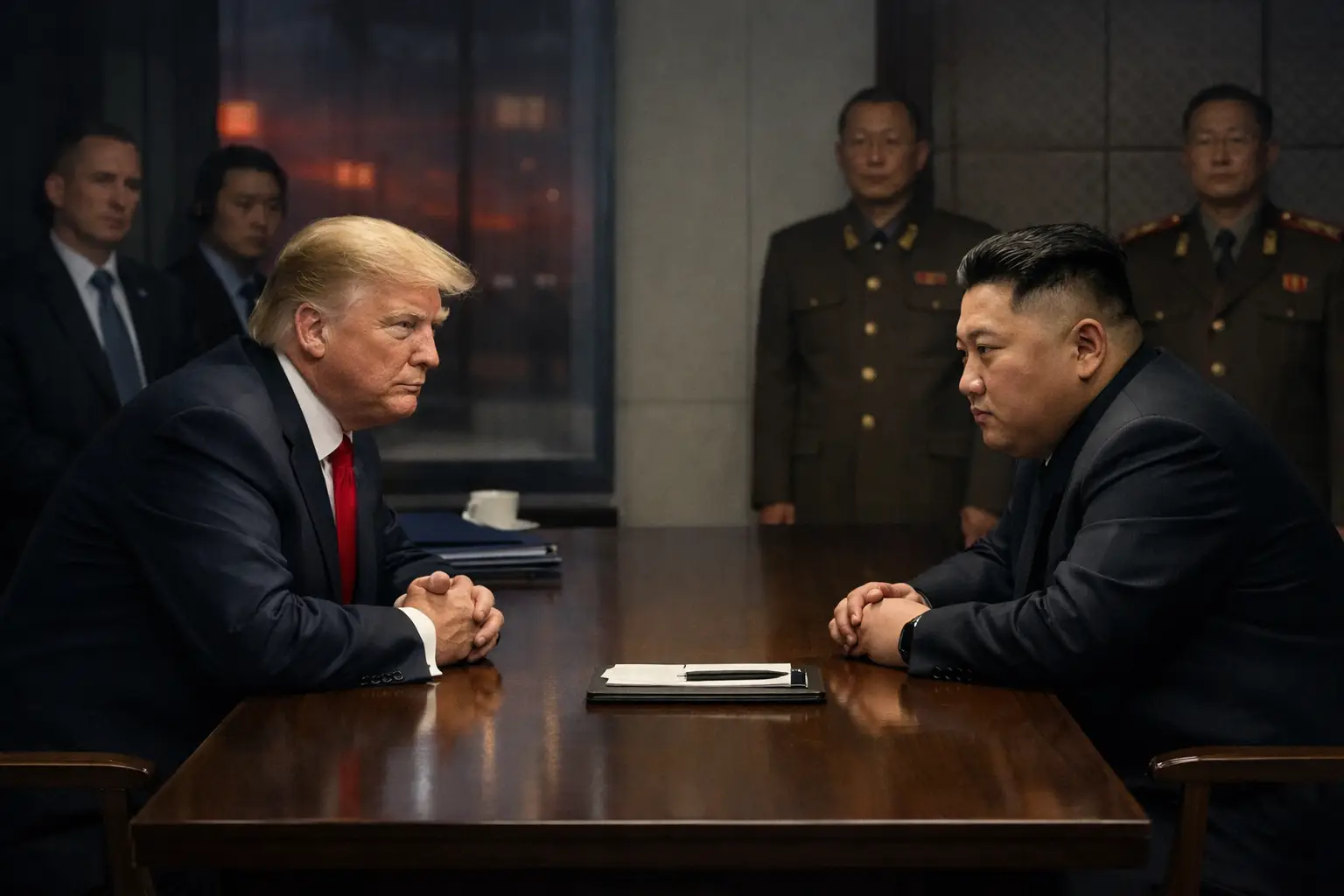
On February 26, 2026, U.S. Secretary of State Marco Rubio announced the White House’s readiness to restore direct diplomatic communication with the DPRK, which had essentially been frozen since Donald Trump’s first presidency.
This action was a response to Kim Jong Un’s statement during his re-election as Chairman of the Workers’ Party of Korea. In his speech, Pyongyang expressed a willingness for “peaceful coexistence” with the United States.
However, this was conditioned on Washington recognizing the DPRK’s nuclear status and ending its “hostile policy,” which includes sanctions and support for the anti-North Korean defense network.
He also stressed that the future of bilateral relations now “fully depends on the decisions of the ‘White House.’” This exchange of political signals is laying the groundwork for a new summit between Donald Trump and Kim Jong Un in spring 2026, with the goal of attempting to fragment the autocratic axis ahead of Trump’s visit to the PRC in April.
Pyongyang intensified its harsh rhetoric toward South Korea, officially designating it the “main enemy and eternal adversary,” thereby confirming the 2023 decision to treat the two states as separate entities.
In his “electoral” speech, Kim Jong Un emphasized a categorical refusal to negotiate with the Lee Jae-myung administration, the intention to continue blocking inter-Korean logistical infrastructure, and readiness to ensure the “collapse” of South Korea in the event of escalation.
For the first time, the DPRK declaratively separated Washington from Seoul, offering the United States—the state previously called its “greatest enemy”—preferential conditions for negotiations.
Notably, against this backdrop, Kim Jong Un held an atypical military parade without heavy equipment: neither intercontinental ballistic missiles nor launchers intended for nuclear weapons carriers were displayed.
Instead, the event consisted of a march by 14,000 soldiers, including units that had participated in Russia’s war against Ukraine. The parade format was addressed directly to Trump.
The absence of heavy equipment reduces the demonstrative threat, while the presence of combat-experienced units from Ukraine positions the DPRK as a military actor with real battlefield experience that claims recognition on par with the PRC and Russia.
The ramp-up in rhetoric about restoring communication between Washington and Pyongyang is part of the White House’s preparation for a potential Donald Trump visit to the PRC in April 2026. An agreement with Kim Jong Un gives Trump an additional lever in his meeting with Xi Jinping.
A direct channel to Pyongyang complicates Beijing’s ability to use the DPRK as a transit jurisdiction for Sino-Russian military and technological exchanges and as a tool for controlled destabilization in the northern Pacific.
The Trump administration proceeds from the premise that further sanctions-based containment of the DPRK’s nuclear program is an ineffective approach that has exhausted its usefulness.
The PRC and Russia have dismantled the UN sanctions regime and recognized Pyongyang’s nuclear status, thereby nullifying the effectiveness of U.S. foreign-policy tools.
The Trump administration understands that lifting sanctions will not transform the DPRK into a trade-and-investment jurisdiction modeled on pre-reform Vietnam.
This stems from Kim Jong Un’s desire to integrate exclusively into the autocratic geopolitical space led by the PRC, with the prospect of open collaboration with similar regimes. Official 2025 statistics illustrate this: trade between the PRC and the DPRK grew by a record 26% that year.
The depth of this integration is illustrated by the “Eurasian Charter of Diversity and Multipolarity,” which the Kremlin has promoted since February 2026.
Formally developed by the Kremlin, the initiative aims to unite Russia, the DPRK, Belarus, Iran, and Myanmar into a single security infrastructure modeled on the Warsaw Pact.
The PRC is formally absent from the list of participants, yet Xi Jinping retains decisive influence over each of these autocracies. The Charter institutionalizes the security axis that Beijing is building through BRICS and the SCO, but without a formal Chinese signature.
Under these conditions, Donald Trump’s objective is not to subordinate the DPRK through economic preferences (as in attempts to intercept Chinese influence over Russia) but to create conditions for systemic tactical maneuvering.
The United States’ primary task is to slow Chinese initiatives toward the DPRK and, in the optimal scenario, provoke personal tension between Xi Jinping and Kim Jong Un.
The practical expression of this strategy is the White House’s intention to formally reorient U.S. Forces Korea (USFK) from countering the North Korean threat to containing the Chinese threat.
This would mean the United States abandoning active military and sanctions pressure on the DPRK and refraining from interfering in the development of its expansionist programs.
Such a proposal is attractive to Kim Jong Un because it would allow Pyongyang to prepare “unhindered” for war with South Korea while preserving the regime’s inviolability.
At the same time, recalibrating USFK toward the Chinese direction will inevitably create contradictions in Pyongyang-Beijing relations, since Xi Jinping views the DPRK primarily as a buffer zone for his own preparations for conflict in East Asia, not as an autonomous decision-making center.
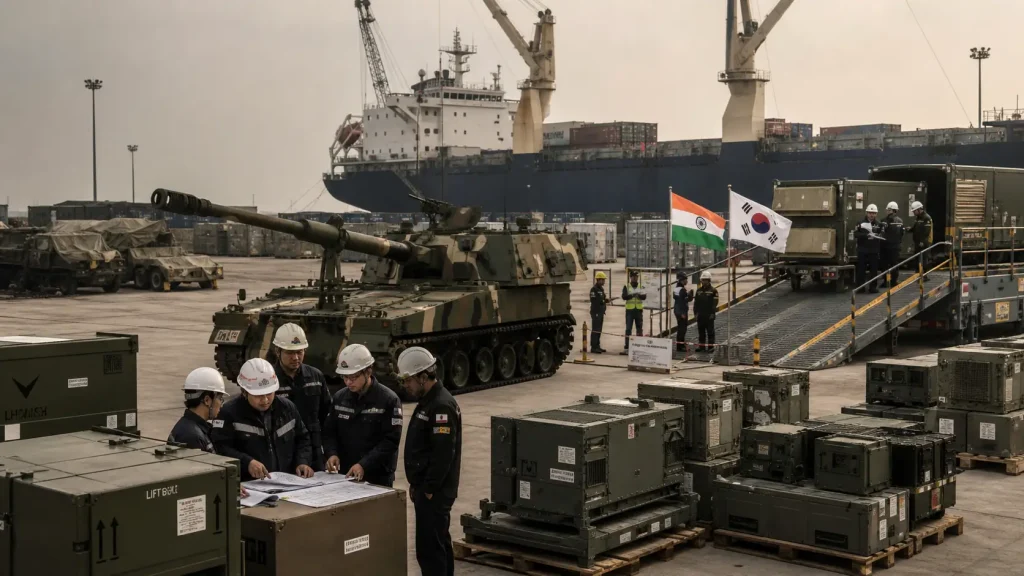
Additionally, this approach serves as a tool to implement President Trump’s South Korea strategy—particularly forcing Seoul to commit to record defense spending and to form an official defense alliance with Japan.
The White House’s intention to conclude an agreement with Kim Jong Un that would de facto recognize his nuclear status is confirmed by Donald Trump’s January statement.
He expressed readiness to involve “other states” in arms-control negotiations between the United States, Russia, and the PRC—explicitly meaning the DPRK.
Notably, in the same context the current administration has removed all references to the North Korean threat from new U.S. defense doctrines.
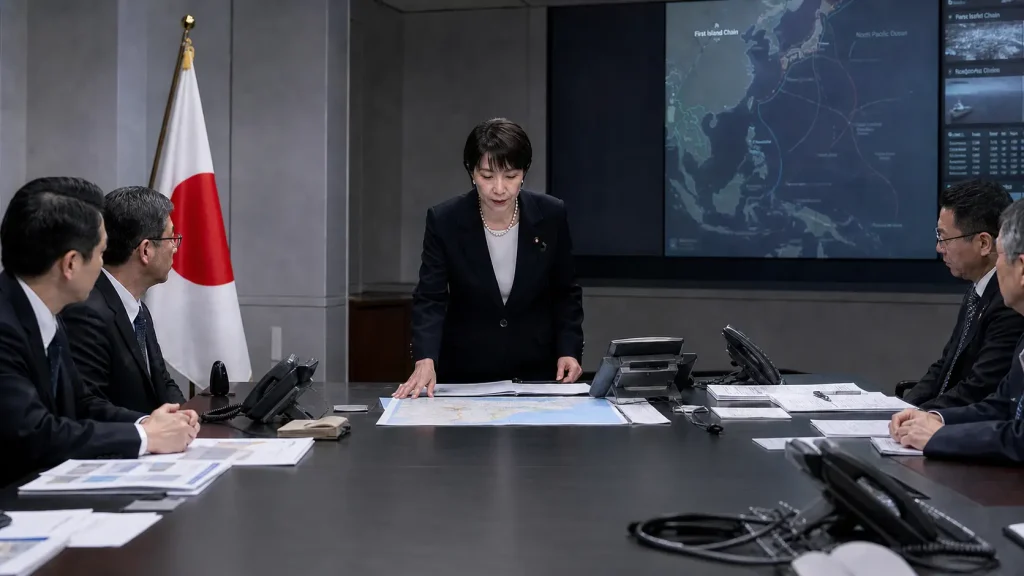
Synchronously with Washington, at the end of January 2026, Japanese Prime Minister Sanae Takaichi spoke out. Following the U.S. President, she publicly referred to the DPRK as a “nuclear state”—an unprecedented step in Japanese policy despite the government’s formally unchanged official position.
Such coordinated actions may indicate an unpublished compromise between the United States and Japan ahead of Donald Trump’s negotiations with Kim Jong Un.
Tokyo’s interest serves a dual purpose: to push South Korea toward a formal military alliance and to tactically obstruct Xi Jinping’s efforts to form a full-fledged trilateral alliance with the DPRK and Russia.
It is believed this context will be on the agenda of negotiations between President Trump and Prime Minister Takaichi during her spring visit to Washington.
Direct dialogue with Washington demands a level of internal control from Kim Jong Un that he has not yet demonstrated. Reaching an agreement with the United States on nuclear-status recognition, while bypassing Beijing and Moscow, carries the risk of sabotage by nomenklatura groups.
These groups have maintained independent channels to the PRC and Russia since the Kim Jong Il era. Such ties constrain the current leader’s ability to pursue foreign policy without facing potential internal opposition.
Evidence of this process can be seen in the strengthened role of Kim Jong Un’s sister, Kim Yo-jong. She was appointed head of the Propaganda and Agitation Department of the Workers’ Party of Korea, a key department responsible for maintaining ideological loyalty and ensuring elite loyalty to the supreme leader.
Another significant signal is the appointment of Kim Jong Un’s young daughter, Kim Ju-ae, to a leadership position within the DPRK’s Missile Forces.
Beyond the obvious context of North Korean nepotism, these steps have a profound pragmatic purpose: to conduct a “loyalty test” among party and military officials.
In particular, the unprecedented public elevation of a woman and a child in a conservative patriarchal society allows Kim Jong Un to identify hidden opponents who might voice disagreement with his decision.
At the same time, Kim Ju-ae is not necessarily the final successor. Her figure may be used as a tool for internal selection and the detection of concealed opponents within the nomenklatura.
The reasons for such categorical power consolidation—accompanied by the replacement of leadership in the Guard Command (responsible for Kim’s personal security) out of fear of assassination by foreign agents—are directly linked to Pyongyang’s ambitions regarding negotiations with Washington.
Through this complex of actions, Kim Jong Un is creating the domestic political foundation for establishing direct diplomatic channels with the United States, particularly counting on the restoration of personal diplomacy with the Donald Trump administration.
This does not mean opening a full-fledged embassy but rather creating a mechanism for the controlled admission of American delegations to Pyongyang without coordination with the PRC and Russia.
Pyongyang requires this in order to create a roadmap for lifting economic sanctions, should the United States agree to recognize North Korea’s nuclear program.
Achieving this outcome depends on the absence of any internal opposition that could undermine the process. Additionally, this prospect aligns with Kim’s internal desire to assert himself as a “self-sufficient autocrat,” similar to leaders like Xi or Putin.
From the American perspective, visits to Pyongyang will have no strategic significance. At the same time, they are viewed as a tool of tactical maneuvering necessary for Donald Trump’s broader geopolitical goals.
In particular, such activity will allow Washington to artificially deepen distrust between the DPRK and the PRC, undermining Beijing’s monopoly on determining North Korean dynamics.
Maintaining a direct communication channel with Pyongyang can also reduce the intensity of North Korean provocations—from missile launches toward Japan to the DPRK’s participation in aggression against Ukraine.
Ultimately, this will enable the United States to sharpen its regional focus on the direct Chinese threat and continue transforming USFK into a unit oriented toward containing the PLA.
A potential vulnerability in U.S. foreign policy remains the lack of its own expert community with deep, professional understanding of the Kim regime.
Until 2016, Washington had no direct access to high-ranking North Korean defectors—particularly until the defection of DPRK Deputy Ambassador to London Thae Yong-ho.
The threat of systemic distortion in the analytical data underpinning U.S. foreign policy is recognized by the Donald Trump administration, and particularly by Secretary of State Marco Rubio.
Understanding the risks of relying on compromised experts, Washington is initiating changes in intelligence-collection approaches.
It is expected that the fundamental basis for developing new tactics of engagement with the Kim regime will be verified information obtained directly from North Korean defectors, who over the past decade have substantially strengthened trusted ties with the U.S. government.
Washington’s analytical vulnerability is compounded by Seoul’s passivity. The Lee Jae-myung administration continues to favor concessions to Pyongyang, including the possible repeal of national-security legislation that has been in force for decades. This aligns with the Democratic Party of Korea’s “Sunshine Policy” doctrine.
In practice, this paradigm means Seoul will adopt a position of non-interference and will not obstruct any prospects for direct communication between Donald Trump and Pyongyang.
Although such geopolitical inertia clearly does not satisfy the White House, Washington is betting on asymmetric steps.
The U.S. government believes that the strategic reorientation of USFK toward containing the direct Chinese threat will serve as a significant security trigger for South Korea.
This shift is expected to increase societal vulnerability and strengthen public support for the right-wing political bloc, which had suffered substantial reputational damage following the crisis involving former President Yoon Suk-yeol.
Under these conditions, the potential normalization of communication channels between Washington and Pyongyang is not an attempt to “restart” security settlement on the Korean Peninsula.
It is an instrumental reconfiguration of the regional balance of power with a clear orientation toward containing the PRC as the United States’ principal strategic opponent.
De facto recognition of the DPRK’s nuclear status within a controlled negotiation format will not mean legitimization of the North Korean regime within a democratic framework, as most European and Asian states will continue to maintain sanctions against Pyongyang.
Instead, it will create an additional lever of influence for Washington over Beijing, destroying the PRC’s monopoly on using the North Korean factor to achieve its expansionist goals.
The key outcome of this strategy should be the recalibration of security architecture in the northern Pacific: the transformation of USFK into a component of PLA containment and the forcing of Seoul toward strategic alignment with the United States and Japan.
For Pyongyang, direct dialogue with the United States is primarily a means of gaining foreign-policy attention necessary to reinforce Kim Jong Un’s sense of “self-sufficiency” as an autocrat.
Accordingly, the DPRK is not interested in liberalizing access for democracies to its jurisdiction; instead, it seeks deeper integration into the Chinese economic-autocratic infrastructure alongside Russia, Belarus, and the rest of their allies.
The American plan does not prioritize dismantling the North Korean nuclear program. Instead, its focus is on disrupting communication within the autocratic axis.
Establishing a direct channel with Pyongyang diminishes Beijing’s monopoly over the North Korean issue, complicates Moscow and Beijing’s use of the DPRK as a transit point for joint military-technological exchanges, and forces Xi Jinping to divert diplomatic and intelligence resources.
Together, these actions broaden the window for U.S. preparations for a long-term confrontation with the PRC.
The course of events in March–April 2026 will determine whether Washington manages to convert the Pyongyang channel into a tactical advantage before Trump’s meeting with Xi Jinping.
The pace of preparations for the summit with Kim Jong Un depends directly on the White House’s assessment of how much this agreement can weaken Beijing’s negotiating position in April.