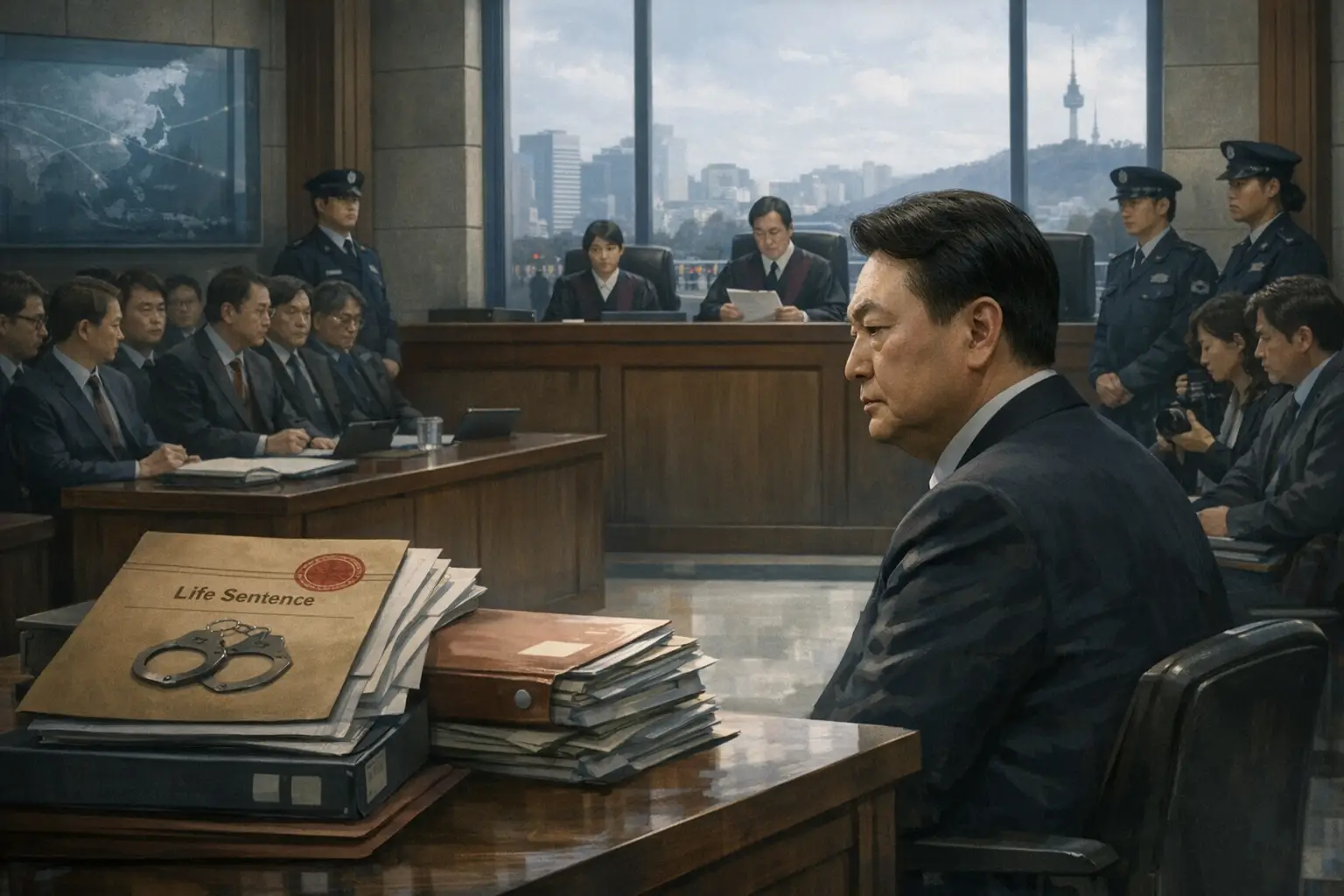
On February 19, 2026, the Seoul Central District Court announced the verdict for former South Korean President Yoon Suk Yeol in the case regarding the imposition of martial law on December 3, 2024.
Having found him guilty of attempting a coup d’état, the court imposed a sentence of life imprisonment in a strict regime facility (labor colony). At the same time, the prosecution insisted on the application of the death penalty—the highest measure of punishment, which has not been applied since 1997.
In addition to former President Yoon himself, the court sentenced former technocratic Prime Minister Han Duck-soo to up to 23 years in prison. Verdicts were also announced for representatives of Yoon’s closest political circle—in particular, the former Minister of Defense, the head of the intelligence service, and the leaders of police agencies.
Depending on the degree of involvement in the events of December 3, 2024, they received sentences ranging from 3 to 30 years in prison. In addition, within another proceeding, the court sentenced Yoon Suk Yeol’s wife to 20 months of arrest.
Thus, this involves the imprisonment of the entire presidential family, which is an unprecedented case in South Korean political history.
Yoon’s verdict goes beyond the internal justice of a U.S.-allied state. Yoon was the architect of the trilateral U.S.–Japan–Korea alliance and the most pro-American leader in Seoul in recent decades.
His removal from the political field creates structural uncertainty: the ability of the pro-American flank to maintain influence without a consolidating leader is not obvious, while Beijing is consistently building up tools to weaken the American security architecture in the Pacific and views polarization in Seoul as an operational opportunity.
Chinese state media systematically present Yoon’s verdict as evidence of the instability of the pro-American course, broadcasting this message to audiences in Southeast Asia: “alliance with Washington ends in prison for your leaders.”
At the same time, the PRC is increasing economic pressure—in 2025, China remains Korea’s largest trading partner with a turnover of over $300 billion, and any restriction of access to the Chinese market becomes a tool of influence on Seoul’s internal politics.
The DPRK, in turn, uses the period of political turbulence to ramp up missile tests—under the logic that internal chaos in Seoul reduces the likelihood of a coordinated response.
The basis for the decision was the court’s recognition that during the six-hour martial law, Yoon Suk Yeol de facto prepared actions aimed at changing the constitutional order. The key evidence for this, the court called the deployment of internal troops units at the parliament building as a tool of pressure on the legislative branch.
At the same time, in the reasoning part, it was emphasized that these steps did not have signs of a long-term planned operation, but were a situational reaction based on the conviction of the former president’s entourage about an alleged conspiracy of the opposition with foreign forces.
In particular, it referred to claims regarding the possible coordination of the Democratic Party of Korea led by current President Lee Jae-myung with agent structures of the PRC and the DPRK.
Although the potential imprisonment of Yoon Suk Yeol will not have an immediate effect on the U.S., in the medium term, deep societal polarization will significantly change the electoral landscape of South Korea. This, in turn, will inevitably adjust the architecture of U.S.–South Korean relations.
According to a February poll by Korea Research International, 18% of South Koreans oppose the imprisonment of the former president, considering him innocent; among the population under 30, this is about 50%.
At the same time, 71% of respondents expressed their position regarding the innocence of his wife Kim Keon Hee, and another 36%—regarding the absence of guilt of former Prime Minister Han Duck-soo. These figures indicate the presence of a stable “core electorate” for Yoon Suk Yeol even at the height of the crisis.
Such a level of loyalty sharply contrasts with the situation in 2016, when support for former President Park Geun-hye amid a corruption scandal fell to a critical 4%, and her Saenuri Party self-dissolved.
Unlike the broader circle of supporters of the opposition People Power Party (whose ratings, according to Ipsos and Realmeter, are in the range of 23–36%), Yoon Suk Yeol’s loyalists form a specific right flank of South Korean politics.
In particular, their ideology is based on the thesis about the falsification of the 2024 parliamentary elections through Chinese interference and the belief that the Democratic Party of Korea maintains corrupt ties with the PRC and the DPRK.
This narrative has gained particular popularity among the youth. Inspired by the example of Donald Trump—primarily his return to the White House after the 2020 defeat and the events around the Capitol—this group continues to transform into a distinct anti-Chinese movement.
Throughout 2025, these activists held dozens of large-scale actions in Seoul and other megacities, demanding stricter migration policies toward PRC citizens and accusing Xi Jinping of destabilizing the internal political situation.
Considering that over 80% of South Koreans view the PRC negatively (Pew Research Center, 2025), Yoon Suk Yeol’s political legacy could become the foundation for a significant electoral transformation ahead of the 2028 parliamentary elections.
In particular, the discrediting of leader Lee Jae-myung through the “Chinese factor” is capable of forming a new geopolitical framework that will be increasingly oriented toward the U.S. and Japan.
This trend will also be facilitated by the traditional decline in the popularity of the Democratic Party of Korea at the end of their power cycle, as well as the fact that Lee Jae-myung closed five criminal proceedings against him after assuming presidential powers.
At the current stage, the Donald Trump administration will refrain from reacting to the persecution of representatives of the right-wing opposition.
This is primarily due to the achievement of the “grand deal” with Lee Jae-myung and the need to maintain trilateral consensus with Japanese Prime Minister Sanae Takaichi.
At the same time, the White House is dissatisfied with the process against Yoon Suk Yeol, who still has significant non-public support among both Democrats and Republicans.
This means that in the event of complications in interaction with Seoul—in particular, regarding the procedure for implementing the “grand deal”—Washington may apply levers of pressure in favor of Yoon Suk Yeol’s supporters.
This is understood in the People Power Party, whose new chairman Chang Dong-hyuk has already emphasized the lack of evidence for accusations against Yoon of attempting to overthrow the constitutional order (coup).
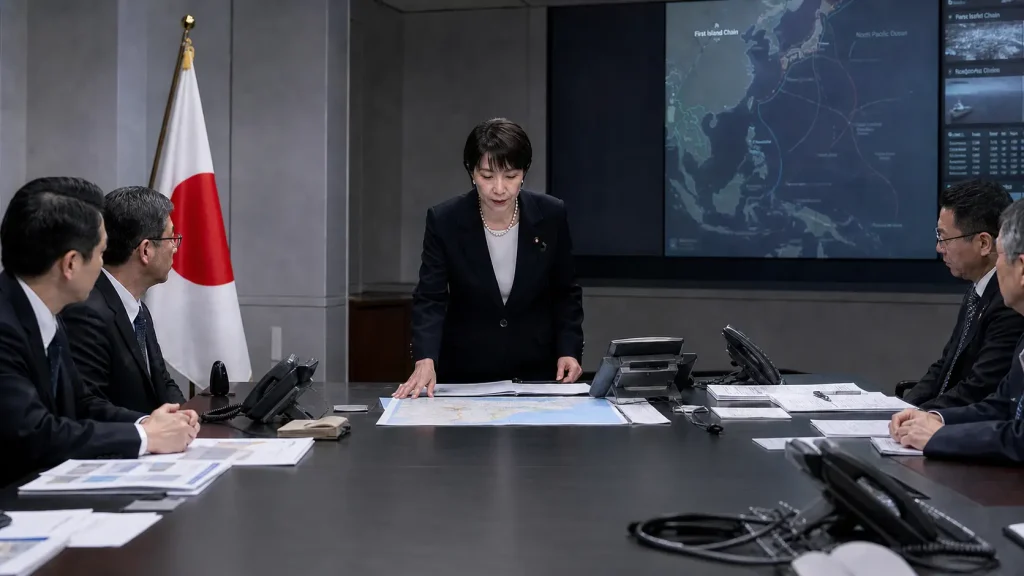
A similar strategy will be adhered to by the Sanae Takaichi cabinet. After the historic victory in the snap elections on February 8, Tokyo has formally set a course for remilitarization and tough containment of autocracies.
For now, Japan’s Liberal Democratic Party (LDP) will support the compromise reached by Vice President Taro Aso and Lee Jae-myung regarding deepening strategic cooperation.
However, any provocations from the Democratic Party of Korea will force Tokyo to change tactics. In such a case, the LDP will direct its political pressure to support Yoon Suk Yeol’s supporters, whom Japanese elites still view as an unfairly punished ally.
From a deeper perspective, such a development of events is a consequence of complex processes that have defined the very essence of South Korean politics.
First, unlike Japan, South Korean society has not gone through a stage of postwar stabilization in the classic Western sense.
Despite the desire of Korean politicians to build an institutionally capable nation-state, the end of the Japanese period turned into an artificial division of the peninsula, consolidated by the 1950–1953 war and subsequent ruin.
Thus, the autocratic regime of Syngman Rhee (1948–1960), oriented toward labor mobilization for state reconstruction, was replaced by a prolonged phase of military dictatorship (1961–1987).
This means that South Korea’s democratic tradition is historically short-lived and vulnerable to unprocessed societal traumas, such as resentment toward Japan and fear of restoring autocratic rule.
There is a deep generational divide: the oldest generation still remembers the period of Japanese mandate; the elderly and part of the adult population were socialized under wartime conditions and an unchanging autocratic model of governance; the youth grew up in an era of economic breakthrough, democratization, and globalization.
Such unevenness of historical experience has created space for chronic political turbulence and a prolonged crisis of self-identification, characteristic of most societies with deep psychosocial traumas.
Second, the generation of South Koreans now aged 40 to 80 has formed a unique psychology of survival, oriented toward enrichment and success under conditions of harsh autocracy and forced industrialization.
Relying on traditional Confucian clanism but rejecting Japanese concepts of social harmony (wa) as colonial legacy, they created a hyper-competitive environment in which the struggle is for personal and group benefits, not for societal interest.
The catalyst for this process was deep social stratification: while some strata viewed the military dictatorship as a social elevator and source of resources, others saw it as an existential threat.
It was this model of interaction that formed the basis for the success of chaebols—dynastic-corporate giants (Samsung, Hyundai, etc.).
Although South Korean conglomerates emulated the structure of Japanese zaibatsu (Mitsubishi, Toyota, etc.), their goal was not so much “serving the nation” or restoring corporate dignity, but gaining monopoly privileges in a fierce struggle with competitors.
As a result, a specific “social cruelty” formed, uncharacteristic of the development models of Japan or Taiwan.
The mentioned generation projected its own development model onto the youth, transforming it into social Darwinism. In particular, it forced the new generation into exhausting competition, institutionalized in the “Suneung” system—a harsh academic selection that determines a person’s future in one day.
Thus, this paradigm of “success at any cost” spread to culture (the industrial conveyor of K-POP), sports, and careers.
Sacrificing mental health and universal values for rating indicators, society faced an unprecedented demographic crisis and deep societal polarization, which the youth often describes as “Hell Joseon”; those who seek to avoid such a future increasingly send their families to the “free world”—primarily to the U.S., Australia, or the United Kingdom.
Third, the described sociopsychological conjuncture led to the formation of one of the highest levels of political polarization in the world.
In South Korea, a deep divide formed between right and left, positioned as “us” and “them”; under such a model of relations, any interaction with the “hostile” bloc is harshly stigmatized and subjected to pressure—from using the law enforcement system to persecute opponents to radical societal ostracism. The nature of such a divide lies in antagonistic historical paradigms.
Left-wing forces, now represented by the Democratic Party of Korea and Lee Jae-myung, trace their roots to the anti-colonial and pro-communist movement. The modern history of this bloc is based on the legacy of overthrowing the military dictatorship in 1987 and trade union struggle against corporatism.
Consolidating around the ideology of “protecting the victim,” South Korean leftists systematically use traumas of oppression to gain electoral advantage. Under such logic, Japan remains the “eternal aggressor,” the military—”oppressors” who divided the nation, and corporations—”heartless exploiters.”
Accordingly, the DPRK is presented as a “lost brother” and victim of circumstances, with which peaceful unification is necessary, and the PRC and Russia are viewed as a historical counterweight to Japanese and American influence, with which balance must be maintained for the sake of protecting sovereignty and preventing a new war.
In contrast, right-wing forces, to which the People Power Party and Yoon Suk Yeol belong, rely on the legacy of groups that defended statehood during the Korean War against aggression from the DPRK, PRC, and USSR.
Having formed a still-relevant consensus between the army and corporations, right-wing forces argue that the nation’s survival depends solely on economic power and security.
According to such logic, the north of Korea is occupied territory, the DPRK—a “terrorist regime,” and the PRC and Russia—a direct threat to national sovereignty.
Accordingly, South Korea—not a “victim,” but a “defender of order”—must expand its alliance with the United States and Japan, preparing for a hot phase of the conflict that formally has not ended since 1953.
The dichotomy of approaches between right and left in South Korea ultimately led to a stable societal conviction that the victory of any bloc inevitably leads the state to “national catastrophe.”
Mutual delegitimization has become the primary tool of political struggle. While Lee Jae-myung’s camp accuses Yoon Suk Yeol of trying to revive the era of military dictatorship and a police state, former President Yoon consistently portrays Lee Jae-myung as a pro-Chinese figure seeking to compromise national sovereignty.
Finally, the decisive determinant of the current crisis was the personal factor, which accumulated all the aforementioned sociocultural contradictions.
Having won over Lee Jae-myung in the 2022 elections with a historically minimal margin of 0.73%, Yoon Suk Yeol established himself as the most pro-American leader in South Korea’s recent history.
However, his strategic goal was not merely following Washington’s course, but a radical break with the status quo that had dominated the country’s political and economic architecture since democratization.
The foundation of his worldview was laid by a long career in the prosecution—an institution that is formally apolitical but in essence acts as the main tool of political struggle.
Holding the position of Prosecutor General, Yoon formed an image of an uncompromising “arbiter of justice,” conducting high-profile investigations against the highest echelons of power, including former President Park Geun-hye and Democratic Party functionaries. It was this prosecutorial messianism that became his main political capital.
Yoon’s foreign policy vector, in particular the building of the trilateral JAROKUS alliance with Joe Biden and Fumio Kishida, was based on the same ideological vision of global justice, where South Korea had to cease the geopolitical balancing characteristic of the left bloc and become a “pillar state” of the democratic world.
In this doctrine, any compromise with authoritarian regimes was regarded as weakness, and internal opposition—as “anti-state forces” driven by hidden Marxism and linked to Beijing’s interests.
Under such logic, the events of December 3, 2024, became for Yoon Suk Yeol not a criminal act, but a “necessary step toward national cleansing” from destructive elements that hindered the implementation of his vision of national salvation through months-long parliamentary paralysis.
As a result, the attempt at a forceful resolution of the political deadlock became the logical conclusion of his psycho-emotional paradigm, where legality is equated with personal vision of moral duty.
However, the rapid realization of the failure of this initiative and pressure from civil society forced him to de-escalate, which ultimately led to the quick cancellation of martial law and public repentance, which, however, only underscored the gulf between the ideological ambitions of the right and left blocs.
Under such circumstances, the imprisonment of Yoon Suk Yeol became a bifurcation point in the confrontation between the left and right camps, which in a broader dimension will intensify the fundamental split of the entire South Korean society.
The forecasted decline in the Democratic Party’s ratings, expected in the second half of 2026, will inevitably be accompanied by the revival of discourse regarding the closed criminal cases against Lee Jae-myung.
This will become a catalyst for support of the People Power Party and its most right-wing faction, represented by Yoon Suk Yeol’s followers.
If the PRC or DPRK resorts to military-political escalation before 2028, the South Korean right flank may receive the same level of consolidated support that the Japanese LDP demonstrated amid Xi Jinping’s aggression.
At the same time, the Democratic Party of Korea, which continues to call for the execution of Yoon Suk Yeol and promotes a bill banning his pardon, risks becoming a hostage to its own radicalism.
Such a “scorched earth” strategy may lead to a rapid loss of electoral sympathies, as happened with left-wing forces in Japan, and ultimately the worst scenario of imprisonment for President Lee himself.
Despite dissatisfaction with Yoon Suk Yeol’s imprisonment, the Donald Trump administration will adhere to a strategy of remote observation, maintaining the status quo and avoiding open support for the right-wing opposition.
At the same time, it will focus on monitoring Lee Jae-myung’s actions regarding the implementation of the “grand deal” and await the results of the local elections on June 3, 2026, as a factor that will determine the further internal political and global perspective of South Korea.