On January 26, 2026, President of the European Commission Ursula von der Leyen and Prime Minister of India Narendra Modi signed a Free Trade Agreement between the EU and India, concluding an almost twenty-year negotiation process.
The document provides for the mutual elimination of tariffs on more than 90% of tariff lines, forming a “seamless” market with a combined population of over 2 billion consumers.
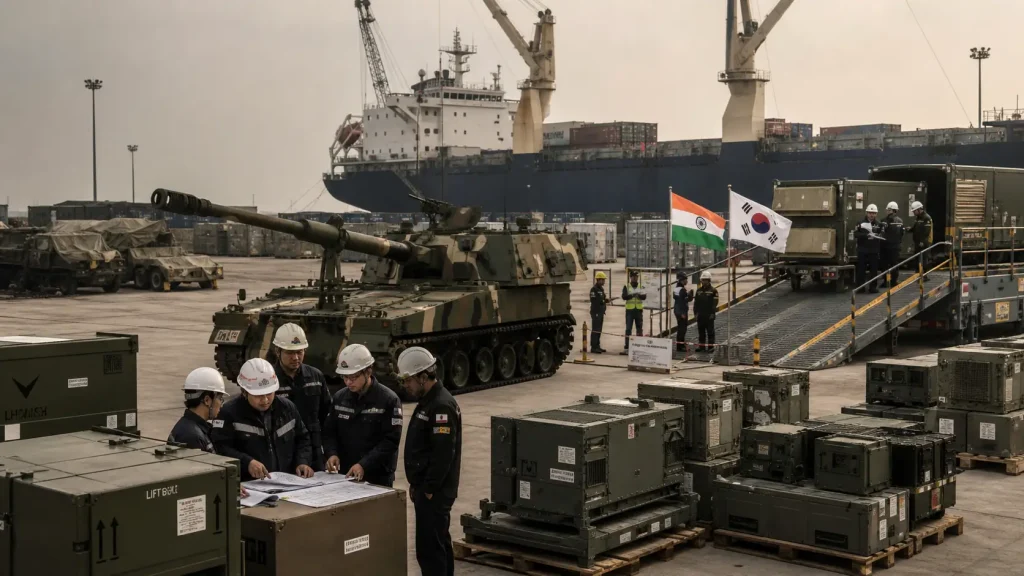
The entry into force of this regime is expected from January 2027. In parallel, the parties signed a Partnership Agreement in the field of security and defense. According to it, the EU and India will deepen cooperation in the military-industrial complex, maritime security, and countering hybrid threats.
Subsequently, on January 29, President of the European Council Antonio Costa and President of Vietnam Luong Cuong announced the elevation of bilateral relations to a comprehensive strategic partnership.
Referring to their Free Trade Agreement (2020), they outlined as a priority the expansion of strategic interaction in the areas of critical natural resources, energy, infrastructure, semiconductors, and artificial intelligence.
Despite the fact that the signing of these agreements had been prepared since 2022, their finalization chronologically coincided with the creation of a free trade area between the EU and the South American bloc MERCOSUR (January 17)—a process that also lasted almost 25 years.
In aggregate with existing EU agreements with Japan and South Korea, this indicates the formation of a stable, diversified economic-security network of the European Union, capable of ensuring the bloc’s autonomous development without critical dependence on the PRC or the US.
For the Donald Trump administration, the expansion of the EU’s economic subjectivity has an ambivalent character.
On the one hand, Washington seeks to maintain control over the level and formats of the European Union’s involvement in markets of strategic interest to the US—primarily Latin America and India—which conditions a negative view of the EU’s recent steps.
On the other hand, in President Trump’s administration, they realize that the EU’s non-Chinese diversification of foreign economic ties is a predictable line of behavior for Brussels, which does not cross American “red lines.”
Since such actions fit into the logic of the policy of “strategic decoupling” between the US and the PRC and do not contribute to strengthening the Chinese economy, the White House views them as an element of the transactional negotiation field; that is, considers them acceptable.
The key subject of concern for the US in this regard is not the diversification steps of the European Commission, but the decisions of individual national governments.
This primarily concerns the pre-planned cycle of visits by leaders of democratic states to the PRC throughout January-February 2026, which has recently acquired an anti-American coloring.
In particular, this applies to the prime ministers of Canada and Finland—flagship states in the Arctic security system—as well as the leadership of the United Kingdom, Germany, and Ireland.
In a broader perspective, such a conjuncture illustrates a structural gap between the position of the European Commission, on the one hand, and national leaders and European factions—on the other.
If Ursula von der Leyen consistently realizes the need to implement a policy of “strategic decoupling” between the EU and the PRC to reduce continental dependence on autocratic supply chains and prevent a repeat of a crisis similar to the one that arose after Russia’s full-scale invasion of Ukraine, she will pursue that course.
At the same time, a group of European leaders led by French President Emmanuel Macron chooses unsystematic balancing between the US and the PRC in order to preserve short-term economic and political stability.
The logic of the French approach is based on the assumption of the postponement of a major war in the Euro-Atlantic and Indo-Pacific for a decade ahead—that is, beyond the current political mandates—and, accordingly, ignores the need for long-term strengthening of the general democratic security network.
Because of this, the Donald Trump administration perceives the current state of affairs in Europe as strategically shortsighted, consistently encouraging it to accelerate the expansion of responsibility for its own security.
This is confirmed by the December position of the US Ambassador to the EU Andrew Puzder, according to which Europe is strategically and culturally vital to the United States, serving as a pillar both for American prosperity and for the development of the world economy.
A telling example of the divergences in approaches within the EU was the repeated blocking of the ratification of the “grand deal” with the United States at the level of the European Parliament.
At the end of January 2026, the political groups S&D, Renew, and Greens, appealing to the Greenland issue, initiated the inclusion in the text of the agreement of a provision that would provide for its automatic annulment in the event of the resumption of “American threats to the territorial sovereignty” of European states.
In contrast, the EPP group, to which Ursula von der Leyen belongs, insisted on the opposite approach—that is, on an accelerated ratification procedure, about which representatives of the European Council agreed after Donald Trump’s promise to resolve Arctic misunderstandings through negotiation.
The delay in adopting a decision on the “grand deal” between the US and the EU, scheduled for February 23-24, 2026, is viewed by the White House as an indicator of the political weakness of traditional European elites.
In circles close to Donald Trump, the conviction dominates that the resistance from individual European Parliament factions is primarily due to the falling electoral ratings of their key leaders, rather than real concern about possible “US interference” in European sovereignty.
This primarily concerns Danish Prime Minister Mette Frederiksen and Spanish Prime Minister Pedro Sánchez (S&D), French President Emmanuel Macron (Renew), as well as the “Greens” political group as a whole, which as of the beginning of 2026 is effectively deprived of government representation in EU member states.
As of January 2026, Denmark is experiencing a systemic decline in ratings of socialist and social-democratic forces, including the Socialdemokraterne party led by Mette Frederiksen.
In contrast, support for the liberal spectrum—Venstre, Moderaterne, and Liberal Alliance—is growing, as well as, though to a lesser extent, conservative forces.
Given the holding of the next parliamentary elections in October 2026, Mette Frederiksen’s team is increasingly using its influence in the S&D group to promote an anti-American agenda around the Greenland issue as a tool for mobilization and partial restoration of the electoral base.
A similar dynamic is observed in Spain, where there is an increase in the rating of the conservative People’s Party (Partido Popular) and a gradual decline in support for the Spanish Socialist Workers’ Party (PSOE) led by Pedro Sánchez.
Taking into account that the next parliamentary elections in Spain are scheduled for August 2027, left-centrist forces in the orbit of the current prime minister are trying to integrate anti-American discourse into their political strategy in advance in order to weaken traditionally pro-American groups. Such tools have already been used by them during the first Donald Trump administration.
The worst electoral configuration is shaping up for Emmanuel Macron, who, completing his last term, has already lost his parliamentary majority and risks finally falling out of the center of political influence following the 2027 presidential elections.
According to a Verian Group study at the end of 2025, the absolute favorite in the race is 30-year-old Jordan Bardella from the National Rally (RN), who is already accumulating about 37% support and could significantly increase his ratings if Marine Le Pen refuses to run.
Further behind with a significant gap are former Prime Minister Édouard Philippe from the Republicans (LR) with 17% and Raphaël Glucksmann from Place Publique (PP) with 13%.
Despite former Prime Minister Gabriel Attal from Renaissance (RE) having about 11% support and claims to the role of Emmanuel Macron’s successor, his candidacy looks structurally uncompetitive: it is displaced by the prospect of nominating a single candidate from the left camp, as well as centrist figures less burdened by the toxicity of Macronism.
Under such conditions, the approach of the French municipal elections from March 15-22, 2026, which are traditionally viewed as a marker for the further presidential campaign, has become one of the main factors in the activation of Emmanuel Macron’s anti-American rhetoric—particularly during the turbulence regarding Greenland.
This also prompted Donald Trump to publicly state that from 2027, France will not be under the control of Renaissance, and his team—to increase attention to Jordan Bardella as the favorite of the future presidential campaign.
From the perspective of the Donald Trump administration, the key flaw in the French approach is the attempt to impose on European states, the United Kingdom, and Canada a position that rapprochement with the PRC can serve as a tool of pressure on the US in order to soften their tough transactional line.
Similar concerns are shared by the European Commission, which has repeatedly emphasized the need to find common denominators with the United States and the impossibility of renewing extensive European-Chinese relations until the end of Russia’s war against Ukraine.
The latest confirmation of this was the statement by the head of the European diplomatic service Kaja Kallas on January 30, according to which the EU will not seek to improve ties with the PRC due to US pressure, as Brussels is not inclined to renew dependence according to the “Russian model” of 1991-2022.
At the same time, neither Ursula von der Leyen nor Kaja Kallas—consistent supporters of a tough anti-Chinese line—have tools for direct influence on the growth of populist and opportunistic tendencies in the Euro-Atlantic space.
Under these conditions, their practical response to the destructive French dynamics is the accelerated promotion of strategic economic agreements with alternative jurisdictions—primarily India, Vietnam, and the South American bloc MERCOSUR—which are capable of continuing the EU’s course toward “strategic decoupling” from the PRC, taking into account the transactional pressure of the US.
In a structural dimension, this means the preservation of tension between the strategic orientation of the European Commission and the unsystematic maneuvering of individual national leaders of the EU in the medium-term perspective.
At the same time, Ursula von der Leyen is trying to lay a geopolitical foundation that will become the core of transatlantic relations in the post-Trump period and simultaneously a tool for restoring the positions of traditional political elites of the European Union.
A key element of this calculation is the realization that the phased implementation of the “de-risking” policy in interaction with the PRC will allow demonstrating tangible macroeconomic results at national levels by 2029—that is, by the next European Parliament elections.
The basis for such conviction serves statistically confirmed examples of the positive effect of reducing economic dependence on the PRC, including Taiwan’s economic growth in 2025 by almost 9%, which is the highest indicator in the last fifteen years.
It became possible thanks to the targeted policy of the Democratic Progressive Party on diversifying supply chains and replacing the PRC as a key donor of technological products.
Additionally, Ursula von der Leyen assumes that the trade deficit between the EU and the PRC has a structural character and is insurmountable, given Beijing’s unwillingness to increase purchases of European goods on a scale comparable to the export of Chinese products to the markets of the European Union.
A similar logic is traced in the economic perspective of relations between the PRC and the United Kingdom.
Despite Prime Minister Keir Starmer’s conviction in the possibility of stabilizing the British economy by expanding partnership with Beijing, bilateral trade continues to be characterized by a persistent deficit in favor of the PRC with low prospects for transformation.
From the perspective of the Donald Trump administration, Keir Starmer’s decision to make a visit to the PRC for negotiations with Xi Jinping, in parallel with consenting to the resonant placement of the PRC embassy in London in the building of the former Royal Mint, is a consequence of the “political agony” of the Labour Party.
This is confirmed by the US President’s comment on January 30, according to which the nature of Prime Minister Starmer’s visit to Beijing is “extremely dangerous.”
According to a Survation group poll from January 28-29, 2026, the Labour Party’s ratings continue to decline, dropping to 18%. At the same time, the Conservative Party maintains growth in support to 20%, and the Liberal Democrats and Green Party—to 12% each.
The main favorite in potential parliamentary races, however, remains the populist Reform UK, which has recorded 31% voter support and demonstrates further positive dynamics.
Under such conditions, traditional political forces of the United Kingdom may be forced to consider a coalition scenario in the event of early dissolution of parliament—that is, to take a step to which none of the key parties is currently ready.
The first visit by a British prime minister to the PRC since 2018, which took place from January 28-31, 2026, was calculated on the possibility of preventing potential re-elections.
In particular, it aimed to stimulate economic exchanges between the states in order to improve not so much the trade as the electoral conjuncture—primarily through accelerating the creation of new jobs.
For this, Keir Starmer brought to Beijing a delegation of about 50 leaders of leading British corporations, including HSBC, AstraZeneca, and Rolls-Royce.
At the same time, the vagueness and declarative nature of the agreements reached following the negotiations indicate that London is not ready for a full renewal of strategic economic ties with Beijing.
This is also confirmed by Prime Minister Starmer’s subsequent visit to Japan, which helped him avoid joining the “subversive group” of Mark Carney and Emmanuel Macron in the eyes of Donald Trump.
Such a complex dynamic in the triangle between the US, the EU, and national governments will persist at least until the European Parliament’s decision on the ratification of the “grand deal” at the end of February 2026.
At the same time—from February 24-27—a visit to Beijing by German Chancellor Friedrich Merz is planned, who is also concerned about the trade imbalance with the PRC.
Given the growing dissatisfaction of the White House with the steps of France, Canada, the United Kingdom, as well as a number of smaller European states, it is precisely the rhetoric and signals that Chancellor Merz will choose during this visit that will largely determine the status quo that will form in the Euro-Atlantic space in the short-term perspective.
In aggregate, the facts presented indicate that the European Union enters 2026 in a state of structural Euro-Atlantic asymmetry, where the strategic line of the European Commission increasingly diverges from the tactical interests of individual national governments.
While Brussels accelerates the formation of a diversified economic-security architecture through agreements with India, Vietnam, and MERCOSUR, part of European leaders are trying to use the PRC as a tool for short-term negotiation pressure on the US and renewal of electoral positions.
For the Donald Trump administration, such behavior serves as a manifestation of the internal political weakness of traditional Euro-Atlantic elites.
Because of this, Washington separates the actions of the European Commission—which fit into the logic of “strategic decoupling” from the PRC—from the maneuvers of France, the United Kingdom, Canada, and a number of other states that are increasingly openly exploiting anti-American discourse for domestic political purposes.
The key factor in the internal destabilization of the Euro-Atlantic conjuncture remains France, whose attempt to impose on the European space a model of balancing between the US and the PRC is based on the assumption of the postponement of a major war and ignores the need for long-term strengthening of the transatlantic security network.
At the same time, the electoral dynamics in France, Denmark, Spain, and the United Kingdom indicate that anti-American rhetoric is increasingly used as a compensator for the decline in support for ruling forces, rather than as an element of consistent foreign policy.
Under these conditions, the strategy of Ursula von der Leyen and Kaja Kallas boils down to creating an irreversible economic reality that will reduce the EU’s dependence on the PRC regardless of the behavior of individual national governments.
Agreements with India, Vietnam, and MERCOSUR thus perform both a trade and stabilizing function, forming the basis for preserving transatlantic interaction under conditions of US transactional pressure.
Under such conditions, 2026 will become a period of consolidating a dual status quo in the Euro-Atlantic space: on the one hand, there will be a gradual strengthening of the EU’s strategic autonomy in partnership with the United States, on the other—a growth in fragmentation of national policies regarding economic security.
Given that the European Union’s ties with the markets of the Indo-Pacific and Latin America can serve as one of the key guarantees for reducing the attractiveness of the PRC as an alternative to the US, the Donald Trump administration took this conjuncture into account.
This consideration influenced negotiations with Narendra Modi and the newly appointed General Secretary of the Communist Party of Vietnam, To Lam.