From January 9 to 12, 2026, a covert operation by China took place in the East China Sea to practice combat maneuvers involving a fishing fleet of about 1,400 vessels.
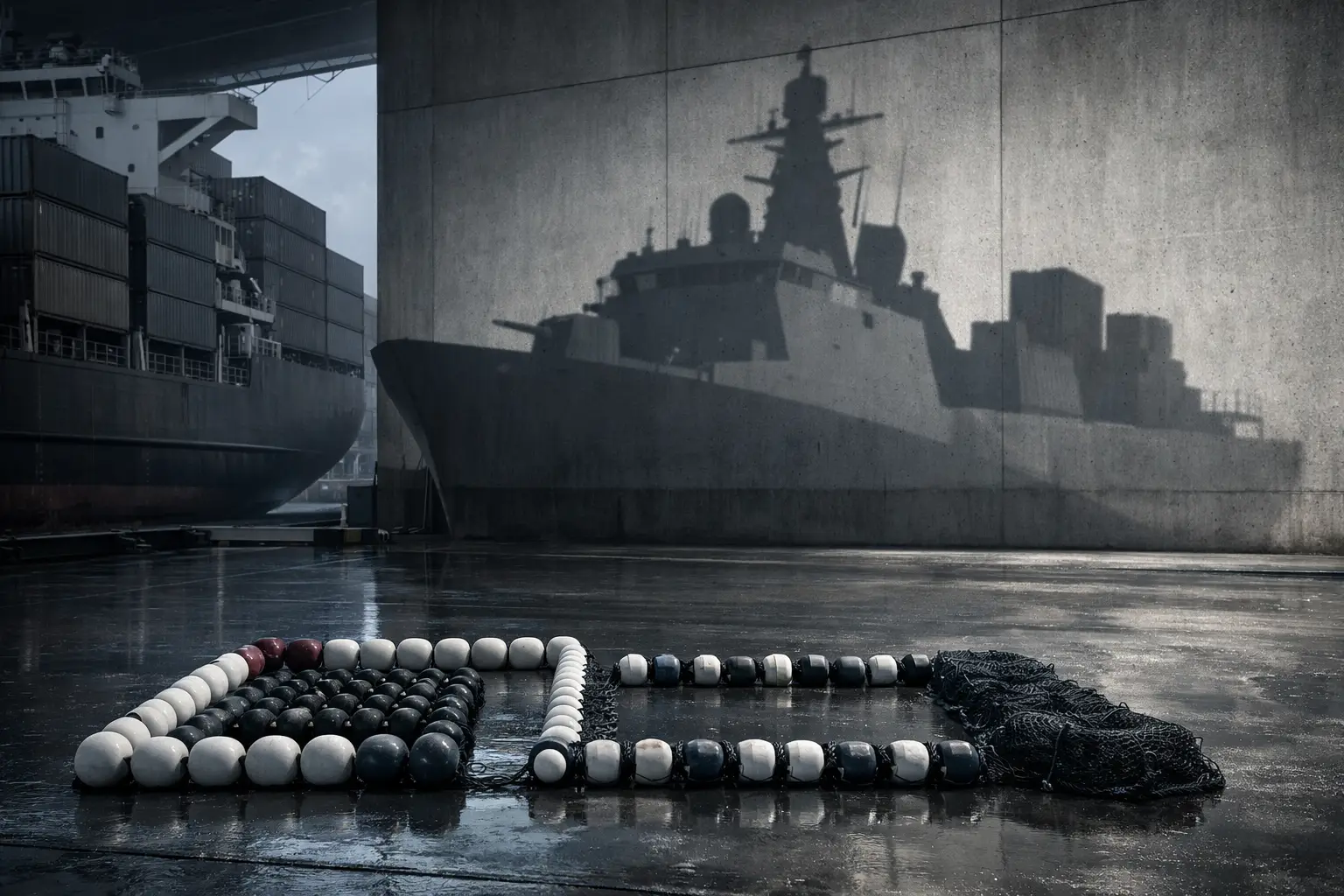
Based on maritime traffic tracking data, American analytical groups recorded the sudden departure of Chinese commercial ships from ports and the nearly simultaneous halt of vessels involved in industrial fishing, which formed a dense tactical rectangle stretching over 300 km between the coasts of China, South Korea, Japan, and Taiwan.
This maneuver essentially repeated a previously unnoticed operation in the same waters on December 25, 2025, when a group of approximately 2,000 Chinese fishing boats synchronously formed an “L”-shaped figure nearly 500 km long.
Given the unprecedented nature of these actions, it is believed that China for the first time practiced the mass mobilization of thousands of civilian vessels for potential use in combat scenarios.
In particular, such maneuvers could allow Beijing to block key maritime routes, complicate adversaries’ combat and logistical operations, and create “swarm” decoy targets for missiles and torpedoes, overloading defense radars and sensor systems.
At the same time, due to the civilian nature of such assets, detecting such a threat will remain problematic for democratic allies.
The practice of Chinese operations involving the fishing fleet occurred amid heightened attention to the issue of militarization of China’s commercial tools.
According to the China Power Project assessment, Beijing is increasingly facing technological and structural limitations on the path to its stated goal of achieving an offensive breakthrough by 2035. This prompts China to compensate for the lack of certain military-technical capabilities by converting commercial vessels for potential combat use.
In parallel, Beijing seeks to force the USA and its partners to expend additional resources on detecting and monitoring mobilized civilian vessels, blurring the focus from the direct forces of the PLA Navy and China’s militarized coast guard.
China is simultaneously building up two contours of maritime power. The first is the regular PLA Navy fleet, which serves as a high-tech combat core. The second is the conversion of the civilian fleet into a distributed system for supporting combat operations.
In this system, thousands of commercial and fishing vessels can form a deep operational field of presence, performing separate functions such as surveillance and targeting, communications, electronic warfare, mine warfare, and deployment of unmanned systems.
The cumulative effect lies in expanding the zone of detection and influence without directly advancing warships, as well as overloading allied sensors and response procedures through camouflage as civilian traffic.
This logic is complemented by technology for the rapid conversion of commercial platforms into semi-military ones. The case of Zhong Da 79, which appears in open materials as a container ship, illustrates this approach.
It is equipped with integrated sensors, self-defense systems, and containerized launch solutions, demonstrating Beijing’s aspiration to create modular carriers for unmanned and missile systems based on serial commercial shipbuilding.
For the USA, this creates an asymmetric dilemma of target recognition and rules of engagement, and also increases the cost of constant monitoring and escorting already at the preparation stage for conflict.
A telling example of this strategy was the exposure at the end of December 2025 of the container ship Zhong Da 79 at the Shanghai shipyard Hudong-Zhonghua—a facility that shows signs of being a military site under civilian cover.
Formally intended for intra-Chinese trade, the vessel was visually equipped with a complex of advanced systems: modern radar and communication means, decoy launchers, close-in weapon systems, containerized missile launchers, as well as a mobile electromagnetic catapult on the cargo platform for launching large fixed-wing unmanned aerial vehicles.
According to some assessments, the configuration of Zhong Da 79 is intended to create a “cheap” advantage over American advanced frigates of the Constellation class.
In real conditions, the successful implementation of such transformational technology would allow China to quickly convert ordinary container ships into advanced platforms for deploying strike UAVs—including the ability to launch them from both sea and land practically anywhere.
This concept is oriented toward a scenario of protracted conflict, in which the decisive factor will be not so much operational mastery in conducting combat operations, but the state’s ability to mobilize and scale industrial potential to achieve strategic goals.
It is noteworthy that the practice of combat operations involving civilian vessels became one of the key elements of the “Will for Peace 2026” military exercises, which from January 9 to 12, 2026, were conducted with the participation of China and Russia in the waters of South Africa.
In particular, units of Chinese and Russian special forces practiced scenarios for capturing an armed commercial vessel. Although the formal pretext for such actions was declared as counter-terrorism, these scenarios directly reflect Beijing’s aspiration to integrate commercial maritime systems into the architecture of potential military operations.
From a deeper perspective, the trends toward militarization of the commercial fleet amid increasingly active weaponization of the economy align with China’s new expansive strategy, which crystallized in the context of supporting Russia’s war in Ukraine.
In particular, Xi Jinping systematically analyzes the consequences of strikes on Ukrainian civilian infrastructure, adapting the corresponding methodology to potential confrontation with the United States and its partners.
In parallel, Beijing seeks to fully utilize China’s structural advantages—in resource, industrial, and demographic spheres—for preparing rapid and massively destructive operations designed to paralyze the adversary’s ability for effective defense.
Such an approach aligns with China’s official strategic guidelines, which since 2022 have increasingly clearly interpreted civilian domains—energy, economic, commercial, digital, and informational—as full-fledged theaters of military operations within the concept of multi-domain warfare.
This is confirmed by the conclusions of the Pentagon’s report (2022 China Military Power Report), which states that Xi Jinping seeks to synchronize China’s economic, political, social, military, and security development into a single, mutually reinforcing system.
Essentially, this approach transforms economic and foreign policy into instruments for implementing military strategy.
Under such conditions, the militarization of China’s commercial fleet—from small fishing boats to large-scale container ships—is a component of an expansive logic, under which a potential war in the region should be accompanied by intensified attacks on civilian infrastructure and systematic use of commercial maritime arteries for military purposes.
In a tactical sense, the commercial fleet serves China as a tool for covert preparation for a possible invasion of Taiwan—since the United States and its allies are unable to detect in advance missiles, rockets, drone launchers, and other types of armaments that can be transported by thousands of civilian vessels.
At the same time, reliance on “camouflage” of such a fleet is one of the reasons for China’s reluctance to publicly demonstrate real progress in preparing for complex amphibious operations involving Russian army units.
This corresponds to Xi Jinping’s intentions to avoid non-hybrid confrontation with the armies of democratic allies, which currently have qualitative superiority over Chinese equipment.
In parallel, the civilian fleet is used as a tool for weaponization of the economy—primarily in the context of the activities of the “shadow fleet” of China and Russia.
In August 2025, China became the first state to ensure the import of sanctioned Russian LNG using shadow vessels, a network of shell companies, and a specially designated port.
This step became an element of countering the American campaign to reduce influence on the Kremlin and simultaneously a mechanism for accelerated integration of Russia’s expansive machine into Beijing’s logistical and financial networks.
Since then, the Chinese port of Beihai has received over 20 shipments of sanctioned LNG with a total value of at least $500 million. This indicates that China is reviving geopolitical interest in the “Arctic LNG-2” project, which directly competes with the White House’s energy goals.
Amid the loss of control over the Maduro regime in Venezuela and the weakening of China’s positions in the global oil market, Xi Jinping will continue the course toward branching out militarized and weaponized commercial chains—primarily as a tool for countering US dominance in the resource sphere.
This, in particular, will involve creating systemic obstacles for the integration of Japan’s commercial fleet—the largest in the LNG supply segment—into the new resource-economic strategy of the United States.
The Donald Trump administration takes into account China’s course toward militarization of the commercial fleet—and since 2025 has been promoting initiatives aimed at limiting Beijing’s maritime trade capabilities.
This includes narrowing Chinese vessels’ access to port infrastructure in democratic countries, imposing additional tariffs, as well as accelerating the launch of an American program to revitalize national shipyard capacities.
At the same time, the White House realizes that despite China’s noticeable progress in this direction, Beijing is unable to fully prepare the civilian fleet for prolonged and large-scale military operations in the short term. This prompts considering corresponding scenarios as situational and hypothetical rather than inevitable.
However, beyond the modeling of scenarios itself, the United States is concerned about the general trends in the development of China’s military-civilian fleet.
According to Statbase database statistics, as of 2025, China owns 10,288 units of commercial vessels—placing it second in the world after Indonesia in this logistical category. The USA, meanwhile, has 3,519 such vessels.
Simultaneously, the PLA Navy owns the world’s largest naval fleet with 234 warships, while the US Navy has 219 units.
Despite the fact that the qualitative characteristics of Chinese platforms in several categories still lag behind US and allied technologies, such dynamics are viewed by the Donald Trump administration as an existential problem.
In particular, the White House takes into account that about 100 million workers are employed at China’s port and related shipbuilding facilities, while in the United States—fewer than 13 million.
Additionally, statistics are considered according to which in 2022, about 1,800 vessels were being built in China, and only 5 in the USA. Washington’s strategic calculations are also influenced by Beijing’s advantage in the number of shipbuilding facilities, which are increasingly absorbing Russia’s production and technological capacities.
Under such conditions, President Trump announced large-scale programs to revitalize American shipyard potential both through internal resources and by involving Japan and South Korea—key shipbuilding competitors to China and owners of one of the most developed production infrastructures in the world.
The latest initiative in this direction was the Golden Fleet program announced at the end of 2025.
On January 13, 2026, US Secretary of the Navy John Felan revealed its details, emphasizing that the White House’s strategic goal is to restore the United States’ ability to fully compete with Chinese shipbuilding capabilities.
In particular, Secretary Felan noted that the USA plans to shift the naval industry to “wartime rails” by creating a new Trump-class battleship and a complex of supporting systems.
The project, preliminarily estimated at least at $9 billion, involves the construction of destroyers, aircraft carriers, submarines, frigates, support ships, and unmanned maritime platforms.
In parallel, Washington will focus on expanding maritime logistics—increasing the fleet of tankers, stockpiles of ammunition, and UAVs. In addition, the Donald Trump administration plans to attract at least 250,000 qualified specialists by 2035 to scale the American shipbuilding industry.
Simultaneously, the USA continues to advance under the flagship project of the Donald Trump administration, MASGA (Make American Shipbuilding Great Again).
It involves large-scale attraction of foreign capital, technologies, and expertise to restore American shipbuilding and maritime capabilities in response to China’s systemic advantage in this sphere.
The first practical stage of MASGA implementation was the $150 billion investment framework for shipbuilding cooperation between the USA and South Korea (it is an element of their “grand deal”).
It covers modernization of American shipyards, investments in component supply chains, development of port logistics, and implementation of advanced shipbuilding technologies.
According to the parties’ plan, the South Korean giant HD Hyundai will act as the “anchor investor” and main technical advisor for MASGA, utilizing decades of experience in military and civilian shipbuilding.
Simultaneously, Samsung Heavy Industries announced its readiness to join the revitalization processes in the US Navy. In a strategic sense, this means forming a sustainable shipbuilding bloc involving the USA, South Korea, and Japan, which will have real potential to weaken the negative Chinese dynamics at sea.
This same context will influence the long-term preservation of political consensus among the JAROKUS coalition participants.
However, despite progress in shipbuilding, the United States remains limited in its ability to effectively counter the influence and scale of China’s commercial fleet.
In particular, the additional port fees for Chinese vessels in the USA ($50 per ton) introduced on October 14, 2025, were deferred for one year after negotiations between Donald Trump and Xi Jinping on the sidelines of the APEC summit in Gyeongju.
Since then, the issue of increasing pressure on China’s trade tools has been shifted to the plane of preparation for the next round of bilateral negotiations, expected in April 2026.
Under such conditions, the militarization of China’s commercial fleet is viewed as a system-forming element of Chinese preparation for a potential major conflict.
Mass mobilization of thousands of civilian vessels allows Beijing to compensate for technological gaps through quantity, creating an effect of overloading the adversary’s response mechanisms.
At the same time, the integration of commercial platforms into military scenarios reflects China’s strategic shift from demonstrating force to its covert accumulation.
Beijing deliberately avoids open military escalation, instead focuses on building infrastructure capable of being instantly converted into military use.
This makes a potential conflict significantly more costly for democratic allies already at the preparation stage, and also creates space for the start of an “unpredictable” invasion of Taiwan.
This threat is amplified by the transformation of the commercial fleet into a tool for weaponization of the economy on a global scale, as confirmed by facts of the formation of a Chinese-Russian “shadow fleet.”
Currently, the US response is focused on revitalizing shipbuilding and forming an industrial coalition with Japan and South Korea.
However, even if large-scale projects like MASGA and Golden Fleet are successfully implemented, Washington will continue to face the problem of asymmetric threat from China’s commercial fleet.
Such a situation will ultimately prompt the Donald Trump administration to make new decisions to weaken China’s trade capabilities.