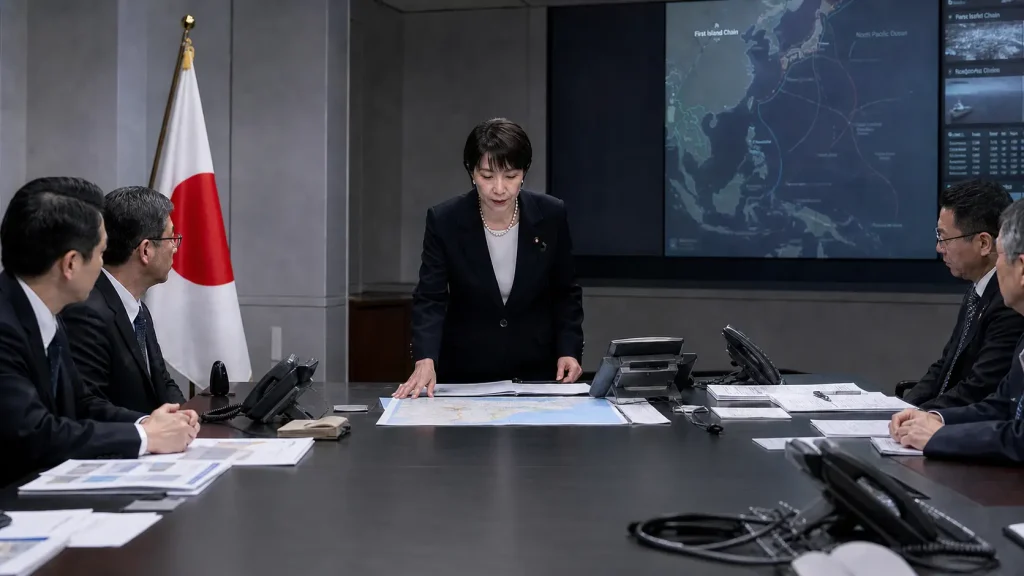
On January 12, 2026, in Washington, the G7 finance ministers, at the initiative of the US Treasury, held an extraordinary meeting on the critical minerals market and supply chain resilience, including discussion of a mechanism for coordinated price minimums for rare earth elements as a tool to reduce risks and neutralize price manipulations.
The G7’s transition to agreed minimum prices on critical minerals reflects the realization that traditional markets, where competition is supposed to regulate prices, are no longer capable of ensuring reliable supplies of strategic materials for technological and defense sectors, which becomes a critical factor in national security.
Setting price “floors” transforms investments in the mining sector into a predictable economic asset, stimulating capital investments in lithium, nickel, copper, and rare earth metals in G7 countries and allies, while minimizing risks of losing technological sovereignty through supply disruptions.
The financial mechanisms agreed upon during the meeting in Washington on January 12, 2026, create a direct incentive for developing mining infrastructure in the US, Australia, Canada, and other allied jurisdictions, forming the potential for large-scale replication of technologically critical chains within Western jurisdiction.
This approach fixes a strategic pivot from abstract diversification to operational intervention, where state control and financing become an integral condition for the viability of the mining sector, ensuring long-term supply stability for industry and the defense complex.
The deployment of such mechanisms is supported by the consolidation of key players, including Glencore and Rio Tinto, which have resumed merger negotiations, forming a combined capitalization of about $201 billion, which provides Western mining infrastructure with scale and financial resilience to counter market shocks.
The emphasis on consolidating resource assets creates the capacity for strategic planning of extraction and production, allowing corporations to form long-term contracts with technological and energy companies, reducing dependence on market volatility and speculative capital flows.
In the short-term perspective, such a configuration reduces risks of supply disruptions for the US and Europe, stimulates growth in capital investments in mining assets and production facilities, and strengthens technological security through control over key materials that go into the production of batteries, electric vehicles, and defense products.
In the medium-term perspective, the measures will contribute to the formation of resilient industrial and technological clusters in the G7, where state control and capital act as tools for strategic risk containment, enabling Western economies to counter structural dominance by external monopolists in key markets.
An additional catalyst is Beijing’s expansion of export restrictions beyond bilateral confrontation with the US, as evidenced by the January 6 decision to block supplies of rare earth metals and magnets to Japan by halting the issuance of licenses for all sectors of Japanese industry.
The Chinese Communist Party’s argumentation with rhetoric about “containing Japan’s militarization” in the Taiwanese context masks a broader logic—the demonstration of readiness to use control over raw materials as a universal tool of political pressure on technological economies.
In this configuration, the G7 transitions from the concept of abstract de-risking to an operational phase with direct financial mechanisms, recognizing that without intervention in pricing, the Western mining industry cannot withstand competition from Chinese overproduction.
The implementation of minimum prices creates conditions for global bifurcation of critical minerals markets, where a more expensive, regulated “Western” segment and a cheaper Chinese one are formed, forcing corporations to choose supply chains as an element of strategic loyalty.
This division inevitably sharpens trade risks, as Beijing retains response tools in the form of further export restrictions or aggressive price dumping aimed at stifling new mining projects in their early stages of development.
The potential deal between Glencore and Rio Tinto fits into the broader context of escalating trade tensions with China, where the West anticipates reciprocal moves in the form of export restrictions or price dumping aimed at undermining new mining projects before they achieve operational stability.
That is why the coordination of minimum prices within the G7 simultaneously launches a process of large-scale recapitalization of the mining industry in Australia, Canada, and other allied jurisdictions, such as Britain and Switzerland, creating an environment in which large transnational players receive incentives for enlargement as a condition of survival.
The resumption of negotiations between British Rio Tinto and Swiss Glencore signals the transition of Western companies from competition among themselves to forming a critical mass of assets capable of countering Chinese concentration of control over strategic metals supply chains.
The structure of the deal, including the option of a fully stock-based merger, reflects the desire to preserve liquidity while creating a corporation with a combined market value of about $201 billion (150 billion pounds), bringing it close to the level of a systemic player.
The key economic driver of this consolidation is copper, whose prices over the past year have reached record levels due to demand from clean energy, AI infrastructure, and uncertainty regarding the tariff policy of the Donald Trump administration.
It is the factor of copper value that previously underpinned large-scale deals in the sector, including the combination of Anglo American and Teck Resources assets, as well as aggressive, though not always successful, attempts by BHP Billiton and Glencore to expand their portfolios at the expense of competitors.
Collectively, these processes demonstrate that the Western mining industry is entering a phase of defensive consolidation, where scale, diversification of the resource base, and control over copper—from supplies of which China depends—become a response to Chinese monopolization and inevitably reshape the global geopolitics of resources.
A logical continuation of “price floors” and corporate consolidation is the West’s shift to a regime of managed trade in strategic sectors, where WTO rules give way to bloc logic, and economic decisions are increasingly made as elements of security policy.
This shift manifests through direct state entry into capital and management of critical production chains, transforming global metals trade from a market environment into a politically constructed space with rigidly defined allied contours.
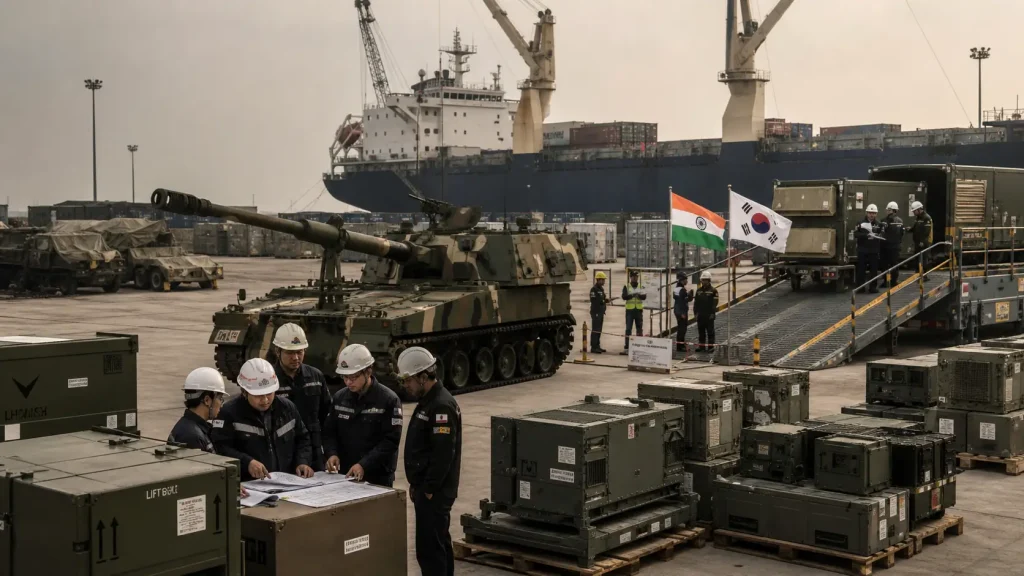
An illustrative example of this transformation is the Korea Zinc deal, the world’s largest zinc producer, which announced its intention to build a large-scale complex in Tennessee for processing critical materials with a total value of $7.4 billion.
The company directly explained the project by the US government’s request to consider Korea Zinc as a strategic partner amid growing risks in global supply chains and structural shortages of non-ferrous metals and critical minerals in the American market.
The board of directors’ decision, adopted on the day of the announcement, underscores the speed with which industrial corporations are adapting to the new reality, where access to Western markets increasingly depends on willingness to localize production in allied jurisdictions.
Of particular importance is the planned production of 5,100 tons of rare and strategic metals, which is a significant part of the needs of the US defense complex and technological sectors, which are increasingly reacting sharply to Chinese export restrictions.
The project’s financial architecture demonstrates a new model of state-corporate symbiosis, where Korea Zinc’s US subsidiary creates a joint venture, Crucible JV, with the United States government, involving $1.94 billion in equity.
The US Department of War receives 40 percent in the joint venture and becomes its largest shareholder, while Korea Zinc’s share drops below 10 percent, indicating the priority of state control over critical infrastructure.
In summary, this case outlines the moment when the US and G7 countries transition from a policy of risk dispersion to deliberate mobilization of resource chains under state control, recognizing that without direct participation of public capital and administrative influence, the Western mining base loses its capacity for recovery.
Accordingly, the current phase of global economic transformation indicates a radical shift in the understanding of competitive advantages: technological dominance increasingly depends on the ability to ensure control over critical resources, rather than on innovative capacity itself.
This realization has become evident in the actions of G7 countries, which have moved from declarative formulations on “de-risking” to specific tools for coordinating market policy, including agreeing on minimum prices for key minerals, which transform the raw materials sphere into a multi-layered mechanism of national security.
The initiative to set price floors in itself demonstrates a critical paradigm shift, in which Western economies abandon orthodox market models in favor of active state intervention to overcome structural asymmetry created by Chinese subsidies and dumping practices in global critical raw materials markets.
Such a step forms a new standard—managed trade, where commercial decisions are increasingly coordinated by state policies to ensure strategic autonomy.
In the medium-term perspective, the state and its allies gain a chance to restore their own mining and processing base, reduce dependence on unilateral supplies, and stabilize technological chains for defense and energy.
At the same time, the policy of managed trade and state participation in critical sectors can lead to increased production costs, which will be felt in end prices for industry and consumers.
The political dimension of this process is no less important. US industrial regions that have experienced structural decline and competition from Asian manufacturers will receive potential impetus with effective coordination of local initiatives with national strategies.
In the opposite case—regional inequality, due to the implementation of new mining projects in resource-rich regions and non-implementation in resource-poorer states—can intensify, generating new social and political divides.