On December 30, 2025, Secretary of State Marco Rubio held talks with the foreign ministers of the United Arab Emirates and Saudi Arabia, during which the parties discussed the impact of the conflict in Yemen on regional security and stability. Several days earlier, the Secretary of State had urged the parties to seek a diplomatic solution.
The escalation of confrontation between two U.S. allies in the southern Arabian Peninsula began after a large-scale offensive by armed formations affiliated with the Southern Transitional Council (STC), which seek to secure the independence of southern Yemen and rely on support from the UAE.
Southern Yemeni groups seized large areas in the Hadramawt and Al Mahrah provinces, whose strategic importance for the parties to the conflict is driven by the presence of significant energy resources, land borders with Saudi Arabia and Oman, and access to the Indian Ocean.
Control over these territories directly affects the security of Saudi Arabia’s southern provinces, the region’s energy logistics, and the balance of influence between the Saudi monarchy and the UAE.
In response to UAE support for Yemeni insurgents, on December 30, 2025, an Arab coalition led by Saudi Arabia carried out an airstrike on weapons and military equipment stockpiles at the port of Mukalla. Riyadh accused the UAE of supplying arms to STC formations.
Developments on the Arabian Peninsula signaled that competition between the two key Arab centers of power is entering an escalation phase, with further developments creating additional risks of oil price destabilization.
For Washington, the UAE and Saudi Arabia are two of the most critical regulators of global oil supply. These states concentrate nearly all of OPEC’s operationally available spare capacity, enabling rapid adjustments to market balances and the mitigation of supply deficits or surpluses without the long lag associated with the investment cycle.
Together, the two countries account for approximately 80–90% of OPEC’s spare production capacity. As of late 2025, Saudi Arabia held an estimated 2.2–2.4 million barrels per day, while the UAE accounted for 0.85–1.1 million barrels per day.
The oil price corridor the United States is compelled to maintain is narrow and two-sided. The lower bound is set by the economics of U.S. shale and the ability to sustain export presence.
The Energy Information Administration (EIA) estimates the average breakeven price for new wells in the Permian Basin at approximately $62 per barrel of WTI, while the price required for profitable drilling of a new well is around $64.
Taking into account the structural premium of Brent over WTI, this translates into a global lower bound in the mid-$60s per barrel for Brent as a condition for the stability of U.S. production and exports. At the same time, Brent moving into an $80+ range accelerates inflation expectations in the U.S. economy.
The gas segment reinforces the same logic of export dominance. In November 2025, the United States set a record for monthly LNG exports at 10.9 million tons, making the preservation of the lower bound of the oil price corridor a matter of systemic presence in global energy markets.
A separate instrument strengthening the U.S. position in managing this narrow price corridor is Venezuela, where the detention of Nicolás Maduro in January 2026 opened a political window for revisiting the parameters of access to Venezuelan oil resources.
Under Maduro, investment in the sector was blocked by a combination of governance degradation and sanctions, depriving Caracas of the technology and capital needed to modernize heavy oil production in the Orinoco Belt.
As a result, the country with the world’s largest proven reserves—estimated at 303 billion barrels—found itself in a low-supply regime, with its role in the global balance reduced to a marginal level. Venezuelan production in 2025 ranged between 0.9 and 1.1 million barrels per day, representing less than 1% of global supply.
For the United States, the heavy crude segment is of particular importance, as it is in deficit and largely associated with autocratic suppliers, including the Russian Federation.
Potential stabilization of Venezuelan production provides Washington with an additional tool to maintain the price corridor through heavy oil supply, while simultaneously serving as an effective channel of pressure on the autocratic axis.
An additional domestic political dimension of oil and gas volatility for Washington lies in the fact that price stability is increasingly tightly linked to the United States’ ability to implement an accelerated strategy of technological dominance in artificial intelligence.
On January 21, 2025, the Trump administration publicly legitimized Stargate as the flagship infrastructure framework for U.S. AI leadership, calling up to $500 billion in investment over four years in building new AI infrastructure in the United States, with an announced immediate deployment of $100 billion.
In September 2025, Stargate’s partners formalized the project’s gigawatt scale, outlining nearly 7 GW of planned data center capacity in the United States, with expansion to 10 GW. This effectively turns the cost of electricity and the cost of capital into key parameters of national competitiveness.
The fiscal motivation behind this bet is structural. As of December 31, 2025, total U.S. federal debt stood at $38.51 trillion, locking in long-term budgetary pressure from higher debt servicing costs and constraining fiscal maneuvering space ahead of a potential escalation of conflict with the autocratic axis.
Baseline projections point to public sector debt rising to 118% of GDP by 2035. At the same time, the threat of a global military conflict is forcing the United States to entrench a trajectory of rising defense spending. Absent a technological leap, traditional tools of fiscal consolidation are incapable of reversing the debt trajectory without sacrificing growth.
The White House is therefore motivated to accelerate the transition of the U.S. economy to a higher-productivity regime, thereby expanding the capacity for increased tax revenues.
Within this framework, AI becomes a mechanism for restarting the U.S. economic cycle and an effective means of broadening the tax base without a fiscal shock.
Under these conditions, any oil price breakout beyond the corridor raises the cost of capital for federal debt while simultaneously increasing the financing costs of the energy backbone of the Stargate project.
AI infrastructure is systematically shifting from the category of a technological investment to that of a core element of U.S. energy security.
According to Lawrence Berkeley National Laboratory, data centers consumed approximately 176 TWh in 2023—about 4.4% of total U.S. electricity consumption—and by 2028 their consumption is projected to rise to 325–580 TWh, or 6.7–12% of national demand, depending on overall economic growth rates.
This range implies an average annual load of roughly 37–66 GW by 2028, sharply increasing the sensitivity of the U.S. economy to external shocks that disrupt energy prices and accelerate inflation expectations.
At the same time, the political cost of tariff instability is rising, as retail electricity prices for end consumers are already trending upward.
In 2024, the average residential electricity rate stood at 16.48 cents per kWh, 12.75 cents for the commercial sector, and 8.13 cents for industry. By September 2025, these figures had risen to 18.07, 14.06, and 9.02 cents, respectively.
In states with concentrated AI-driven demand, regulators are moving toward approving energy programs whose scale alone is sufficient to turn tariff policy into a political issue.
For the continental United States, the key channel through which oil volatility affects the AI surge is the macro-financial environment, in which oil sets the inflation impulse via transportation costs, logistics, construction materials, and industrial components that form the price base for deploying data centers, substations, transformers, cable infrastructure, and backup generation.
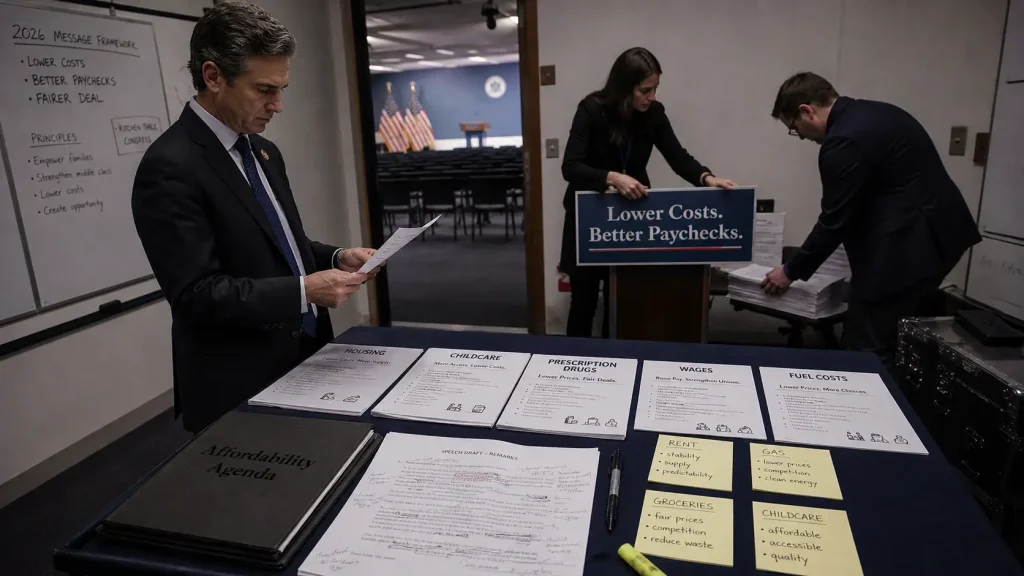
Within the Stargate model—publicly tied to hundreds of billions of dollars in investment and multi-gigawatt loads—any wave of energy inflation translates into higher financing costs, slower grid expansion, and more politically toxic tariff decisions, directly reducing the administration’s control over the domestic agenda ahead of the 2026 elections.
In this configuration, de-escalation between Saudi Arabia and the UAE ceases to be a purely Middle Eastern energy issue and becomes an instrument for sustaining U.S. technological dominance.
A stable oil price corridor and predictability across a broader basket of energy commodities provide the United States with lower inflationary pressure, improved financing conditions for AI infrastructure, and greater political resilience on tariff issues.
Taken together, these factors form the material foundation for maintaining an edge over China in the race for computing power and economic influence in the Global South.
Continued Saudi–Emirati confrontation in Yemen, as well as in other parts of the Middle East and Africa, affects the U.S. economy—an assessment that is a decisive factor in shaping voter preferences—and therefore has a direct impact on the outcome of the 2026 electoral cycle.
According to a PBS News/NPR/Marist poll, 45% of American respondents view rising prices as their most pressing concern. At the same time, an absolute majority of voters believe that the Trump administration has failed to meet expectations regarding stabilization of the U.S. economy.
Fifty-seven percent of respondents express dissatisfaction with the White House’s current economic policy, while only 37% approve of how President Trump is managing the economy, according to a November Reuters/Washington Post poll.
The share of citizens who believe that the economic situation has worsened since Trump’s inauguration reached 52%. As a result, by the end of 2025, the number of Americans who view the Democratic Party as more effective in addressing economic challenges exceeded those who prefer Republicans on economic management.
Declining support for the White House’s economic policy has become the primary factor driving down Donald Trump’s approval ratings. The PBS News/NPR/Marist poll recorded that as of December 2025, presidential approval had fallen to 38%, the lowest level of Trump’s second term.
The presidential team is facing a support crisis even among its core electorate, as positive assessments of the current economic course among Republican voters fell from 78% to 69%.
Instability in relations among key Gulf monarchies creates macroeconomic risks for Washington, the materialization of which would further erode support for the incumbent administration and, as a consequence, complicate Republican efforts to secure a congressional majority after the 2026 elections.
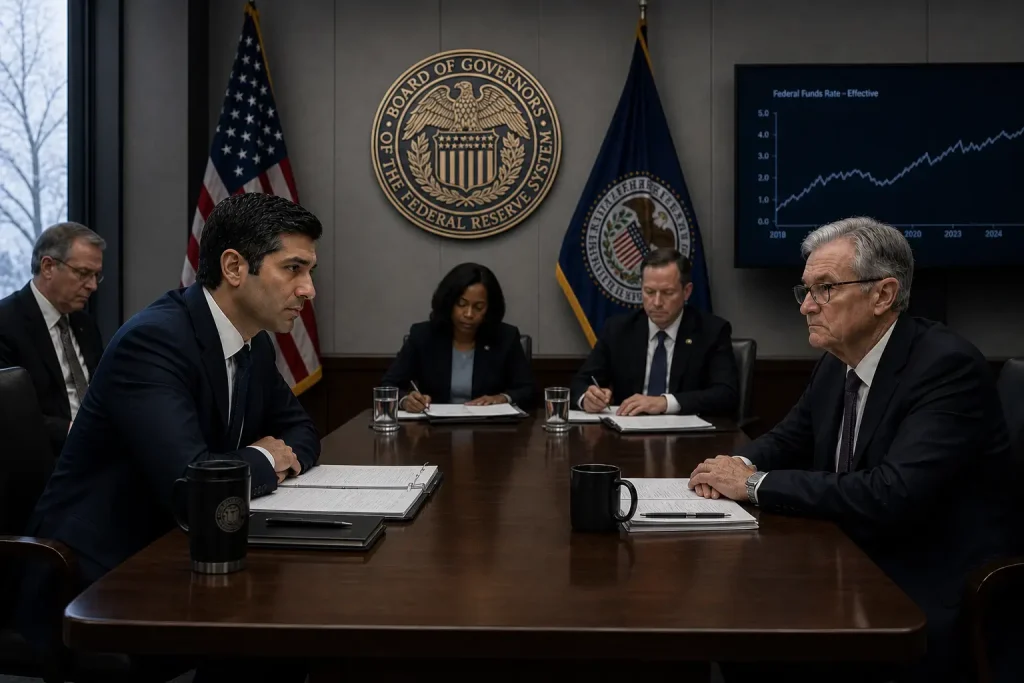
Economic outcomes in 2025 were marked by largely unfavorable indicators for the United States. As of November 2025, U.S. inflation remained at approximately 2.7% year over year, while the more persistent core measure hovered in the 2.6–3% range, remaining above the Federal Reserve’s stated 2% target.
Unemployment rose to 4.6%, with additional factors constraining hiring including the Republican administration’s migration policy and workforce aging.
The federal budget deficit in November 2025 totaled $173 billion, while the goods trade deficit in September 2025 stood at $79 billion. The introduction of new tariffs in spring 2025 was accompanied by a sharp decline in stock indices.
Negative economic indicators coinciding with the approach of midterm elections and growing public demand for change are turning the energy sector into one of the few instruments available to partially offset trends unfavorable to the White House.
Since the beginning of Trump’s second presidential term, U.S. oil production has steadily increased, reaching record levels due to deregulation, expanded offshore auctions, and high shale prices.
In November–December 2025, average daily production reached 13.81–13.86 million barrels per day, with the shale sector posting annual growth of 1.5%.
The EIA expects production to stabilize in 2026 at 13.58–13.6 million barrels per day. The largest current risk to the U.S. fuel sector is a prolonged decline in shale energy prices, as the World Bank identifies a significant oversupply in the global oil market.
If this surplus persists in the absence of corrective mechanisms, it would trigger sharp price fluctuations, leading to reduced investment and slower production growth in the U.S. shale sector.
It is for this reason that Washington’s response to the split among its Middle Eastern allies—Saudi Arabia and the UAE—has taken the form of an energy stabilization instrument, restraining competition between Riyadh and Abu Dhabi from entering an escalation phase that would heighten market volatility.
The key factor underpinning the stability of regional interaction in Arabia and ensuring the gradual, managed integration of most states within the Islamic dynamic into economic, energy, and security cooperation with Washington is the United States’ capacity to provide partners with credible defense guarantees.
During the presidency of George W. Bush, Bahrain and Kuwait were designated Major Non-NATO Allies, while under Joe Biden, Qatar received the same status.
During Crown Prince Mohammed bin Salman’s visit to Washington in November 2025, Saudi Arabia was also added to the list of U.S. Major Non-NATO Allies.
Although the UAE—the Saudi monarchy’s principal competitor on the peninsula—does not hold this status, the level of military cooperation between the Emirates and Washington has increased systematically.
During Donald Trump’s visit to the Middle East in May 2025, the United States and the UAE signed a Statement of Intent providing for the development of a multifaceted defense partnership.
In the spring of the same year, the UAE was officially brought into the U.S. National Guard State Partnership Program, under which the parties agreed to cooperate in air and missile defense, cybersecurity, and military operational planning.
Ahead of Trump’s visit to the UAE, the State Department notified Congress of plans to sell $1.45 billion worth of arms to the Emirates.
The objective of the Gulf cooperation framework established by Washington was to prevent regional monarchies from becoming leaders of uncontrolled Islamic dynamics; to engage Saudi Arabia, the UAE, and Qatar in de-escalation efforts across the Middle East and Africa; and to limit the influence of China and Russia in the region by transforming Arabian monarchies into new security partners for African states.
This approach—developed by the Trump administration amid Russia’s loss of capacity to serve as a credible security guarantor for North Africa, the Sahel, and the Horn of Africa—faced several significant challenges in the second half of 2025.
The Israeli airstrike carried out on September 9, 2025, against members of Hamas’s leadership based in Qatar led Gulf states to reassess their perceptions of U.S. security advantages.
Defense guarantees provided by Washington in exchange for political loyalty, mediation in crises across the Global South, and support for stability in global energy markets are no longer viewed by Middle Eastern monarchies as sufficient.
An additional factor reinforcing Gulf states’ confidence in the inadequacy of partnership with the United States as a guarantor of their security was the White House’s response to the Israel Defense Forces (IDF) strike on Doha.
The strike on Qatar—a long-standing U.S. partner hosting the forward headquarters of U.S. Central Command (CENTCOM), the headquarters of U.S. Air Forces Central Command, and approximately 10,000 U.S. military personnel—did not result in any tangible negative consequences for the Israeli government.
Although Donald Trump criticized the Netanyahu government over the IDF airstrike on Qatar, prompting the Israeli prime minister to issue an apology to Qatari leadership, regional monarchies interpreted the White House’s limited and diplomatic response as evidence that Israel’s security takes precedence over the interests of U.S. Arab partners.
Subsequent U.S. efforts to balance the asymmetry between Washington’s response to Israeli actions and the security priorities of Gulf states failed to produce sufficient effect.
Agreements on constructing facilities for the Qatari Air Force at the U.S. Mountain Home Air Force Base helped reduce tensions in relations with regional monarchies.
Additional easing came from new Saudi–U.S. security understandings reached during Mohammed bin Salman’s visit to Washington and from joint military exercises involving the United States, other NATO members, and Qatar (Ferocious Falcon 6).
At the same time, these steps did not eliminate Arab states’ drive to diversify their security guarantees.
Despite Saudi-U.S. agreements reached at the November 2025 summit on the sale of military aircraft and armored vehicles to the Kingdom, Saudi Arabia had concluded a defense pact with Pakistan two months earlier.
That agreement—envisioning Pakistan’s nuclear potential as an indirect element of Saudi defense guarantees—demonstrated that the Kingdom intends to act autonomously in ensuring its security, independently both of U.S.-proposed security models and of coordination frameworks within the Gulf Cooperation Council (GCC).
The UAE, for its part, continued a policy of attracting investment into its domestic security sector and implementing a digital government strategy that prioritizes the use of artificial intelligence in defense, as well as investments in quantum computing and machine learning for intelligence and surveillance platforms.
Amid a crisis of confidence in U.S. defense guarantees and the search by Gulf monarchies for divergent and non-coordinated security models, Washington’s capacity to act as an arbiter in resolving disputes among Arab states has declined significantly.
The intensification of these contradictions complicates U.S. efforts to prevent Saudi–Emirati escalation, as their coordination remains a critical condition for supply stability and the manageability of oil prices.
The crisis of Washington’s mediation capacity—which has sharply reduced the U.S. ability to restrain escalation among Gulf monarchies and coordinate their positions in regional conflicts—has created an additional instrument on which Arab states increasingly rely in shaping their defense strategies.
For Arabian monarchies, security is increasingly ensured through the creation of their own spheres of influence in states marked by governance dysfunction and weak institutions.
By relying on affiliated political and paramilitary structures in the Middle East, North Africa, and Central Africa, Gulf monarchies seek to entrench loyal political forces and armed groups and establish durable formats of interaction with them.
Saudi Arabia employed a strategy of forming governments under its patronage to secure its interests even before Gulf monarchies reassessed prospects for continued defense cooperation with the United States.
Since the establishment of the ayatollahs’ regime in Iran, the Kingdom has structured its military-political strategy around containing Tehran.
As the largest Gulf state with the region’s most capable armed forces and a long-standing role as the informal center of Arab political dynamics, Saudi Arabia became the leader of the coalition countering the Houthis in Yemen and played a central role in containing other elements of the Shiite “axis of resistance.”
From the early years of Syria’s civil war, the Kingdom provided financial and logistical support to anti-Assad armed groups and later—together with other states within the Islamic political dynamic—sought to contain the influence of the autocratic axis in Africa through the financing of private military companies.
The weakening of the United States’ role as a security guarantor and as an external force facilitating intra-Arab coordination is pushing Saudi Arabia to integrate the pillars of its military-political strategy into a unified system aimed at ensuring the Kingdom’s long-term influence across the Middle East and the African continent.
At the same time, political groups and armed formations affiliated with the Saudi monarchy have evolved into levers of influence in conflicts emerging among Gulf monarchies themselves. Saudi Arabia’s principal competitors within the GCC remain Qatar and the UAE.
Competition between Saudi Arabia and the UAE is driven simultaneously by political, economic, and energy factors. As the two largest regional economies and the monarchies with the strongest defense potential, both states compete for dominance on the Arabian Peninsula.
Both monarchies also rank among the world’s top oil producers, creating structural grounds for divergence between Saudi Arabia and the UAE within OPEC+.
On November 2, 2025, OPEC+ countries agreed to increase oil production by 137,000 barrels per day in December 2025. During negotiations, Saudi Arabia secured a significantly larger increase quota than the UAE: the Kingdom was authorized to raise output by 41,000 barrels per day, while the UAE’s quota increased by only 12,000 barrels per day.
The meeting proceeded according to procedure and concluded with a consensus decision, showing no immediate signs of coordination failure. However, further Saudi–Emirati escalation would risk dysfunction within OPEC+ as a coordination platform, directly increasing U.S. energy risks through the loss of price corridor manageability.
An external manifestation of resource and political competition between Saudi Arabia and the UAE is their support for different military-political formations in conflicts beyond the Persian Gulf.
Although Saudi Arabia and the UAE hold broadly aligned views on the political futures of Libya and Syria and support the same sides in conflicts in the Horn of Africa, their positions diverge fundamentally in Sudan and Yemen.
During the civil war that escalated in April 2023, Saudi Arabia provided informal military support to Sudan’s internationally recognized government and hosted Sudanese leader Abdel Fattah al-Burhan in March 2025.
The UAE, by contrast, organized arms deliveries to the Rapid Support Forces (RSF), a paramilitary formation fighting on behalf of the alternative “Government of Peace and Unity.”
UAE support for the RSF enabled Abu Dhabi to use the group to advance its interests beyond Sudan and transform it into an instrument of indirect influence in other regional conflicts, including Yemen and Libya.
Through the integration of Sudanese mercenaries into other theaters of conflict in which the UAE and Saudi Arabia are indirectly involved, the Sudanese conflict acquired additional significance for Abu Dhabi as a source of manpower in its broader regional competition with the Kingdom.
Alongside support for affiliated armed groups in civil conflicts across the Middle East and Africa, the UAE is consolidating its political presence through large-scale foreign direct investment.
Between 2019 and 2023, Emirati companies invested more than $110 billion in extractive, infrastructure, energy, and technology sectors across several African countries—surpassing China and becoming the continent’s largest foreign investor.
The UAE’s investment activity intensifies competition with Saudi Arabia, whose leadership also identifies Africa as a priority investment region. As of 2023, the Kingdom had invested $10.7 billion across more than 400 projects in 47 African states.
Nearly 60% of Saudi Development Fund allocations to developing countries are currently invested in African projects.
Given the continued implementation of the Vision 2030 program, Saudi Arabia will continue to view Africa as both an investment and security priority.
For the United States, multilateral competition among Arabian monarchies, Qatar, and Turkey in Africa represents both a resource and a risk. As a resource, it increases capital inflows and infrastructure presence that displace Chinese projects and weaken Russian security networks without direct U.S. financing.
It becomes a risk when competition escalates into armed confrontation and mutual undermining of U.S. partners in conflicts, reintroducing volatility into oil markets and undermining the U.S. price corridor. This forces Washington to expend diplomatic capital moderating relations between the UAE and Saudi Arabia.
Beyond intra-Arab competition, Turkey is also engaged in contesting Africa’s industrial and logistical potential and the loyalty of local governments.
As one of Saudi Arabia’s principal regional rivals, Ankara established a military base in Somalia in 2017, where more than 5,000 local troops had been trained by 2023.
As a result, the African vector is increasingly becoming a space of multilateral rivalry among Middle Eastern power centers.
Despite Saudi efforts to diversify security guarantees, the Kingdom remains the most deeply integrated with the United States across digital, security, and investment projects.
The package of agreements reached during Mohammed bin Salman’s visit to Washington in November 2025 formalized the White House’s shift toward a more pragmatic and constructive cooperation model with Saudi Arabia, as these arrangements established a clear system of mutual benefits.
One objective behind Washington’s deepening integration with Saudi Arabia is the creation of parallel pro-American investment and security frameworks in Africa that displace Chinese projects and Russian security networks without direct U.S. financing.
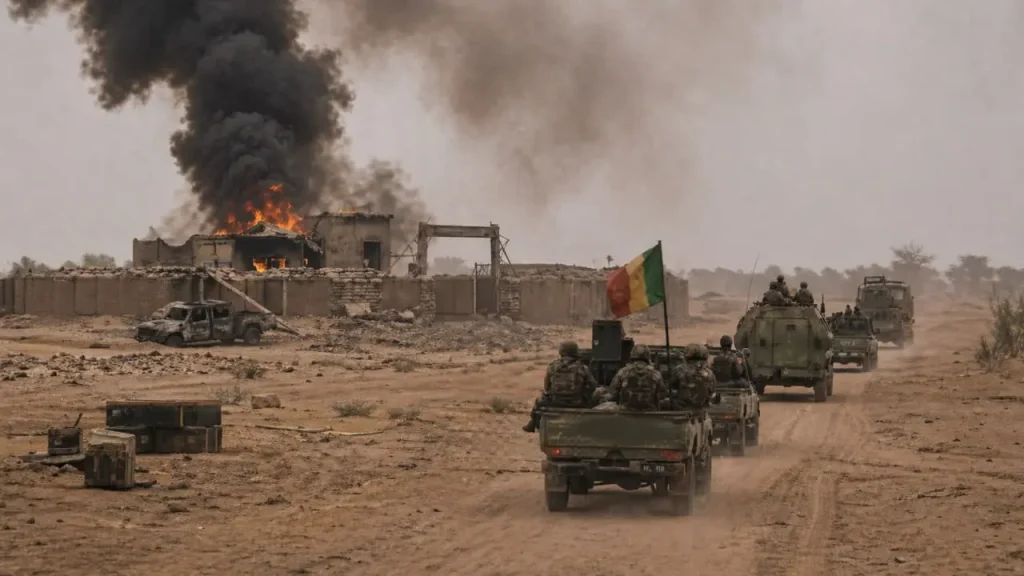
In 2025, the United States succeeded in significantly reducing the militarized presence of the autocratic axis on the continent. Following the dissolution of the Wagner Group in June 2025, the number of Russian mercenaries in Mali, Niger, Burkina Faso, and other African states declined.
At the same time, the withdrawal of a substantial portion of Russian armed formations created a vacuum of coercive and political influence that Washington cannot consolidate exclusively around Saudi Arabia.
The emergence of multiple parallel power centers—particularly the UAE and Turkey—raises the risk of Saudi Arabia clashing with other Arab monarchies and Ankara over control of political and security processes in Africa.
Such dynamics complicate coordination on the continent, create conditions for escalation within Arab political dynamics unfavorable to U.S. interests, lay the groundwork for Saudi–Turkish rivalry, and ultimately reduce the effectiveness of the security responsibility delegation strategy.
The limited effectiveness of this delegation model generates complex negative consequences for Washington. It increases transaction costs in managing regional crises, heightens the need for constant U.S. arbitration, and diverts attention and resources intended for the Indo-Pacific.
As a result, the space for transforming U.S. geopolitical strategy ahead of intensified confrontation with China narrows.
The structural reason is that delegating influence to actors positioning themselves as opponents of the autocratic axis does not function properly in an environment of competition among multiple regional power centers.
When partners simultaneously pursue their own rivalries and hold incompatible priorities, delegation ceases to be a stabilizing mechanism and instead becomes a source of fragmentation and escalation risk. For this reason, full-scale application of this model to the Middle East is currently unfeasible.
Throughout 2025, the Trump administration sought to stabilize relations within Islamic political dynamics, viewing these efforts as part of a broader transformation of U.S. geopolitical strategy in regions not considered primary theaters of future escalation with the autocratic axis.
Washington’s calculation was to reduce the need for additional force deployments in West Asia and free resources for the Pacific by delegating elements of containment of the Shiite “axis of resistance” to regional political dynamics opposed to the autocratic bloc.
However, fragmentation among Gulf monarchies, internal conflicts, and systemic competition among key U.S. partners render such delegation only partially effective and return Washington to the role of permanent arbiter.
Escalation in Yemen demonstrated that the critical focus of this mediation effort is preventing Saudi–Emirati confrontation, which could disrupt coordination within OPEC+ and undermine the manageability of the oil price corridor required by the United States for macro-financial stability and technological mobilization.
Iran’s defeat in the 12-day war in June 2025, the crisis of the Shiite axis of resistance—which lost logistical coherence and the capacity for coordinated military action against opponents of the autocratic bloc—and a wave of protests inside Iran that forced the ayatollahs’ regime to focus on internal stability, created a limited short-term window of opportunity for Washington.
The multifaceted crisis confronting the primary source of Middle Eastern destabilization and the main channel of autocratic influence in the region created conditions the Trump administration aims to exploit to reduce tensions within Islamic political dynamics and intensify mediation between Saudi Arabia and its regional competitors.
At the same time, the time window available to the United States is limited, as in the medium term Tehran—backed by China and Russia—will restore capabilities enabling the ayatollahs’ regime to support autocratic proxy forces beyond Iran’s borders.
Absent internal coordination among key Arab monarchies, even partial restoration of the axis of resistance’s operational capacity would increase the region’s security vulnerability and facilitate the emergence of new conflicts.
The risk of declining White House control over regional processes is prompting Washington to adjust its Middle East policy in anticipation of further moves by the autocratic axis.
Over the next several years, the U.S. administration intends to focus on simultaneously deepening political and military cooperation with the UAE, Saudi Arabia, and other Gulf monarchies; integrating key regional states into U.S.-initiated cooperation formats; and expanding the scale of investment projects.
Taken together, these measures aim to create interdependence that synchronizes Gulf initiatives with U.S. geopolitical strategy, strengthens coordination in displacing Russian and Chinese presence from key regions of the Global South, and simultaneously reduces the risks of radicalization and autonomous Islamic political dynamics.
Targeted efforts to restore confidence in U.S. security and political guarantees among Arabian Peninsula states thus become a critical safeguard for the success of the broader long-term strategy of containing autocracies.
Implementing a synchronized and comprehensive approach to intensifying U.S.–Arab interaction would restore Washington’s capacity to stabilize Arabian political dynamics and establish a manageable foundation for long-term containment of autocratic influence in the Middle East and adjacent regions.
Ultimately, Secretary Rubio’s diplomatic intervention on December 30, 2025, represents an element of a broader U.S. policy aimed at maintaining global oil prices within a narrow corridor, without which a managed restructuring of the U.S. economy becomes unattainable.
Control of this corridor preserves the investment logic of the shale sector and U.S. LNG dominance, restrains inflationary pressures, and stabilizes the cost of capital—thereby sustaining the financial conditions necessary for fundamental economic transformation.
Within this framework, manageability of relations between Saudi Arabia and the UAE becomes both an instrument for preserving the administration’s economic resilience ahead of the 2026 elections and a component of the broader strategy of containing the autocratic axis in global markets.