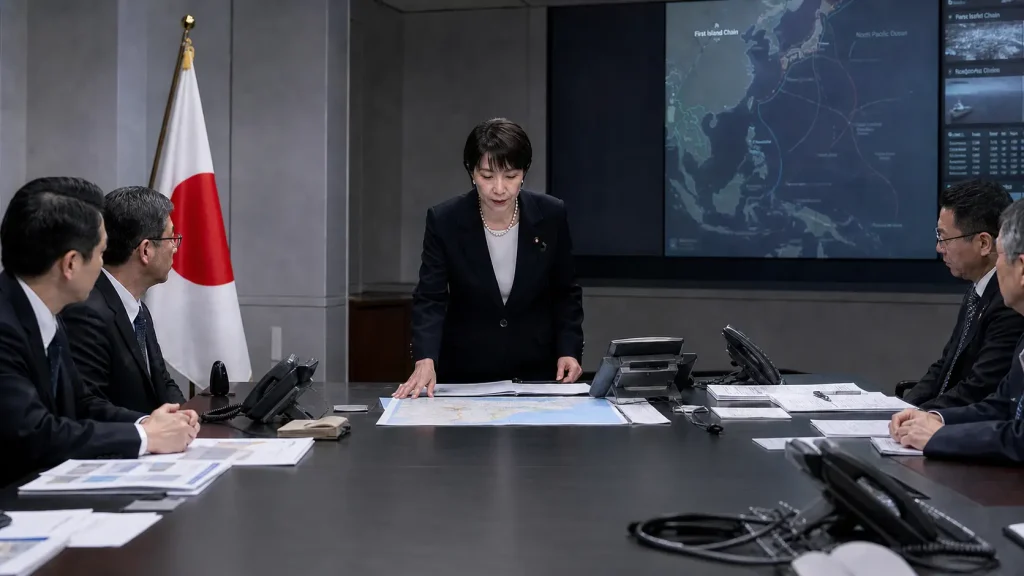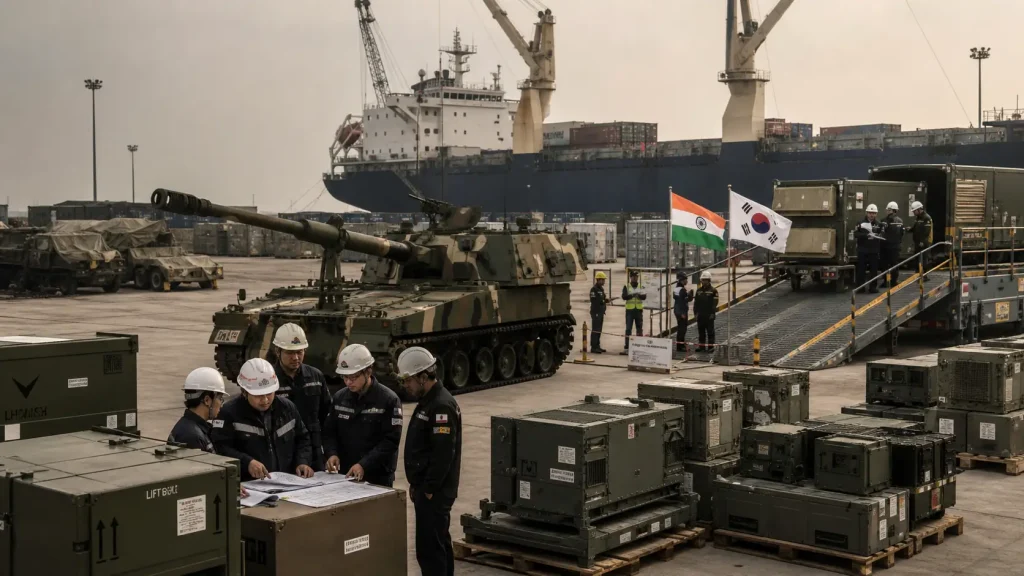
On December 12, 2025, it became known about the formation by the Trump administration of a coalition to counter China’s dominant control over critically important minerals through the signing of the Pax Silica Declaration, which will unite Singapore, Australia, Japan, South Korea, and Israel. The project is formalized as a separate multilateral framework outside traditional formats like the G7 or WTO.
The Pax Silica coalition serves as a format for the external contour of the development model for the U.S. critical minerals industry, which synchronizes rules of the game among allies, and which is taken outside the G7 and WTO, as Washington seeks to create a managed system for diversifying supply chains beyond these platforms.
Against this backdrop, the Chinese model of centralized control over processing is vulnerable, as the previous approach of locking imported raw materials processing in factories in China turns the Pax Silica coalition into a potential risk for the functioning of the entire mineral processing system in the PRC.
The new Chinese policy of strict state coordination through the rare earth elements law is a reaction to this structural instability, not a manifestation of strength capable of guaranteeing long-term monopoly.
The U.S., meanwhile, is building an ecosystem in which the loss of a single source or partner does not disrupt the functioning of the entire system, as production and processing are distributed among many points.
This model does not promise a quick reduction in China’s lead in tonnage or volumes of industrial processing, but it forms an advantage in resilience, adaptation rates, and ability to operate under conditions of prolonged confrontation.
Geopolitical scaling through coalitions is combined with industrial fragmentation within the country, creating an asymmetric response to Chinese concentration of capacities.
On December 9, 2025, the U.S. Army announced plans to develop small factories for processing critical minerals.
In this logic, geopolitical expansion is combined with internal production fragmentation, where instead of large centralized hubs, a network of small, functionally autonomous capacities is formed, capable of operating independently of global market fluctuations.
Washington is transferring to the sphere of critical minerals the principles of distributed electricity generation, where system resilience is ensured by multiplicity of nodes, and the loss of a single element does not lead to the shutdown of the entire chain.
Such an approach allows the States to compensate for China’s advantage in processing scale through deployment speed, flexibility, and ability for local response to export restrictions or political pressure from the PRC.
The American defense-industrial complex applies a similar logic, gradually reducing the orientation of defense procurements on five giants (Lockheed Martin, Boeing, and others) through delegating individual segments to less large-scale companies with shorter production cycles.
In the minerals sphere, this manifests in the creation of a network of small factories for extraction and processing of materials necessary for ammunition, armor, and high-precision military systems, where stability matters more than commercial efficiency.
The state military complex consciously limits the volumes of such processing, focusing on ensuring strategic needs, reducing dependence on private producers sensitive to price signals and external pressure.
Industrial use of tailings and secondary raw materials is integrated into this model as a way to quickly increase supply without opening new mines, which reduces regulatory risks and shortens time losses.
Modular capacities are viewed as infrastructure capable of adapting to constant external influences on the critical minerals sphere, including trade wars, sanctions, and manipulations in concentrate markets.
The U.S. Army has already spent $30 million on developing a program for antimony (stibium) extraction and processing, and the private company Westpro Machinery has designed a processing plant that is transported in four sea containers.
The processing plant can produce from 7 to 10 metric tons per year of one type of antimony, known as antimony trisulfide, which is significantly less than a commercial enrichment plant produces, but sufficient to supply the army in peacetime.
In the event of a conflict, the army is capable of expanding processing by adding additional mini-processing capacities to process ore from the “Perpetua” mine in Idaho.
The antimony case demonstrates the practical logic of this approach, where a mobile factory in the format of several containers provides the minimum necessary volume for the army, leaving the possibility of quick expansion in a crisis period.
However, China’s global leadership in critical materials has long gone beyond rare earth elements and is increasingly clearly concentrated around copper—the base metal for artificial intelligence, electrification, and the new generation energy transition.
Beijing today absorbs more than half of global copper imports, controlling about 51% of global flows, which turns this market from a trade one into a politically managed one, where demand is formed by the PRC’s political and technological priorities.
Copper purchases from key regions, including South Asia and Latin America, are accompanied by direct export of Chinese mining technologies and management solutions, as demonstrated by the case of the Saindak copper mine in Pakistan, which is actively developed by the Chinese.
China uses a combination of technological advantage and financial pressure for stable consolidation of unprocessed copper flows, redirecting them to its own industrial centers, where control over pricing and access is formed.
Control over the entire chain—from auxiliary extraction to mass absorption of concentrate—creates conditions for quiet, non-kinetic warfare, which in analytical models is increasingly described as undeclared war (liminal warfare).
Aggressive ramp-up of copper purchases logically combines with manipulations in adjacent markets, primarily lithium, where Beijing applies another but complementary tactic.
If in the case of copper, China acts through vertical integration and bilateral agreements, then in the lithium market, the bet is on artificially maintaining prices at levels that make alternative projects economically unviable.
Despite double-digit growth rates in lithium demand for batteries, electronics, and energy storage, global prices remain depressed, indicating targeted rather than market dynamics.
This creates a situation where any Western attempts to launch independent and transparent supply chains face a lack of investment logic at the starting stage.
Price manipulation on lithium complements regulatory escalation in the rare earth elements sector, where export licenses and mining quotas perform the function of an upper limiter for competitors.
As a result, two-sided pressure is formed: from above—through licensing regimes and export restrictions, from below—through price depression that stifles alternative investment models before their institutionalization.
Accordingly, the Trump government’s Pax Silica initiatives and decentralized network of critical mineral factories form an external and internal approach to containing Beijing’s use of rare earth metals as a geoeconomic weapon.
Pax Silica is a tool for preparing the democratic core for a sanctions break with the PRC in the forecasted escalation window of 2028-2029, when the Taiwan scenario could shift competition into a mode of blockade, export bans, and secondary restrictions.
Washington’s logic is to maintain a pre-assembled replacement and mutual assurance network among democratic countries, ready for activation during periods of political turbulence.
This ensures that any decision to impose sanctions will not leave the U.S. or its allies without critical materials—such as rare earth elements, antimony, tungsten, and related resources—essential for ammunition, armor, high-precision weapons, and AI infrastructure.
The 2027-2029 window overlays the 2027 French presidential elections, 2028 U.S. presidential elections, 2029 European Parliament elections, and the cycle of government team changes in Europe, which inevitably reduces the coalition’s breadth and increases the share of partners prone to ambiguity in policy toward Beijing and in support for Ukraine.
That is why Pax Silica is constructed as a narrow and managed regime. It is designed specifically for states that, even under conditions of a Western split, will maintain strategic discipline and the ability to sustain production despite Chinese export restrictions — including the United States, Australia, Japan, South Korea, and, in the European segment, the United Kingdom, Scandinavia, and the Baltic countries.
In this framework, copper and lithium serve as indicators of a much bigger process. The core idea is simple: the small number of countries that will stay in the democratic coalition by 2028–2029 will need guaranteed access to critical materials.
This material autonomy is essential so they can sustain a long-term confrontation with the autocratic bloc — no matter how markets fluctuate or how loyal other partners prove to be.
Washington is shifting from the confrontational policy applied by Biden to building an alternative technological bloc, where access to critical resources and technologies becomes an element of security.
By applying the coalition model around critical minerals, China is isolated not by tariffs but through alliance formation. For the EU, this is a signal that the center of decision-making in the technological war is increasingly shifting to narrow coalitions rather than universal institutions like the G7.
In the medium term, such a model will mean fragmentation of global critical materials markets and accelerated formation of parallel supply ecosystems, in which scaling speed and political loyalty will matter more than economies of scale.
China will retain strong positions in enrichment and material processing but will face gradual erosion of its monopoly through distributed, modular, and less vulnerable Western production contours oriented toward defense, AI, and energy.
In such a model, Beijing’s geoeconomic advantage will increasingly depend on the stability of external suppliers, making it structurally fragile under conditions of geopolitical uncertainty.