On December 12, 2025, the Australian Strategic Policy Institute (ASPI)—the country’s leading security-analytical center, affiliated with the Ministry of Defense—published a new forecast.
According to it a large-scale military clash in the Indo-Pacific could lead to significant operational separation among democratic allies (Japan–Australia defense cooperation in the Pacific: The case for a partial division of labor).
The document anticipates that in the event of the U.S. focusing on containing the PRC along the First Island Chain, responsibility for protecting critically important economic arteries in the Pacific will essentially fully shift to Australia and Japan.
In particular, if Beijing blocks logistics routes through the Malacca, Sunda, and Lombok Straits, it will be Canberra and Tokyo that are forced to maintain control over the “corridor of life”—a key space between Micronesia and Melanesia that connects Australia’s resource base with the military-industrial capacities of Japan, South Korea, and Taiwan.
The loss of this “corridor,” which runs along the Second Island Chain, would lead to strategic defeat, opening the way for Chinese advancement toward the U.S. mainland.
The ASPI report summarizes that regional states—primarily the island nations of the southern Pacific—need to realize that the PRC’s expansion will not be limited to seizing territories of Taiwan, the Philippines, and Japan.
This means that the PLA will not be burdened by issues of violating the sovereignty of smaller states in order to gain a strategic advantage over the U.S. and its allies.
Although the mentioned Australian analysis focuses on modeling a potential military situation, its foundation reflects a profound shift in trends in relations between Australia and Japan after Donald Trump’s return to the White House.
The unprecedented victory of the Labor Party in the May parliamentary elections, driven by Australian society’s disagreement with the phenomenon of Trumpism itself, led to a structural rethinking of Prime Minister Anthony Albanese’s government doctrine.
In particular, he adopted an Australia-centric vision, according to which Canberra itself bears responsibility for the security and future of surrounding waters, which should be based on principles of values-based policy.
Realizing Australia’s special role as a supplier of rare earth metals and other critical resources for the purposes of the American “strategic decoupling” from the PRC, Prime Minister Albanese’s government managed to comprehensively update the partnership with the United States on transactional grounds—including preserving the AUKUS coalition agreement.
At the same time, Canberra concluded that relying on the White House as a guarantor or moderator of Indo-Pacific security was a misguided strategy that led to the weakening of national security.
This dynamic outlines further strengthening of Australia’s geopolitical agency, which will manifest both through bolstering its defense presence in the subregions of the southern Pacific and Southeast Asia, and through concluding extensive “latticework” agreements built on its resource and geographical advantages.
At the same time, Canberra’s course toward building up defense capabilities will differ from the European one with a significantly more realistic and non-bureaucratic approach, which will ultimately contribute to maintaining the White House’s transactional commitment.
Similar processes by nature are occurring in Japan—a state that, from the perspective of Donald Trump’s administration, is the “most important” U.S. ally.
Sanae Takaichi’s victory in the Liberal Democratic Party of Japan (LDP) presidential elections and the return of decisive influence by Taro Aso—the founder of the “latticework” security vision for the Indo-Pacific—to the Cabinet provided impetus for completing the transformation of the state into a leading security leader.
Rejecting domestic political constraints, the LDP accelerated strategic processes that, in its belief, should restore Japan’s “geopolitical greatness and unbreakable security”: renouncing constitutional pacifism, unblocking military exports, adopting counter-espionage legislation, and broader militarization of society.
In this context, Prime Minister Takaichi’s government seeks to restore security “patronage” over democracies that have historically been under Japan’s civilizational influence and simultaneously form its security network—Taiwan, South Korea, the Philippines, Palau, etc.
In addition, it plans to strengthen Japanese presence in the Euro-Atlantic, based on the conviction that these ties will ensure tangible support from the United Kingdom and the EU in the event of direct confrontation with the PRC.
Ultimately, thanks to the tandem of Sanae Takaichi and Taro Aso, the current geopolitical conjuncture for the first time falls under the influence of significant Japanese dynamics, which is now manifesting in a “reactive” change in the balance of power in East Asia.
Since both Australia and Japan have established themselves as indispensable transactional allies of the United States, their convergence in the “latticework” and ideological dimensions will become a long-term trend that will define the security situation in the Pacific both with and without White House participation.
This aligns with the essence of the U.S. National Security Strategy published in December 2025, according to which American allies and partners must build up and finance defense interactions without Washington’s involvement—that is, independently take responsibility for maintaining order in waters that are a “common backyard” for each of them.
It also fits into the essence of the “2+2” negotiations between Australia and the U.S., which took place on December 8 in Washington; following their outcomes, the White House confirmed its commitment to the “ironclad alliance” with Canberra, but made it clear that it expects its responsible agency in the process of supporting Indo-Pacific security.
A distinctive feature of Australian-Japanese relations is mutual strategic perception. At least since 2003, Japan has viewed Australia as an optimal raw material base capable of stably supplying its economy and military-industrial complex with minerals and energy resources in safe geographical conditions remote from the PRC.
In parallel, in Japanese society, an image of Australia as the “true America”—a pluralistic, Asia-centric state ready for stable and long-term partnerships—is forming.
Australia, in turn, sees Japan as a key technological donor (particularly in the military sphere—as in the case of Mitsubishi’s “Mogami” frigates), a reliable partner and strategist capable of shaping the Indo-Pacific security architecture independently of U.S. participation.
Indicatively, over 76% of Australians have a positive attitude toward Japan as an ally—this is the second highest indicator after New Zealand (85%), according to the Lowy Institute Poll 2025.
Similarly, 76% of Japanese declare a sense of affinity with Australians (外交に関する世論調査2024 – public opinion poll on foreign policy 2024).
Under favorable conditions, this forms the basis for the creation of a full-fledged “strategic symbiosis” between Japan and Australia, which could become the core of regional defense capability, able to develop and self-reproduce outside the American political context. Geography will remain a fundamental factor in their unity.
Currently, Japan, Australia, and the U.S. divide zones of primary interest (domains) in the Pacific. Tokyo is focused on large-scale activities covering the northern Pacific, Micronesia, and Hawaii—that is, the same domain controlled and supported by the U.S.
At the same time, Canberra is focused on supporting security in the southern Pacific and, to a lesser extent, in the waters of the Indian and Antarctic Oceans. The central point of intersection of their interests is the Melanesian Arc—the “gates” that separate Australia from Asia and, in the event of a Chinese war, will control the “corridor of life.”
The Melanesian Arc is an island system in the Pacific Ocean that includes New Guinea, the Solomon Islands, Vanuatu, Fiji, and New Caledonia. It is the most populated part of Oceania, which since 2022 has been experiencing unprecedented intervention from the PRC.
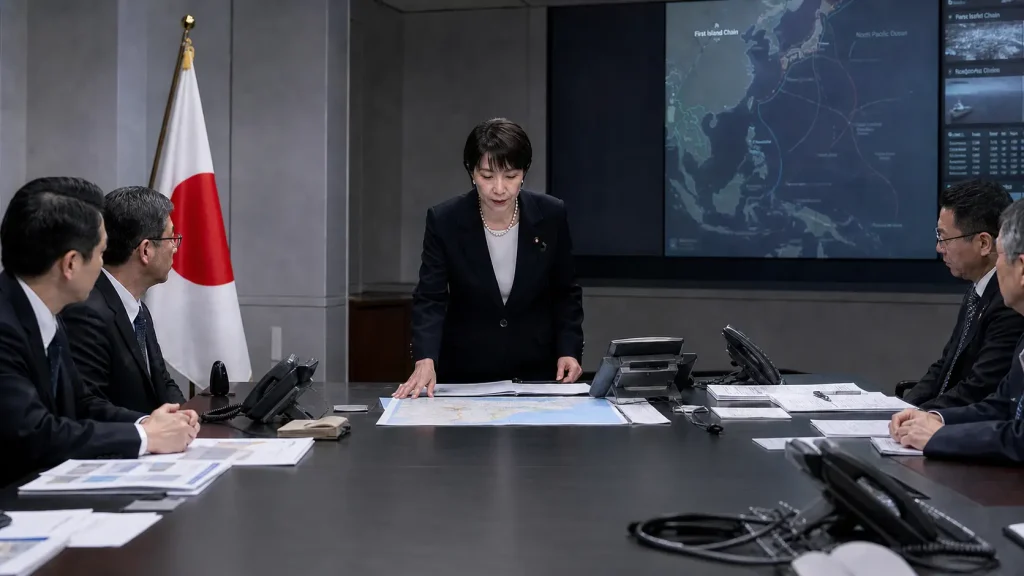
Japan and Australia realize that in the event of a major regional conflict, the PLA will obviously block navigation through the South China, East China, and Philippine Seas. Then, supplies from the Euro-Atlantic to East Asia will pass through the Indian Ocean, then Australian Antarctic waters, and finally—through the Melanesian Arc.
Key significance on this route is held by the Bismarck Archipelago—a kind of “ideal” geographical shield that will determine the course of a potential protracted war with the PRC; its role may be comparable to that of Crimea in the Black Sea region or Cuba in the Caribbean Basin. The archipelago is part of Papua New Guinea.
Currently, the Australian government has spent about $500 million on modernizing the Lombrum naval base on Manus Island—the northernmost defense point of the Bismarck Archipelago, which will have critical importance during a clash with the PLA.
Until recently, this base was under U.S. control, which allocated $25 million to support Lombrum. However, after the signing of the defense pact between Australia and Papua New Guinea in October 2025, access to the base will also be granted to Australian troops.
A problematic issue for both states remains the pace of building up defense infrastructure along the Melanesian Arc—particularly because the United States has essentially withdrawn from this process, shifting responsibility for supporting security in the southern Pacific to Canberra.
In particular, Australia accounts for 43% of the region’s funding, which is four times the aid from New Zealand—the second donor on the list. Because of this, the position that Australia is completely alone in real responsibility for the southern Pacific is being affirmed.
This situation significantly contributes to the PRC’s expansionist goals, which does not abandon attempts to build military facilities in the Solomon Islands, Fiji, Vanuatu, and—in the event of achieving independence from France—New Caledonia.
At the same time, the winding down of USAID programs has allowed Beijing to strengthen the trust of Pacific Islands Forum states and expand the list of infrastructure grants around the Melanesian Arc.
The strategic goal of this process is to prevent the formation of a system capable of ensuring the “corridor of life” for East Asian democracies during a potential military clash.
Such a prospect is unsatisfactory for Japan, which has its own format of interaction with the region (PALM). By expanding defense ties with Australia, Prime Minister Takaichi’s government expects to strengthen its own presence in Melanesia and, in particular, in Papua New Guinea. This aligns with Canberra’s intentions and—from a broader perspective—Washington’s.
In parallel, Japan is interested in building up military infrastructure along the Second Island Chain—primarily Micronesia.
Tokyo’s particular emphasis, however, will be on Palau—a freely associated state with the U.S., which from 1920 to 1945 was part of the Japanese Empire. In addition, Prime Minister Takaichi’s government seeks co-participation in supporting the security of the Northern Mariana Islands, which are under U.S. control.
The political impetus for building up Australian-Japanese cooperation in Oceania is the intensification of Chinese provocations.
Shortly after the Japanese government’s decision to declare readiness to participate in Taiwan’s defense, PRC forces carried out a series of large-scale provocations.
They included joint Chinese-Russian intrusions into the airspace of Japan and South Korea, as well as PLA radar locks on Japanese fighters performing defense missions over Okinawa.
In parallel, Australia’s Ministry of Defense warned of the PLA’s beginning preparations for repeated exercises in the Australasia region—similar to those in early 2025 that involved Chinese ships circumnavigating the entire Australian continent.
As of December, PLA ships have approached Palau’s waters, moving toward the Melanesian Arc. Canberra named the goal of these exercises as rehearsing actions of amphibious tactical groups taking into account the need to replenish supplies at a significant distance from the PRC.
Essentially, it is about Beijing’s preparation for potential landings on the territory of southern Pacific island states with the aim of undermining the security of the Second Island Chain.
Similar assessments were voiced by other Australian government representatives. In particular, Foreign Minister Penny Wong emphasized that Beijing is systematically strengthening its strategic and military influence in the southern Pacific, using economic and so-called “security” tools; according to her, this process has already become irreversible.
At the same time, the director of the Australian Security Intelligence Organisation (ASIO), Mike Burgess, warned of unprecedented levels of Chinese espionage aimed at infiltrating Australia’s critical infrastructure—water supply, transport, telecommunications, and energy systems.
Private security initiatives and data of stakeholders involved in them are also under heightened threat. According to Director Burgess’s assessments, the activities of Chinese intelligence structures have already cost Australia at least $8.2 billion, and these losses will continue to grow.
Japan, which is simultaneously intensifying its own efforts to counter Chinese espionage, views this mirrored security dynamic as a basis for further deepening practical strategic partnership with Australia.
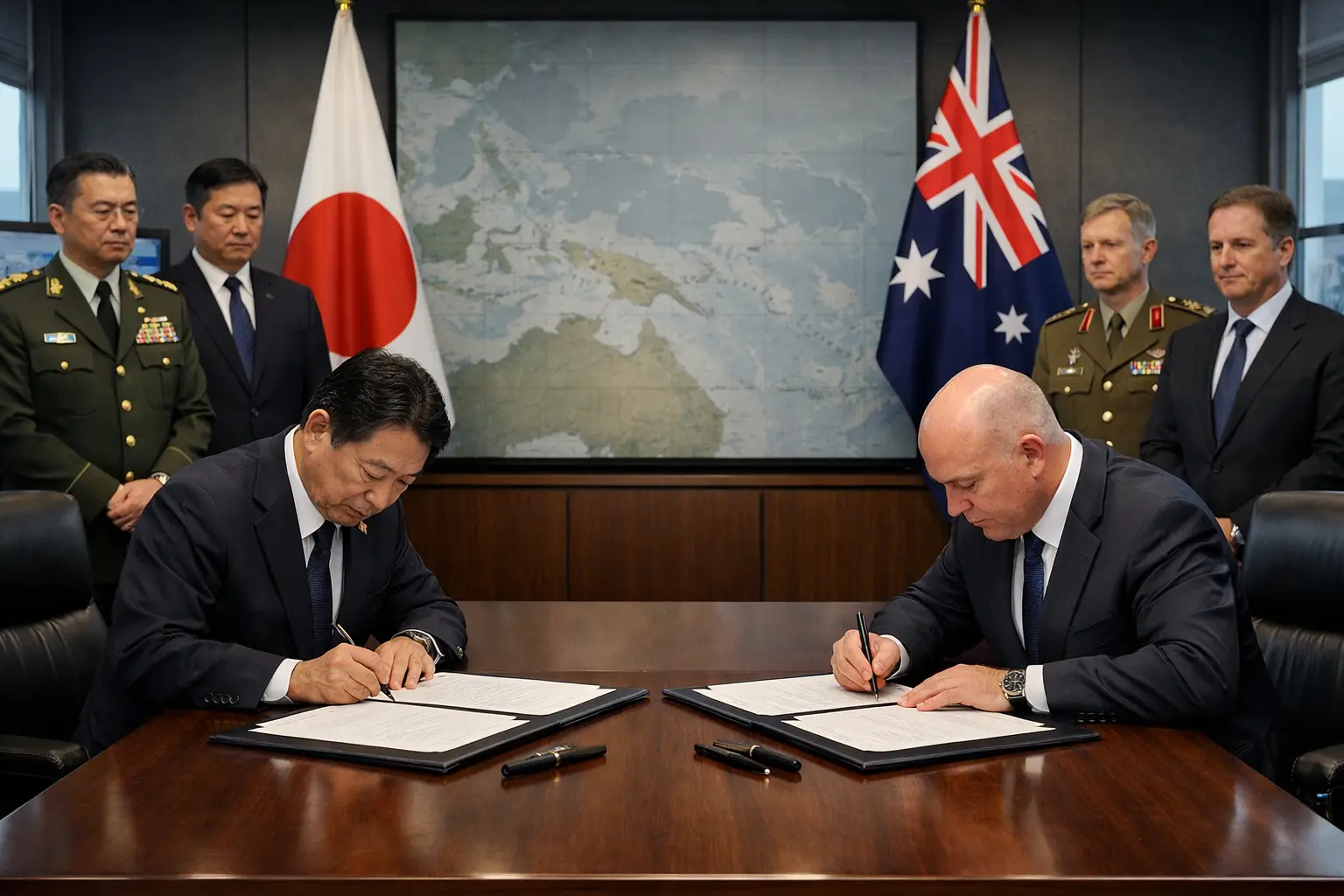
On December 7, 2025, Defense Minister Shinjiro Koizumi and Deputy Prime Minister and Defense Minister Richard Marles announced the launch of the Framework for Strategic Defence Coordination between Japan and Australia (FSDC).
According to it, coordination of the two states’ defense policies is elevated to a permanent institutional level under the direct leadership of the Defense Ministers with regular—at least annual—meetings and involvement of relevant agencies.
This framework is intended to ensure deepened synchronization in the areas of defense policy, intelligence, bilateral and multilateral military activities, defense industry, technologies, and capability development, including space, cyber, and integrated air and missile defense dimensions.
It also envisions coordination of actions across the full spectrum of scenarios—from peacetime to crises and contingencies—with the aim of strengthening collective deterrence amid the degradation of the regional security environment in the Indo-Pacific.
This means that the states have laid the foundations for further institutionalization of the defense architecture in the areas of the Melanesian Arc.
Confirmation of such a course is the agreement within the FSDC to build up presence and joint activities of the Japan Self-Defense Forces and Australian Defence Force on mutual territory and in the region, deepen operational interoperability, and expand strategic exchanges.
In a broader strategic dimension, the FSDC consolidates the role of Japan and Australia as the central hub of coordination among pro-democratic states in the Indo-Pacific.
This includes a clear linkage to trilateral interaction with the U.S., joint containment of the PRC, support for stability in the Taiwan Strait, East China and South China Seas, as well as deepening operational cooperation with the Philippines, ASEAN countries, and the formation of a “latticework” security architecture.
Under such conditions, the ASPI’s prognostic report became an indicator of the fixation of a new security reality.
In this reality—in the event of a large-scale military clash in the Indo-Pacific—the United States will focus on containing the PRC along the First Island Chain, while maintaining critically important economic and logistics arteries in the Pacific de facto shifts to the responsibility of Australia and Japan.
Moreover, it is not about situational or auxiliary “division of tasks,” but about a sustainable separation of duties that will define the nature of a regional war and preparation for it already at the pre-crisis stage.
In these conditions, Canberra and Tokyo are increasingly clearly stepping beyond the classic role of U.S. allies and transforming into independent regional security providers capable of planning, financing, and maintaining defense infrastructure outside direct American management.
This crystallizes their uniqueness among the entire democratic camp, which still has significant gaps in Europe.
A special role in strengthening the Japanese-Australian strategic partnership will be played by the Melanesian Arc and the Second Island Chain, which during a potential conflict will serve as the “corridor of life,” designed to ensure the continuity of strategic supply chains between the Indo-Pacific and the Euro-Atlantic.
At the same time, the convergence of Australia and Japan is determined not only by the activation of PRC provocations, but also by a significant change in the American approach to allies.
In particular, Donald Trump’s administration promotes a model in which partners must take responsibility for the security of their “own backyard,” while the U.S. focuses on supporting the “American Hemisphere” and direct confrontation with the PRC.
For Washington, this is a rational and advantageous configuration that aligns with the 2025 National Security Strategy: Australia finances security in the southern Pacific, Japan provides its technological-operational component, and the U.S. remains the strategic center, unburdened by “unnecessary expenditures.”
Such a situation means that Japan and Australia are approaching the formation of a self-reproducing strategic symbiosis capable of effectively functioning both with active U.S. participation and in conditions of their limited involvement.
Although Donald Trump’s administration is fully satisfied with such developments, it does not account for the deeper consequences of this shift: in particular, the formation of “values-based alliances,” which—given proper political support—could outweigh the U.S. in global leadership already in the medium-term perspective.