Unlock the full article
Read the complete analysis with instant access, or subscribe to receive unlimited access to all Solid Info publications.
Already subscribed? Sign in
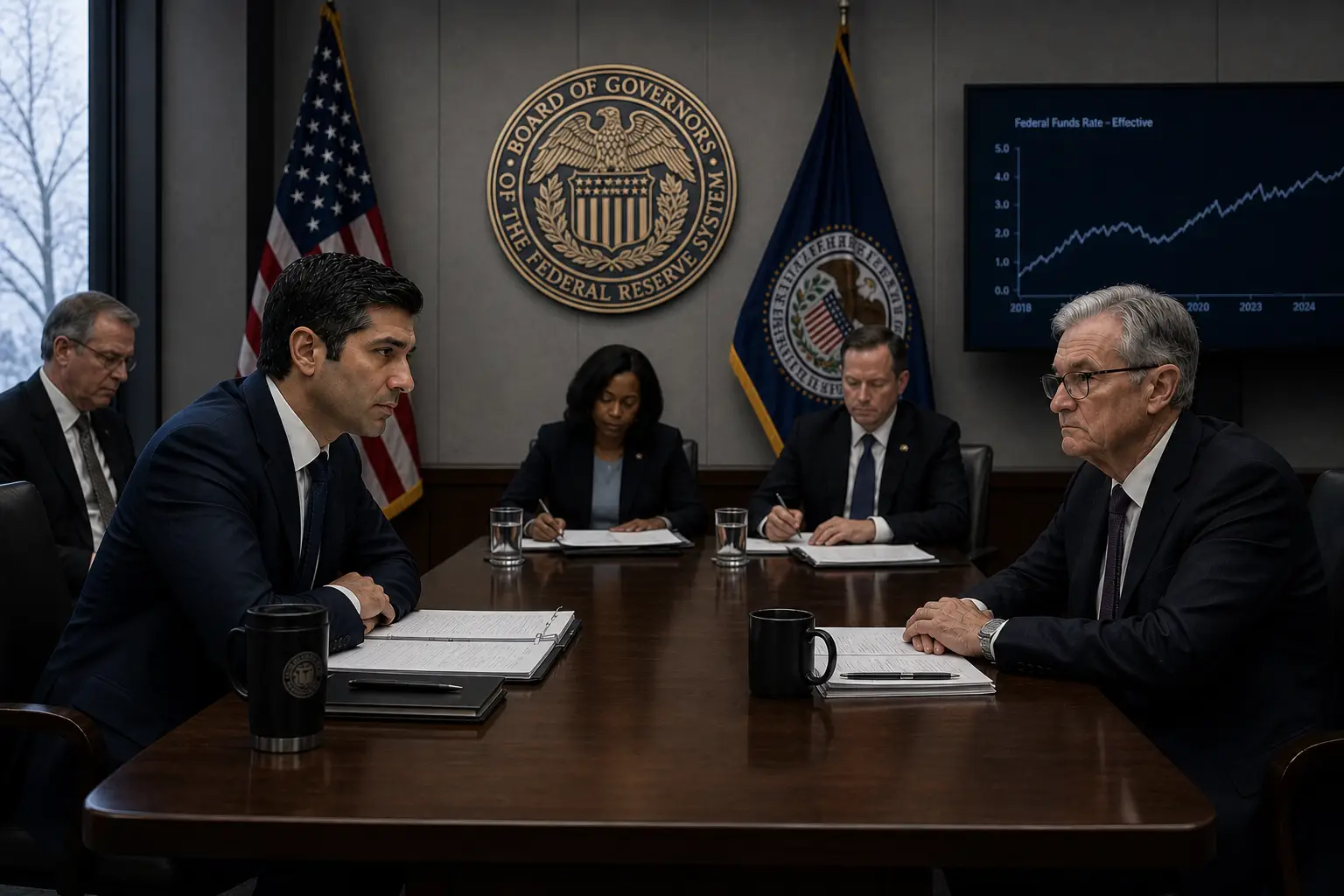
On April 29, 2026, the U.S. Federal Reserve left its benchmark interest rate unchanged for the third consecutive time at 3.5–3.75%, signaling readiness to maintain a restrictive monetary stance despite political pressure and deteriorating consumer expectations.
The Fed found itself balancing three competing demands: the Donald Trump administration expects rate cuts, inflation requires a tight monetary policy, and the U.S. federal debt trajectory demands sustained confidence in borrowing costs.
The Senate vote confirming Kevin Warsh as Fed Chair, alongside the continued presence of Jay Powell on the Fed Board, is shaping an internal system of checks and balances in which decisions are formed through coalitions rather than political hierarchy.
Read the complete analysis with instant access, or subscribe to receive unlimited access to all Solid Info publications.
Already subscribed? Sign in