On March 13, 2026, during a press briefing, Pentagon chief Pete Hegseth criticized the media company CNN for its reporting on the conduct of the military operation in Iran.
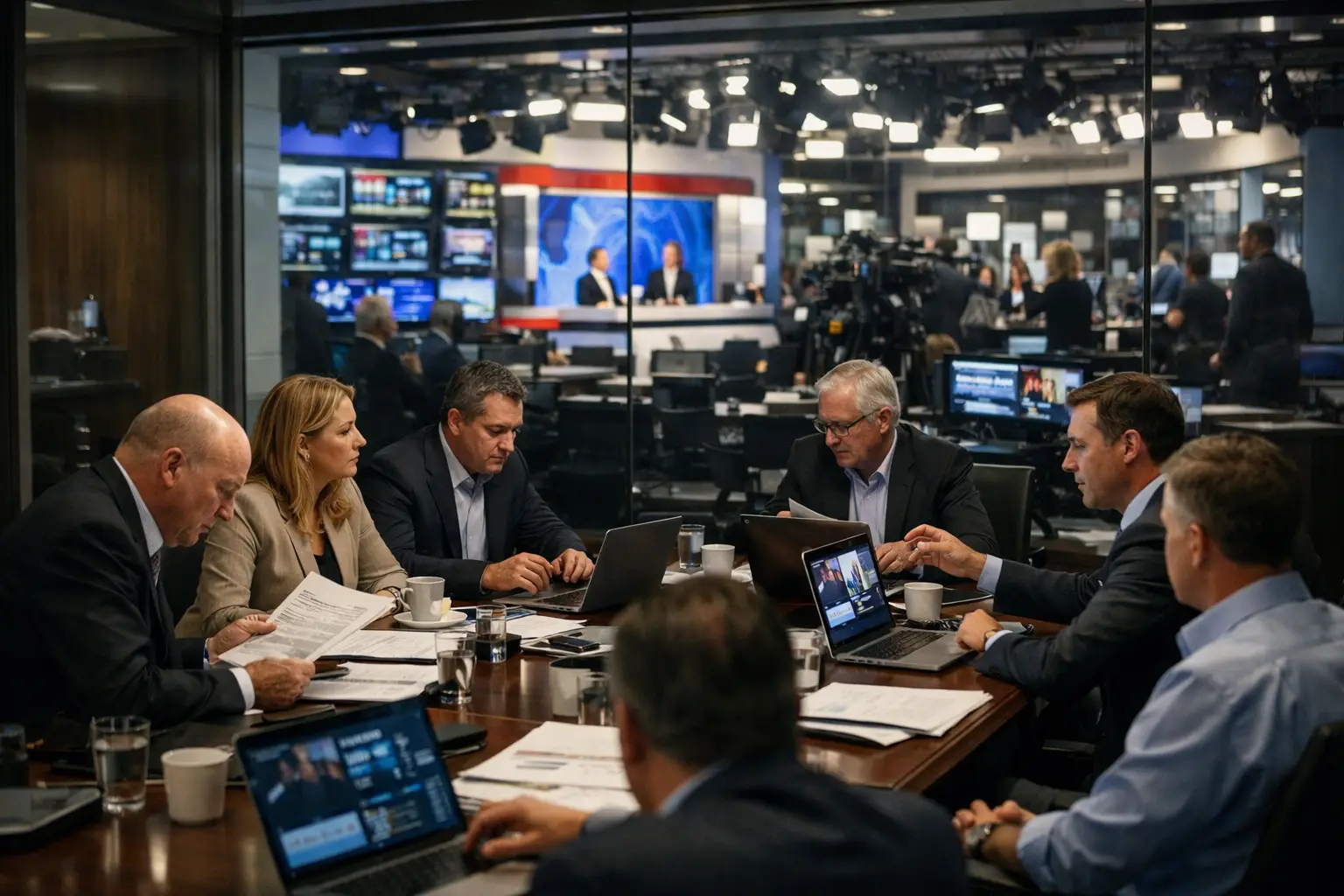
The Secretary of Defense criticized CNN journalists for questioning the White House’s ability to assess Iran’s readiness to restrict shipping through the Strait of Hormuz and predict other consequences before the launch of Operation “Epic Fury.” At the same time, he supported the company’s transition under media magnate David Ellison.
Two weeks before Pete Hegseth’s comments on CNN’s information policy, the media conglomerate Paramount Skydance Corporation—owned by David, son of Oracle founder and Republican mega-donor Larry Ellison—announced the conclusion of a deal with Warner Bros. Discovery (WBD).
The agreement reached on February 27, 2026, stipulates that Paramount will absorb WBD, which includes CNN, by September 30, 2026.
Prior to signing the agreement for the planned acquisition of WBD, Paramount Skydance successfully passed the first stage of antitrust review. Although there are currently no legal obstacles to David Ellison’s company acquiring WBD, Paramount must still undergo review by antitrust authorities.
The U.S. regulators responsible for reviewing the transaction include the Department of Justice and the Federal Trade Commission (FTC), whose leadership was appointed by the Trump administration.
During the review process, which is expected to last 6 to 18 months, informal negotiations will continue between the federal agencies and Paramount. In these talks, U.S. agencies will outline their expectations regarding the political positioning of the media outlets that are part of WBD.
Among the conditions the U.S. administration will consider acceptable for approving the deal is a reorientation of CNN’s editorial policy—one that includes softening criticism of the White House and the Republican Party and shifting the media’s rhetoric toward more conservative narratives.
The practice of conservative entrepreneurs acquiring media conglomerates that previously supported Democratic Party policies was already implemented in the first year of Trump’s term. Combined with strengthened regulatory restrictions on the media, it has become a tool for the systematic reformatting of American media.
On August 7, 2025, David Ellison’s company Skydance Media entered into a merger agreement with Paramount Global, which owned the CBS television and radio network.
A month after the acquisition, the company managed by David Ellison appointed Kenneth Weinstein—a representative of the conservative Hudson Institute think tank—as ombudsman of the CBS news division and recruited several journalists with clear pro-Republican views.
The change in CBS leadership, which coincided with the Federal Communications Commission (FCC) review of broadcasting rules, led to an adjustment of the network’s rhetoric.
In July 2025, on the eve of the Skydance Media–Paramount Global merger taking effect, CBS announced that the final season of The Late Show with Stephen Colbert would air in 2026.
Network leadership cited financial reasons for the decision, but the real cause of canceling new seasons of The Late Show with Stephen Colbert was Colbert’s regular criticism of Donald Trump and other conservative politicians.
At the start of 2026, new CBS News editor-in-chief Bari Weiss introduced a plan to grow the outlet’s audience. CBS said some journalists left because they disagreed with the new editorial direction.
The network then hired 18 new commentators, including Niall Ferguson, Patrick McGee, and physician Mark Hyman, who is close to Health Secretary Robert F. Kennedy Jr.
Following a complaint from the then-Secretary of Homeland Security Kristi Noem, in which she accused the network of airing shortened versions of interviews, CBS committed to broadcasting full, unedited material in its flagship socio-political programs.
An additional instrument of influence on CBS was the critical stance taken by the President of the United States toward the network’s previous editorial policy.
In October 2024, Donald Trump filed a lawsuit against CBS accusing the network of video editing that favorably portrayed the statements of Democratic presidential candidate Kamala Harris during an interview with CBS journalists.
The amount of Trump’s lawsuit against the network grew to $20 billion, prompting CBS’s parent company to transfer $16 million to the Trump Presidential Library to settle the case.
Paramount Global’s decision to settle the lawsuit showed that legal action can be an effective way to pressure media outlets that resist changing their political stance.
Thus, in December 2024, ABC News essentially conceded to the claims brought by Trump’s team in a defamation lawsuit. ABC News agreed to pay $15 million and publicly acknowledged the unreliability of statements made by its host that had discredited Donald Trump’s reputation.
The legal settlements and substantial compensatory payments that ABC and CBS were forced to make became an additional factor influencing the correction of their public positions.
As a result of multifaceted pressure on the editorial policies of several of America’s largest media outlets, by the end of 2025 the presidential administration and conservative business elites had developed an effective model for correcting U.S. information policy.
This model consists of regulatory levers, lawsuits, and the acquisition of leading media companies through merger and acquisition agreements.
Since these methods worked in the first year of Trump’s term, the Republican administration plans to expand its influence over the U.S. media sector to shape societal values—especially among younger people—ahead of rising tensions with autocratic powers.
The new stage of global conflict, initiated by the American-Israeli operation in Iran, has been marked by the absence of sufficient public consensus on national security issues.
A CNN poll conducted in the first days after the launch of Operation “Epic Fury” showed that 59% of respondents condemn the White House’s decision to begin a military campaign against the ayatollah regime, and only 12% of Americans support a U.S. ground operation in the region.
The White House interprets citizens’ skeptical and pessimistic attitude toward the campaign against Iran as the result of a long-term information policy that failed to cultivate values connected with patriotism, state security, and readiness for military service.
A key factor that contributed to the decline in public support for the military and the moral unpreparedness of citizens for military service has been the American film industry, which remains one of the key instruments of communication with society.
A factor that contributed to the reduction in public support for the army and the moral unpreparedness of citizens for military service has been the American film industry, which remains one of the key instruments of communication with society.
The ideological narratives promoted by cinema since the 1990s have been characterized by a critical attitude toward state institutions and the armed forces, anti-war content in films, and a reduction in the number of pictures promoting patriotic ideology.
Between 1948 and 1953, around 70 films criticizing the USSR and communist ideology were released in the United States, and the Cinema Alliance for the Preservation of American Ideals actively promoted Western civilizational narratives.
After the Cold War ended, however, American power and the military were increasingly portrayed as morally flawed and corrupt institutions.
The consequence of these ideological shifts in cinematography—and in particular the elimination of moral and patriotic emphases in American films—has been the systematic unpreparedness of the new generation of Americans to participate in recruitment.
According to 2022 data, 77% of Americans aged 17–24 are unfit for military service due to physical or psychological reasons. The share of young people willing to enlist fell from 16% in 2003 to 10% in 2022, and only about 2% both meet fitness standards and want to serve.
Governments of the autocratic bloc countries systematically monitor the decline in U.S. recruiting potential and the shift in public attitudes toward military service.
For the leadership of the PRC, Russia, and other autocracies, the revision of American socio-political values and the crisis of trust in the military serve as indicators of U.S. vulnerability in the intensifying global confrontation.
In contrast to the decrease in the combat-ready reserve recorded by the Pentagon, China consistently encourages military enlistment through active state propaganda and an extensive system of benefits.
Evidence of the effectiveness of Chinese priorities in staffing its armed forces is the replenishment of the People’s Liberation Army (PLA) with educated and motivated personnel.
The share of college graduates among Chinese recruits rose from 17% in 2006 to 90% in 2018, and the number of Chinese students who applied to join the army reached about 15% of all graduates.
The American administration views the transformation of the media and cultural environment, along with a change in information policy priorities, as the way to overcome society’s unpreparedness for service and its pacifist sentiments amid the escalation of global confrontation.
A clear signal of the importance the current Republican administration attaches to reformatting the media space and the film industry came even before Donald Trump’s official inauguration, when he appointed Jon Voight, Sylvester Stallone, and Mel Gibson as “special envoys” to Hollywood.
The President defined their main tasks as returning the industry to a more conservative discourse, shaping American values, and turning the entertainment industry into a tool of state communication with society.
The administration expects that activating film production through potential economic incentives and deregulation will create a favorable environment for promoting narratives capable of restoring public support for the country’s defense policy ahead of the next stages of confrontation with China.
A more effective method of transforming the U.S. cultural environment has been the change in the ownership structure of leading media conglomerates.
Following the absorption of WBD by David Ellison’s company, its subsidiary Warner Bros. Entertainment—which as of 2025 ranks second in the U.S. box-office market and accounts for 21% of American film production—will also undergo editorial policy changes.
Similar to the transformations that occurred at CBS in the second half of 2025, Warner Bros. Entertainment will face a management overhaul and personnel rotations in favor of individuals who share conservative values and recognize the need to contain the expansionism of autocratic states.
The White House’s reaction to the lack of public consensus around the tactics of “coercive diplomacy” and the active preemption of the aggressive geopolitical strategy of autocracies demonstrated a fundamental shift in the Trump administration’s approach to the information environment.
As traditional media increasingly adapt to the political expectations of the current government, the White House has gained an opportunity to exercise partial control over the rhetoric of key American media outlets.
The advantage obtained by the presidential team will help the Republican Party more effectively consolidate its traditional electorate ahead of the 2026 midterm elections and unify it around the country’s political leadership.
The American administration expects that reducing criticism of the decisions of the country’s military-political leadership and promoting conservative narratives in the media will help maintain control of Congress after the 2026 election campaign.
This will preserve synchronized interaction between the White House and Capitol Hill and thereby strengthen the United States’ ability to counter external pressure from the axis of autocracies.
On the other hand, the reformatting of political discourse in news, television shows, and films is becoming a tool for preparing society for a prolonged confrontation with autocracies that will continue even after the Republican term ends.
Taking into account the further escalation of conflict with the PRC and its allies, the White House seeks to build information policy on a horizon that extends beyond the Trump presidency.
The American administration is using its influence over regulators and working with conservative business elites to promote patriotic values among young people and improve perceptions of the state, the military, and foreign rivals.
Media mergers, updated regulations, and new efforts to reform the film industry are part of the White House’s response to how quickly autocratic regimes can mobilize their societies.
While authoritarian governments have consistently maintained and updated their information policies to support stability and unity, the U.S. is only now beginning to address the effects of long-term ideological inertia and skepticism in the media space.
The Republican administration believes that without greater alignment in Hollywood and major media, the United States will face autocracies with a divided society, weak public consensus, and harmful value orientations among key groups.
Because years of promoting pacifism, pessimism, and skepticism toward the state and the military have left many young Americans unprepared to defend their country, Washington is entering a new phase of global tensions without a strong foundation for mobilization.
The ideological transformation of companies that produce informational and entertainment content is perceived by the White House as part of building the country’s defense potential for the long term.
Greater attention to communication with society has turned media consolidation from a purely regulatory issue into a tool of long-term state resilience.
Media resources have become a means of restoring public trust in the government and the military and a lever for influencing the ideological unity of the American public in the future.