On February 24, 2026, the PRC announced an unprecedented expansion of export controls on 40 Japanese technology companies due to their involvement in the development of the military-industrial complex.
This decision became the largest package of targeted economic restrictions from Beijing since the establishment of diplomatic relations between the states in 1972, specifying the general regime of restricting Japan’s access to dual-use goods from January 6.
According to a decree by the Ministry of Commerce of the PRC, the mentioned Japanese companies were divided into two sanction levels.
The first and most stringent sanction level included 20 companies from the ownership structures of Mitsubishi Heavy Industries, Kawasaki Heavy Industries, IHI Corporation, NEC, and Fujitsu.
It also covered the National Defense Academy of Japan and the Japan Aerospace Exploration Agency (JAXA). All these entities face a complete ban on the supply of dual-use goods without special government permission.
The second level of export control extended to the other 20 companies, including Subaru, ENEOS, and Nitto Denko corporations.
Although Beijing did not impose an automatic ban on supplies for this group, the new restrictions provide for significant non-market barriers that will essentially make it impossible for them to participate in Japan’s defense initiatives without the risk of losing access to PRC products.
Beijing’s calculation assumes that economic pressure will slow the revitalization of the Japanese defense complex. In practice, the PRC’s sanctions have the opposite effect—they speed up the adoption of long-delayed security decisions and unite business and government around a strategy to reduce dependence on the Chinese market.
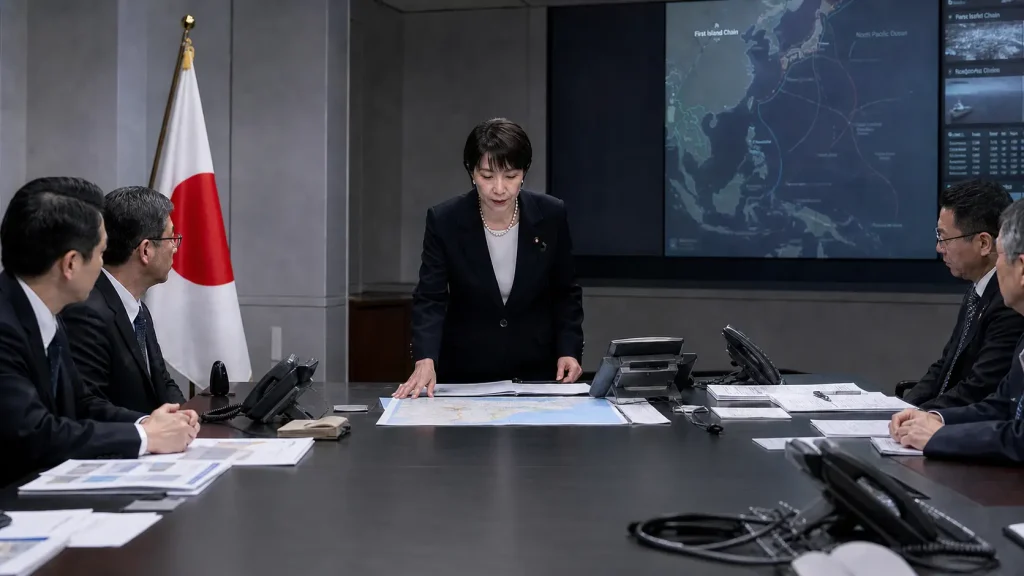
The introduction of the new anti-Japanese sanctions package coincided with the decision of the government of Prime Minister Sanae Takaichi to begin a review of the current restrictions on the export of lethal weapons.
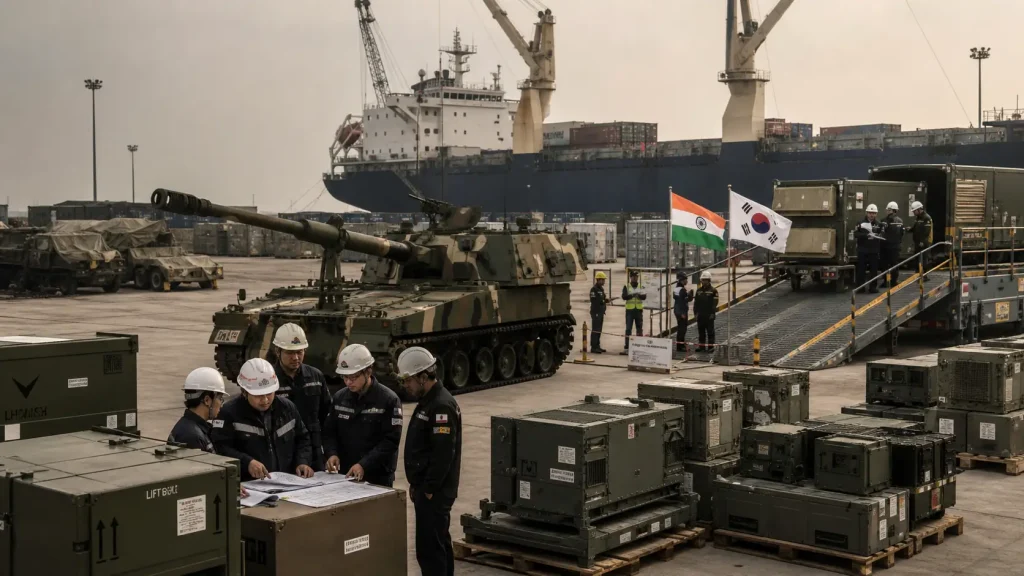
This includes the ruling Liberal Democratic Party of Japan (LDP) and its coalition partner Nippon Ishin no Kai initiating a draft amendment to legislation that would allow the state to transfer lethal weapons to treaty allies, such as the USA, Australia, India, and EU countries.
In exceptional cases, the amendment would also permit transfers to partner countries that have suffered armed attacks, including Ukraine.
The adoption of this decision will lead to an unprecedented intensification of the military-industrial complex’s work since 1945 and, accordingly, a significant expansion of Japan’s defense capabilities.
Restoring Japan’s competitiveness in the global arms market and further modernizing its defense complex will allow Tokyo to build up arsenals of naval, air, missile, unmanned, and laser equipment, which even under the current constitutional restrictions has a reputation for being high-class and advanced.
At the regional level, this will initiate a rebalancing of forces in East Asia with the prospect of forming a collective parity of Japan, South Korea, and Taiwan regarding the offensive potential of the PLA.
Such strengthening of the First Island Chain will relieve the USA of the need to directly guarantee its stability, allowing to limit the American military presence in the region exclusively to forces critically necessary for maintaining the full functioning of USFJ and USFK.
The new PRC export rules directed against Japanese technology companies even before the official start of reforms indicate that Xi Jinping is aware of the scale of challenges for the PLA.
At the same time, these steps demonstrate Beijing’s inability to undermine the positions of Sanae Takaichi, who, following the snap elections on February 8, gained control over 75% of the lower house of parliament and neutralized the influence of the opposition oriented toward pro-Chinese balancing.
The profiles of the companies selected for sanctions confirm that the restrictions are aimed not so much against Japan as against the American strategy of involving Japanese industrial capacities in restoring its own defense potential.
The first vector of pressure was Japan’s shipbuilding industry, through which the Trump administration plans to compensate for the shortage of its own shipyards.
Sanctions against Mitsubishi Shipbuilding and Japan Marine United Corporation (JMU)—key developers of submarines and destroyers for the Japanese Navy—go beyond attempts to weaken Tokyo’s naval positions.
They reflect Xi Jinping’s desire to hinder the implementation of the American strategy to overcome its own shipbuilding crisis by involving the industrial capacities of Japan and South Korea.
It is notable that the current PRC decision regarding Japanese shipyards follows the October restrictions on the South Korean defense giant Hanwha Ocean, immediately after its entry into the MASGA (Make American Shipbuilding Great Again) program.
Through these measures, Beijing is seeking to hinder the USA’s ability to quickly rebuild its naval fleet by pressuring key industrial contractors.
At the same time, the PRC seeks to limit the international expansion of Mitsubishi Heavy Industries, which in 2025 concluded a strategic agreement to supply Australia with Mogami-class frigates.
From the USA’s perspective, these advanced ships are potentially capable of changing the regional balance of power, strengthening the maritime component of the PRC containment system in the Indo-Pacific.
The second vector is aimed at technological links without which the American military-industrial complex cannot function autonomously from Chinese suppliers.
Subsidiary structures of IHI Corporation, which hold dominant positions in the production of scarce high-temperature alloys and aerospace components, came under special scrutiny. These materials are critically important for creating modern aircraft engines, forming so-called “bottlenecks” in global supply chains.
By restricting IHI’s activities, the PRC seeks to block U.S. efforts toward “strategic decoupling” and building a network of suppliers independent of Chinese raw materials.
The PRC’s sanction activity against Fujitsu and NEC aims to undermine the foundation of the USA’s digital transformation. These companies are key architects of systemic technological integration, developers of supercomputers and advanced radar systems that are critical for defense initiatives in the Euro-Atlantic.
In addition, the PRC’s sanctions affected Japan’s missile, aerospace, and energy industries, which are increasingly integrating into U.S. initiatives—including the development of advanced satellites and lasers.
The totality of these steps demonstrates that the Communist Party of China is purposefully working with key vulnerabilities of Japan in the process of revitalizing its military-industrial complex.
This includes targeting the dependence of the Japanese military industry on rare earth elements and strategic raw materials, control over which remains Beijing’s main lever of influence.
Despite efforts to diversify supplies and expand processing capacities within the QUAD format, Japan will be unable to quickly compensate for the shortage of components in the event of a sudden cessation of exports from the PRC.
This will lead to a loss of attractiveness of Tokyo’s potential positions in the global arms market, which continues to gravitate toward fast and relatively inexpensive technological solutions.
In parallel, Beijing is applying a strategy of interfering in secondary supply chains, trying to paralyze the work of thousands of small and medium-sized enterprises integrated into the structure of the 40 Japanese companies that fell under sanctions.
Fearing strict inspections and repressive measures from the PRC, some suppliers may resort to self-isolation and voluntary severance of ties with sanctioned businesses to minimize their own risks.
In the long term, such barriers will create significant tactical obstacles to expanding Japan’s defense production capacities. This is an example of Chinese “weaponization” of the economy—turning economic tools into strategic pressure—a threat that the government of Sanae Takaichi previously identified as a key national security challenge.
The LDP views such containment by the PRC as a pretext for taking more decisive steps to diversify supply chains. In particular, Prime Minister Takaichi’s government believes that Beijing’s political and economic provocations have not changed regional conditions in favor of the PRC.
Instead, these actions have strengthened the consolidation around previously delayed security decisions aimed at countering Chinese coercion and trade expansion.
In practice, this means that Japanese corporations, especially those directly affected by the new sanctions, receive a political impetus to exit the Chinese market.
At the same time, the priority will shift toward deepening cooperation with Taiwan, India, Australia, and ASEAN countries to accelerate the development of a reliable alternative to Chinese exports.
In parallel, Tokyo has accelerated its course toward internal technological revival, directing large-scale investments into the national microelectronics sector to restore Japan’s historical dominance in this field.
Confirmation of such a course is the position of Hiroshi Yamada—an influential LDP deputy who belongs to the Taro Aso faction and is responsible for the party’s ideological course.
Describing the LDP’s philosophy as “vertical democracy” (a system where past and future generations are metaphysically present in the discussion about national development), he emphasizes that over the last 30 years, Japan has stagnated due to false ideals.
He identified the key mistake as trusting globalist trends and viewing the PRC as a safe and reliable manufacturing hub. Accordingly, the task of Sanae Takaichi’s government is to address this crisis by radically rethinking economic security and defense strategy, while also shedding the constraints of the era of constitutional pacifism.
The key factor that cements the strategic consensus between the Japanese government and business regarding a quick exit from the PRC remains the aggressive approach of Xi Jinping himself.
Japanese corporate conglomerates reacted extremely sharply to Wang Yi’s statements at the Munich Security Conference in February 2026, in which he threatened Japan with “self-destruction” if Prime Minister Takaichi’s political course is maintained.
For business, this became a signal that the current hostile status quo is not a temporary escalation, but a new long-term reality that must be taken into account in the process of unblocking the military-industrial complex.
These sentiments intensified after taking into account the report of February 27, 2026, prepared by the Japan Institute of National Fundamentals (JINF)—an analytical center deeply connected with the LDP leadership.
According to their forecast, after his reappointment to a fourth term in 2027, Xi Jinping will force the adoption of a decision to attack Taiwan and start a war in the region.
Given such a perspective, JINF analysts emphasize that Japan must urgently develop and scale its own military technologies capable of breaking the dominance of the PRC and RF in adjacent waters, no longer waiting for the crisis to be resolved solely through U.S. efforts.
The totality of such processes proves that the expansion of Chinese export controls against Japan is a manifestation of the growing strategic uncertainty of the PRC amid American campaigns in Venezuela and Iran.
Trying simultaneously to contain Tokyo’s defense transformation, complicate the restoration of American shipbuilding, and maintain a monopoly on critical materials, Xi Jinping acknowledges that the consolidation of the defense of the First Island Chain without PLA dominance is a realistic scenario.
However, Beijing’s bet on political provocations and “weaponization” of the economy does not become an effective deterrent to this process, but on the contrary stimulates the Japanese government and business to accelerate anti-Chinese steps.
The PRC’s sanction pressure accelerates Tokyo’s integration with the defense and technological systems of the USA, Taiwan, and Indo-Pacific states.
Japan is moving toward a model in which containing autocracies becomes the sovereign responsibility of the nation, relieving the United States of part of the burden of directly guaranteeing the security of the First Island Chain.
The timing of these processes—four days before Operation “Epic Fury” and five weeks before Trump’s visit to Beijing—confirms that Beijing is aware of the rapidity of changes and is trying to slow them down with the only available tool, the effectiveness of which is refuted by the result itself.