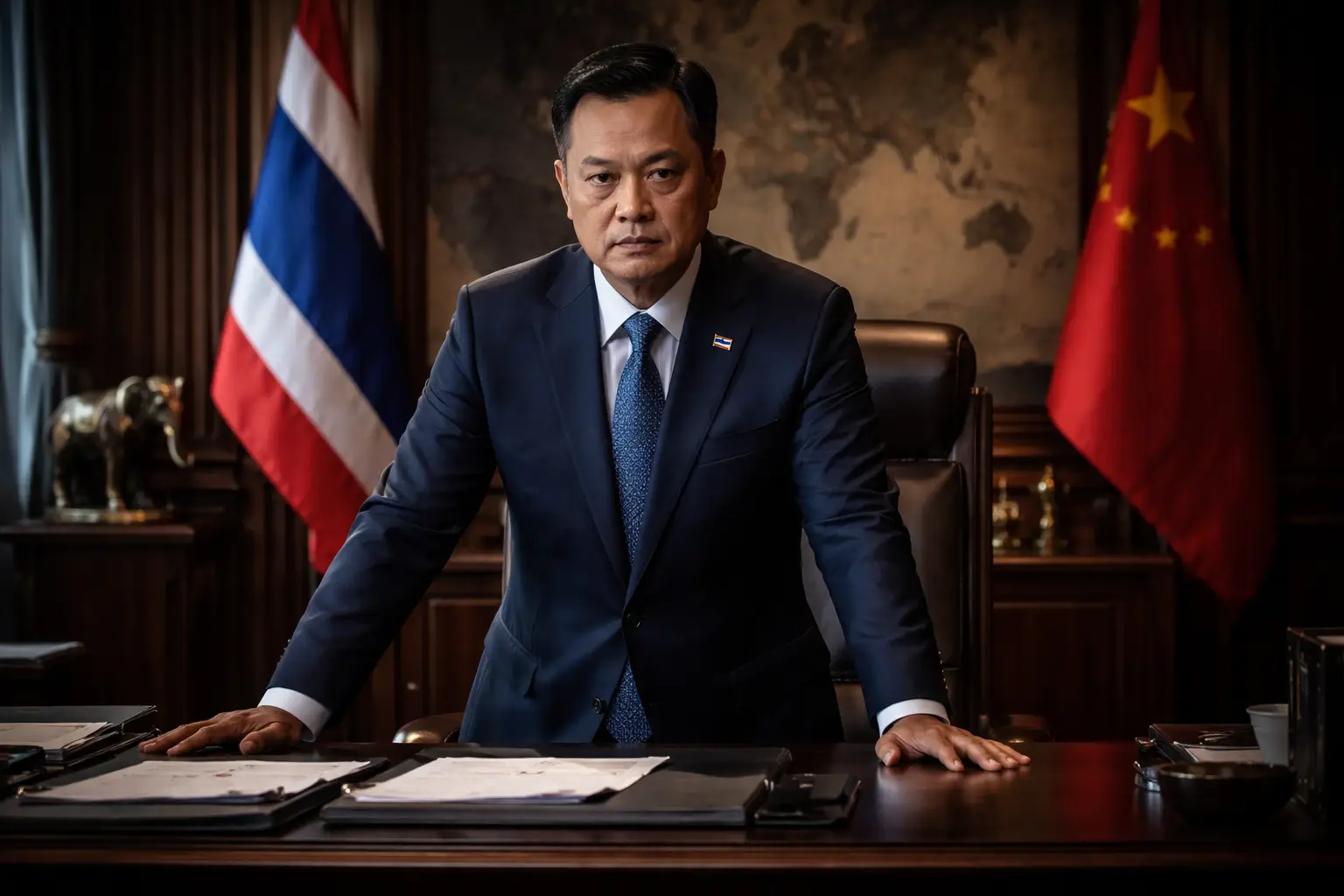
On December 12, 2025, Thailand’s interim Prime Minister Anutin Charnvirakul announced the dissolution of the lower house of parliament and the scheduling of early elections for February 8, 2026—a month earlier than agreed upon by opposition forces after the removal from power of Paetongtarn Shinawatra and the Pheu Thai party.
These elections will be the second parliamentary race since the end of the military junta’s rule, which governed the country from 2014 to 2023.
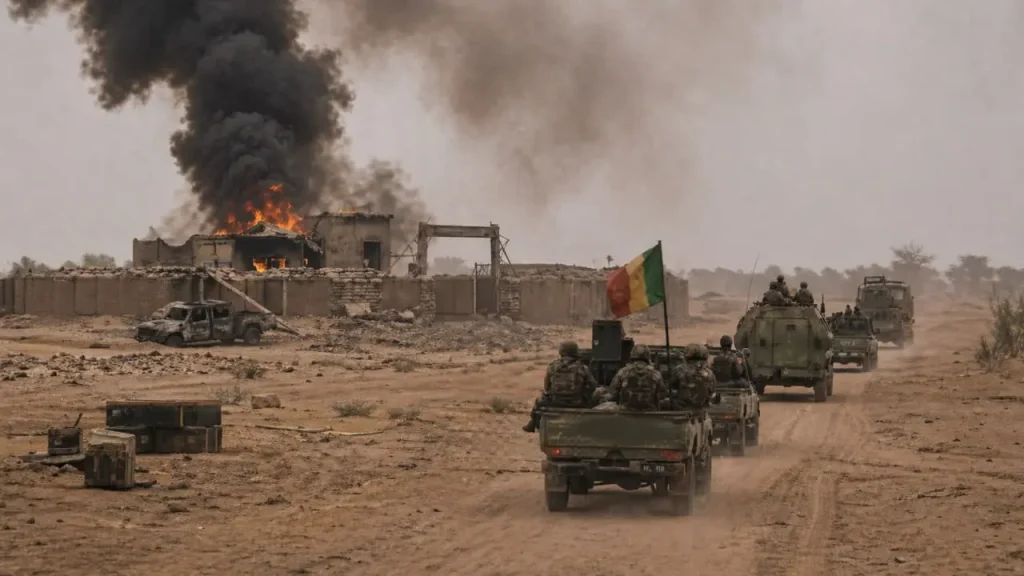
This decision by Prime Minister Charnvirakul coincided with the escalation of hostilities between Thailand and Cambodia. On December 8, the sides exchanged intense artillery fire and airstrikes, resulting in casualties among civilians and military personnel.
The escalation occurred less than a month after Bangkok’s formal refusal to adhere to the truce mediated by Donald Trump; the Thai government cited the discovery of new Cambodian mines in border areas as the reason, which was essentially established at the UN level.
Immediately after the dissolution of the Thai parliament, U.S. President Donald Trump held separate conversations with Prime Minister Charnvirakul and Cambodian Prime Minister Hun Manet.
Following these contacts, the White House announced that agreements had been reached to restore the “peace regime” and return to the terms of the October truce. However, neither Bangkok nor Phnom Penh confirmed this, and hostilities—both aerial and ground—were resumed the same day.
Accordingly, Thailand’s Ministry of Foreign Affairs publicly expressed disappointment with the actions of the U.S. President, who—in Bangkok’s view—issued the corresponding statement without considering the “malicious actions” on Cambodia’s part.
Ultimately, the Thai government emphasized that military actions would continue until the “elimination of the threat” to national security.
The complication of American interaction with Thailand is due to the multidimensional regional political conjuncture, which the White House—despite the successful conclusion of “grand deals” and threats to resume tariff pressure—essentially does not control.
First, the determining factor in this problem remains the Thai domestic political context, which is still structurally linked to the decade-long rule of the military junta.
After the restoration of democratic order in the summer of 2023, Thailand’s politics was fragmented among three key influence groups. The first included pro-democratic forces led by Phak Prachachon, which advocated for liberal reforms, demonarchization, and cleansing the constitution of junta provisions.
The second group was formed by pro-autocratic forces oriented toward revanchism of militarism and strengthening the monarchical component. The third—opportunistic multivector forces, which included both Pheu Thai (the Shinawatra clan) and Bhumjaithai—the party of Anutin Charnvirakul.
Despite the victory of the pro-democratic camp in the 2023 elections, due to the intervention of networks associated with the junta, they were unable to form a government.
Instead, executive power passed to Pheu Thai—first under the leadership of Srettha Thavisin (2023–2024), and later Paetongtarn Shinawatra (2024–2025). At the same time, the informal center of decision-making remained Thaksin Shinawatra—a key figure in Thai politics who had been in exile for a long time after the military coup.
The outbreak of military tension between Thailand and Cambodia, which led to the removal of Paetongtarn Shinawatra and the subsequent collapse of the fragile coalition between Pheu Thai and pro-junta forces, created a window of opportunity for Anutin Charnvirakul.
In particular, he refused to position himself as a temporary leader tasked with ensuring the proper organization of early parliamentary elections and adopting a limited set of operational decisions within agreements with Phak Prachachon.
Instead, Prime Minister Charnvirakul chose a course to use the conflict with Cambodia as a tool to restore the positions of junta-oriented elites through electoral mobilization.
Essentially refusing the agreements with Donald Trump regarding the “truce,” Prime Minister Anutin Charnvirakul seeks to convert border tension into growing nationalist sentiments—and, accordingly, into strengthening the political agenda of Bhumjaithai.
His tough rhetoric and populist steps, including covering up to 60% of citizens’ consumer expenses in restaurants and stores, raised the party’s rating from 14% in September to 22% in November 2025.
However, the further aggravation of the socio-economic crisis after the November natural disasters in the Mekong subregion and the exposure of systemic corruption in the critical infrastructure sector caused support to fall to 9%.
It was this that ultimately became the key factor in rescheduling the early parliamentary elections from March to early February 2026.
According to Anutin Charnvirakul’s plan, the active phase of confrontation with Cambodia should last at least until mid-January 2026—a period during which Bhumjaithai and its affiliated forces will try to build electoral support.
After that, he expects to make limited concessions to the Donald Trump administration and achieve a truce, which should also work to increase electoral sympathies.
At the same time, he realizes that Bangkok is unable to withstand U.S. pressure for a longer time without the risk of facing unbearable economic burden.
Second, the Cambodian conjuncture remains negative for the United States, which, on one hand, is structurally similar to the Thai one, and on the other—deeply dependent on the political will of the PRC.
By staging the removal of Paetongtarn Shinawatra from the position of Prime Minister through provoking a military clash, Cambodia’s de facto leader Hun Sen—chairman of the senate and father of the current prime minister Hun Manet—sought to solve several structural tasks at once.
In particular, he demonstrated loyalty to his key sponsor Xi Jinping by eliminating the Thai domestic political buffer between pro-democratic and pro-autocratic forces, a role traditionally played by the Shinawatra clan and the Pheu Thai party, thereby opening additional opportunities for implementing China’s expansive strategy in Southeast Asia.
In parallel, Hun Sen created preconditions for reducing U.S. tariff pressure from 49% to 19% by promoting a “peace agreement” mediated by Donald Trump—without any real anti-Chinese commitments.
Ultimately, he significantly strengthened nationalist tendencies in Cambodian society, which, in his view, should serve as a pillar of the autocratic regime’s stability.
Promoting the “peace agreement” in such a configuration serves for the Hun clan the function of a political screen, which is intended to reduce external pressure on the criminal-financial contour while preserving the regime’s key rent.
U.S. sanctions decisions in 2025 directly describe Cambodian “casino developments” as an environment where money laundering, cryptocurrency fraud, and labor exploitation are integrated into a single model.
For Phnom Penh, this means that any truce that does not affect the mechanics of the scam economy is not a compromise but a deferral.
It is this interest that explains Cambodia’s line of external demonstration of “peacemaking” while simultaneously internal mobilization and reproduction of the infrastructure of coercion and fraud, which the regime seeks to reposition as a problem of “private actors.”
Playing along with Anutin Charnvirakul’s electoral goals, Hun Sen is simultaneously trying to form a new package of proposals for the U.S. within the framework of another truce.
In particular, it concerns the desire to reduce American pressure on Cambodia’s cyber-fraud infrastructure—a key source of enrichment for the Hun clan, which in the fall of 2025 came under intensified sanctions pressure from the White House.
In the strategic optics of the U.S., this infrastructure is not a peripheral criminal phenomenon but an industrial platform for transnational fraud, which in scale and monetization speed surpasses classic models of organized crime.
Cambodian compounds, disguised as casinos and development projects, function as factories of social engineering.
In these operations, forced labor is combined with cryptocurrency “pig butchering” scams (investment fraud that involves gradually “fattening” victims before withdrawing their funds) and advanced technological escalation using AI and deepfakes (synthetic video and audio substitutions that destroy trust barriers in digital channels).
That is why American pressure on the Cambodian criminal-financial node is a direct continuation of Washington’s internal security logic. The U.S. Treasury Department records that Americans’ losses from online investment fraud grew to over $16.6 billion, and at least $10 billion in 2024 were linked to operations based in Southeast Asia.
This provides the White House with grounds to view the Cambodian regime as a co-owner of the risk, rather than a neutral third party that requires diplomatic “balancing.”
Accordingly, it concerns pragmatic calculation and geopolitical engineering, where war becomes an ordinary tool of foreign policy.
Third, the core of these processes unfavorable for the United States remains the intervention of the PRC, for which Southeast Asia acts as a “backyard”—a space within which the Chinese civilizational model has already gained a structural advantage.
Realizing that the Donald Trump administration continues to consistently weaken regional PRC proxies in the Middle East (Iran, Syria) and Latin America (Venezuela, Peru, Bolivia), as well as trying to intercept influence over central sub-Chinese autocracies (RF, Belarus, DPRK), Xi Jinping is preparing an escalation plan for 2026.
This plan is aimed at undermining the White House’s foreign policy strategy—from disrupting supply chain diversification to neutralizing the strengthening of the “lattice” security system in the Indo-Pacific on a transactional basis.
Unlike the United States, the Communist Party of China views processes in Southeast Asia comprehensively—through the prism of its own corruption-financial infrastructure and ethnic-cultural networks of influence.
Going beyond the immediate confrontation in the “Golden Triangle” area, Beijing interprets the change of power in Thailand, the upcoming quasi-elections in Myanmar, and the National Congress of the Communist Party of Vietnam (January 2026) as elements of a single subversive puzzle designed to comprehensively worsen the positions of the Donald Trump administration.
From the Chinese perspective, strengthening the positions of Bhumjaithai and its affiliated structures will mean the defeat of the hitherto pro-American Phak Prachachon—that is, the loss of the prospect of transforming Thailand into a flagship U.S. ally in the Mekong subregion.
The legitimization of Myanmar’s junta is seen as a way to engrave a second large-scale victory for the autocratic system after freezing the war in Ukraine on terms of formal consolidation of the RF in the eastern and southern regions.
Intervention in the election of the general secretary of the Communist Party of Vietnam aims to weaken the subjectivity of To Lam, who concluded one of the most stable “grand deals” with the United States.
At the same time, China’s defining presence in Cambodia and Laos will remain unchanged—despite the White House’s attempts to intercept influence over Hun Manet.
From a broader perspective, it concerns the formation of a complex paradigm that threatens the alternative American production network necessary for the White House to strategically weaken the PRC and complete Donald Trump’s negotiations with Xi Jinping in April and September 2026 on U.S. terms.
This does not indicate the PRC’s ability to completely reverse the dynamics in Southeast Asia in its favor, as has already happened in the case of the RF and Belarus or in Central Asia.
Instead, Beijing is gaining the first broader opportunities for targeted interventions aimed at weakening the tactical steps of the United States in tariff and sanctions policy.
The Donald Trump administration proceeds from the fact that the buildup of American presence in Southeast Asia, particularly in the Mekong subregion, is rigidly limited by structural factors.
Having begun a review of the regional strategy—including through allowing public legitimization of the Myanmar junta—the White House is preparing for tactical, asymmetric competition with the PRC for influence over ASEAN participants.
Under such an approach, the U.S. consciously abandons attempts at institutional consolidation in the region, focusing on situational maneuvering and using political windows of opportunity that may open as a result of internal transformations in Thailand and Cambodia.
Such an approach implies Washington’s readiness for negotiations with pro-junta forces in the event of Bhumjaithai’s victory in the early elections, with a shift in focus from value-based rhetoric to economic and infrastructure parameters of interaction.
Similarly in Cambodia, the U.S. will act in a mode of targeted competition with the PRC, offering the Hun clan limited but politically relevant incentives within the transactional “partnership” model.
Ultimately, it concerns pragmatic adaptation of American policy to the fact of losing strategic initiative in the region in the short term and an attempt to minimize the asymmetry of influence through flexible, non-institutionalized tools.
At the same time, the U.S. will continue to incline Thailand and Cambodia toward restoring the truce, relying on its own negotiating advantages over the PRC.
This involves using the tariff compromise with Malaysian Prime Minister Anwar Ibrahim, who after the current escalation flare-up has activated pro-American diplomatic efforts, as well as strategic ties with the administration of Philippine President Ferdinand Marcos Jr.
Such logic is due to the fact that Malaysia chaired ASEAN in 2025, while the Philippines will take over this chairmanship in 2026.
One of the key strategic priorities for the U.S. in this context is preventing the transformation of the Cambodian-Thai confrontation into a protracted, externally managed conflict, the parameters of which will be determined primarily by the PRC.
In particular, the White House is growing concerned that Thailand has shifted from border incidents to projecting force deep into Cambodian territory, striking remote military facilities up to 70 km from the “Golden Triangle” using F-16 fighters.
This corresponds to the decision of Thailand’s military command to eliminate the entire network of Cambodian strongholds along the disputed border.
Despite the obvious asymmetry of forces in favor of Bangkok, the Hun clan seeks to convert military vulnerability into political capital. Through a targeted information campaign, Phnom Penh appeals to Western democracies, while distorting both the factual picture and the value context of the conflict.
This is particularly indicative given that it is Cambodia that has systematically violated agreements, including by mining border territories. An additional destabilizing factor was the capture of Western military equipment by Cambodian units.
Such a situation creates significant grounds for advancing information and political manipulations that will harm the U.S. foreign policy goals.
From a deeper perspective, the PRC and RF are already forming the basis for potential international legitimization of Cambodia as a “war victim,” which could be used to undermine American security and political networks in Southeast Asia and weaken Thailand as a treaty ally of the U.S. Accordingly, Washington is interested in quickly freezing the escalation during January-February 2026.
Against this backdrop, the U.S. is not trying to directly intervene in Thai electoral dynamics and is not providing open support to Phak Prachachon, despite its clear orientation toward Bangkok joining U.S. security initiatives in the Indo-Pacific.
Instead, Washington has chosen a wait-and-see tactic until the formation of a new coalition, in order to launch stabilization negotiations after the elections and simultaneously displace the PRC’s political presence from Thailand.
This logic relies on several factors. First, in the early stage of the military crisis, society is in a state of irrational nationalist mobilization, which structurally works in favor of right-wing and populist forces, not left-centrist ones.
Second, Donald Trump is not inclined to openly support progressive foreign politicians, whose representation is embodied by Phak Prachachon. Third, the White House is not interested in worsening relations with pro-junta elites due to economic considerations.
As of now, Phak Prachachon remains the leader in electoral sympathies, with about 25% support, which, however, is significantly less than the 47% recorded in July—before the removal of Prime Minister Shinawatra. Pheu Thai holds about 11%, which is also almost half of the summer indicators.
At the same time, support for Phak Prachathipat—the old liberal party, which is increasingly viewed as a more balanced “buffer” between pro-democratic and pro-junta forces than Pheu Thai—is growing.
If Phak Prachachon, Pheu Thai, and Phak Prachathipat can form a government following the February 8 elections, this could potentially radically change both the internal and regional conjuncture—and at the same time provoke another military coup.
It is this structural uncertainty that determines that the Donald Trump administration will ultimately not provide political support to any side.
Under such conditions, the Cambodian-Thai escalation at the end of 2025 evidences a change in the nature of strategic competition between the U.S. and the PRC in Southeast Asia, which will be determined by their ability to influence the decisions of regional political elites.
For Beijing, destabilizing Thailand is not an end in itself but a tool for containing the transformation of the Mekong subregion into a pillar of an alternative American production and security architecture.
In this context, the early elections on February 8, 2026, open a critical window for the PRC to shift the balance in its favor for a period that will outline the preconditions for a potential military clash in the Indo-Pacific.
At the same time, the United States, realizing the limited tools of direct influence, consciously shifts to a mode of adaptive containment, agreeing to a temporary loss of initiative in order to preserve the possibility of targeted maneuver after stabilization in February 2026.
Such an approach means abandoning faith in rapid democratic transformation of the region and recognizing that in the short term, competition with the PRC will occur in the plane of situational agreements and economic pressure.
Ultimately, the key risk for Washington remains not the victory of one or another political force in Thailand but the institutionalization of military escalation as an acceptable tool of domestic policy and external bargaining in mainland Southeast Asia.
It is preventing such normalization of conflict—not supporting individual actors—that will determine the further U.S. tactics in the region, where Chinese intervention has already demonstrated the ability to destroy even formally stable political constructs.