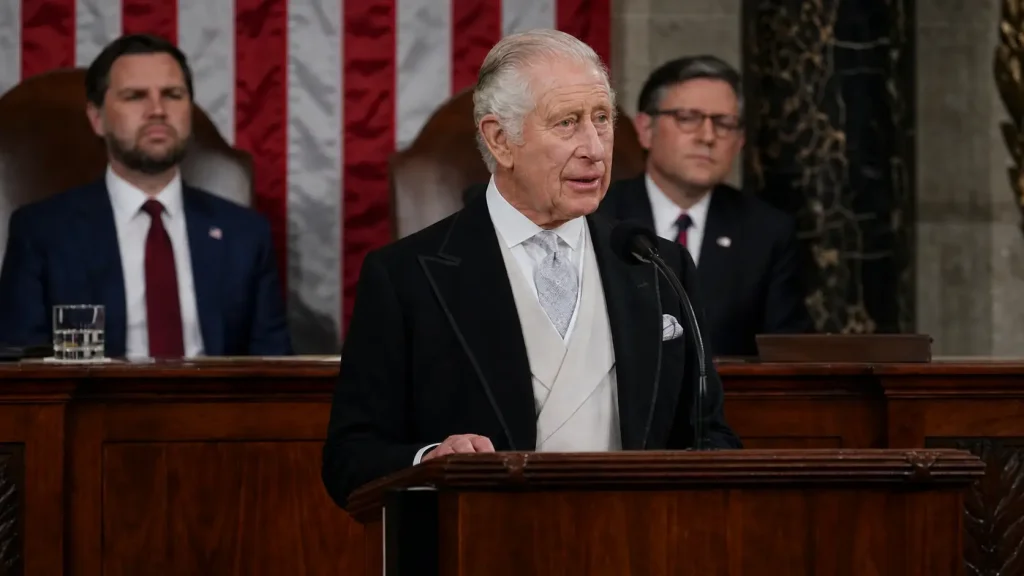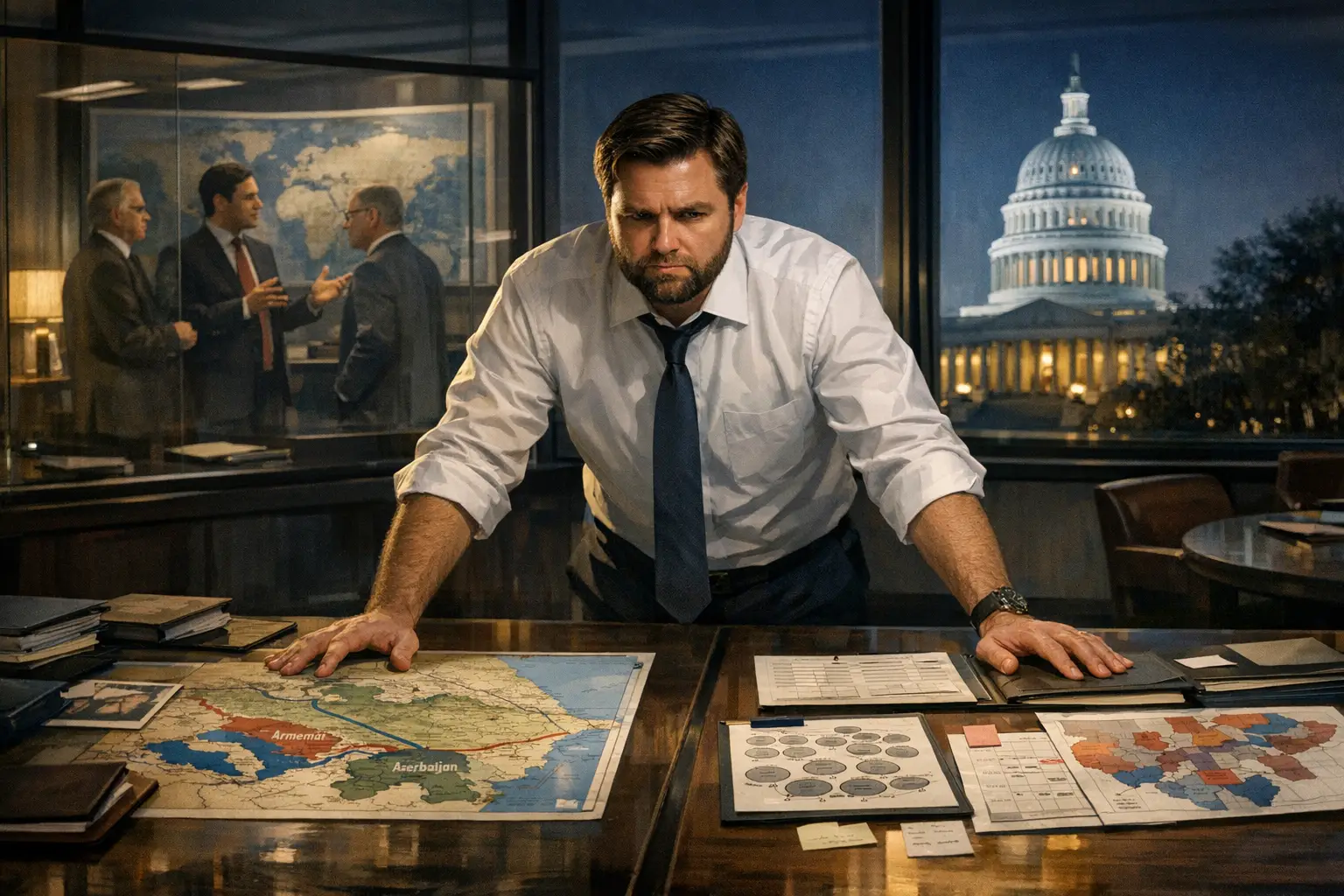
On February 9, 2026, JD Vance made an official visit to Armenia, becoming the first sitting U.S. Vice President to visit the country.
As a result of Vance’s talks with Armenian Prime Minister Nikol Pashinyan, the parties signed an agreement on cooperation in the civil nuclear sector, which provides for the supply to Yerevan of nuclear fuel and maintenance services for small modular reactors worth $4 billion.
The American Vice President also announced plans for the U.S. to export computer chips and UAVs to Armenia, as well as to invest in the country’s infrastructure.
The next day, Vance met with Azerbaijani President Ilham Aliyev in Baku, during which the countries signed a Charter on Strategic Partnership in energy, trade, and the defense and security sector.
Vance’s visits, intended to expand U.S. influence in the South Caucasus, reflected his desire to play a larger role in White House foreign policy. They also highlighted the growing competition between him and Secretary of State Rubio for leadership positions within the Republican Party following the end of Donald Trump’s term.
The catalyst for the intra-party rivalry involved Vance, a member of the President’s closest circle with long-standing personal ties to key Republican donors, and Rubio, who has emerged as a leading figure for supporters of the “Peace through Strength” approach.
The tension arose from the strengthening of the Secretary of State’s influence over the formulation of White House foreign policy. It also reflected Rubio’s growing role in the implementation of that policy, which intensified competition between the two.
The “coercive diplomacy” tactic advocated by Marco Rubio toward Latin American governments disloyal to Washington achieved its result and initiated a process of political transformation in the region. It has the consequence of systematically reducing China’s economic, political, logistical, and military influence in the Western Hemisphere.
The Secretary of State’s implementation of pressure policy on Latin American autocracies and representatives of the regional political establishment oriented toward cooperation with China was accompanied by Marco Rubio’s parallel involvement in resolving the Israeli-Palestinian and Russian-Ukrainian conflicts.
On October 22, 2025, two weeks after the signing of the American peace plan for Gaza, Rubio held meetings with the President and Prime Minister of Israel.
The goal of the American delegation in these negotiations was to prevent the transformation of political differences between conservative and moderate Israeli government officials into a factor that could jeopardize the implementation of the American peace plan.
The Secretary of State’s effective actions in de-escalating the confrontation between Israel and Gaza led to Marco Rubio gaining one of the key roles in the peaceful settlement in the Middle East.
Thus, after Donald Trump’s announcement of the creation of the Peace Council, Rubio was included in its executive committee, while Vice President Vance did not receive a position in the Council’s structure.
Membership in the Peace Council’s executive committee expanded the Secretary of State’s access to mediation in the Russian-Ukrainian negotiation process.
On November 30, 2025, together with U.S. President’s special envoy Steve Witkoff and Donald Trump’s son-in-law Jared Kushner, Rubio was included in the American negotiating team in the dialogue with the Ukrainian delegation in Miami.
Rubio’s participation in the negotiations between Washington and Kyiv regarding the plan to end the Russian-Ukrainian war continued after this dialogue.
On February 14, 2026, during the Munich Security Conference, the Secretary of State met with Volodymyr Zelenskyy, and during a discussion with the foreign ministers of the G7 countries, he confirmed the United States’ readiness to continue negotiations on de-escalating the Russian-Ukrainian conflict.
The Secretary of State’s consistent involvement in key foreign policy initiatives—from the transformation of Latin America to efforts at de-escalating the Israeli-Palestinian conflict and mediating a Russian-Ukrainian settlement—has built Rubio’s portfolio of foreign policy achievements. This record has made him a central figure in the international affairs of the Trump administration.
The strengthening of Marco Rubio’s positions in the current American administration has limited Vance’s participation in shaping the White House’s political course.
From the second half of 2025, the Vice President’s activities were primarily focused on implementing the Republicans’ domestic political program.
JD Vance advocated the provisions of the “One Big Beautiful Bill” law to voters and also acted as a mediator in restoring interaction between Elon Musk and the Trump team after the escalation of their conflict in June 2025.
At the same time, the informal division of spheres of responsibility between Vance and Rubio threatened to weaken the Vice President’s positions in the intra-party rivalry.
Since the presidential team is increasingly concentrating its activities around foreign policy priorities and preparation for the escalation of global confrontation with the axis of autocracies, Vance’s focus on the domestic agenda limited the Vice President’s ability to claim the role of Trump’s political successor.
JD Vance retains broad support from Republican elites consolidated around Donald Trump and party donors from the Big Tech sector, and has also secured the favor of most conservative voters.
According to the RealClearPolling aggregator of polls, Vance’s nomination for the presidency in 2028 is supported by 44.6% of Republican respondents.
The nomination of Rubio for the next presidential election is approved by only 8.4%, and the Secretary of State’s ratings as a potential party nominee lag behind JD Vance, Donald Trump Jr., and only slightly exceed the level of support for Florida Governor Ron DeSantis.
On the other hand, an indicator of the reduction in Vance’s role in implementing key White House decisions was the 2026 Munich Security Conference.
The American delegation in Munich was led by Secretary of State Rubio, who in his speech laid out the administration’s strategic vision for a new model of international security and outlined the conditions for future U.S.-Europe cooperation within the Western bloc.
He also introduced a new civilizational concept for democratic countries in the context of escalating conflicts with autocracies.
At the 2025 Munich Security Conference, it was JD Vance who represented the American side and outlined the political priorities of the new administration.
However, ahead of this year’s forum in Germany, the Vice President was making visits to the countries of the South Caucasus—a region that ranks lower in priority in American foreign policy interests compared to the European direction.
Although progress in moderating the Armenian-Azerbaijani peace process offers Washington regional geopolitical advantages and economic benefits, U.S. influence in the South Caucasus does not dictate the future foundations of the democratic bloc. The development of this bloc is occurring primarily at the Euro-Atlantic level.
The smaller number of developments in priority areas for the White House, compared to Rubio’s foreign policy results, prompted the Vice President to focus simultaneously on domestic priorities and the international dimension of the administration’s activities.
To demonstrate his ability to ensure the continuity of the political course laid down by Donald Trump, Vance faced the need to prove that he has foreign policy achievements comparable to the successes of the Secretary of State’s activities.
While Rubio and the intra-Republican factions oriented toward him were strengthening their positions through the transformation of Latin America, the politically expedient direction for consolidating his influence that JD Vance chose was ensuring U.S. geopolitical advantage in the Caucasus region.
First, such a calculation by Vance was driven by the previous successes of the U.S. in resolving the Armenian-Azerbaijani conflict, which led to a reduction in Russia’s influence in the South Caucasus.
Thus, in June 2024, the Russian peacekeeping contingent was finally withdrawn from the territory of Nagorno-Karabakh, and Armenia, which was the only South Caucasian member state of the CSTO, suspended its membership in the organization and refused to finance it.
The Azerbaijani-Armenian peace agreement signed in August 2025 with Donald Trump’s mediation provided for the creation of the TRIPP transport corridor, with exclusive rights for its development granted to the United States.
Although American-Turkish competition for influence in the South Caucasus continues, the strengthening of the Trans-Caspian transport route through TRIPP mitigates potential tensions with Ankara.
The corridor allows Turkey to bypass Russian and Iranian trade routes and gain direct logistical connections with Central Asian states, as envisioned by Washington.
At the same time, the TRIPP project becomes part of the American strategy to contain China in the region by creating direct competition to the Chinese “Belt and Road” initiative and the ability to complicate the advancement of Chinese goods to European markets after the escalation of geopolitical confrontation.
Second, the resolution of the Armenian-Azerbaijani conflict and the creation of logistical projects in the South Caucasus under U.S. patronage became a priority project for Donald Trump, in the implementation of which the U.S. President was directly involved.
Vance’s active role in advancing energy, trade, and security agreements with Yerevan and Baku enables him to frame his efforts as implementing initiatives personally set by Donald Trump. This serves as a persuasive signal to most Republican influence groups that prioritize the uninterrupted continuation of the President’s political agenda.
An additional political priority for JD Vance is working on attracting funds for the Republican campaign ahead of the 2026 midterm elections.
At the same time, Vance’s involvement in the pre-election campaign places the Vice President in a zone of considerable political risk. Donald Trump’s approval rating, which directly affects the party’s electoral prospects, reached its lowest point of the entire second presidential term as of February 2026.
According to CNN, only 36% of Americans approved of the President’s performance, and among independent voters, the figure fell to 26%, a historic minimum.
According to a Pew Research Center poll, the share of Americans who support Trump’s political course has decreased to 27% compared to 35% at the beginning of the term, and strong approval among Republicans has dropped below 50% for the first time.
Against the backdrop of falling presidential ratings, current polls show a Democratic advantage in the nationwide vote by party lists: according to the Silver Bulletin aggregator, Democratic candidates lead Republicans by 5.4%, while Fox News and Emerson College polls show a 6% gap in favor of the Democratic Party.
According to the Brookings Institution, the likelihood of Republicans losing control of the House of Representatives is high, as Democrats need to gain only three additional seats to change the majority.
Vance, who formalized his role in preparing for the midterm elections through chairing the RNC’s finance committee and directly coordinating fundraising, becomes a hostage to the electoral consequences of Trump’s falling rating.
Unlike Rubio, who distances himself from the pre-election campaign and focuses on foreign policy achievements, Vance has no opportunity to avoid personal responsibility for the voting results—his involvement in election preparations is too obvious and public.
Vance’s significant dependence of his political future on the Republicans’ results in the 2026 midterm elections prompted the Vice President to directly join the coordination of fundraising for Republican candidates’ campaigns.
Working to strengthen financial support needed to ensure the party’s victory in the midterm elections, Vance joined the organization of a series of fundraising initiatives.
In particular, on February 17, 2026, the Vice President headed a Republican event in New York, during which, according to estimates, the party accumulated $2 million.
During the first year of Trump’s term, JD Vance became the organizer and key participant in fundraising events for the Republican Party’s needs in Texas, Georgia, California, Wyoming, and Florida, and on March 3, 2026, the Republican Party plans to hold an identical donor event in Virginia, which will also be organized by the Vice President.
In addition to coordinating the process of attracting funds, as the presidential elections approach, Vance’s responsibilities increasingly include direct work with voters.
The presidential administration expects that the Vice President’s interaction with citizens in a number of regions of the country will contribute to the electoral mobilization of those conservative population groups that are ready to support Donald Trump directly but are not motivated to vote for other Republican politicians.
The first year of Vance’s chairmanship of the RNC finance committee was marked by notable achievements. By early 2026, the Republican National Committee had raised $95 million, while the DNC—the Democratic Party’s executive body—had only $14 million available and carried $17.5 million in debt.
Such a disproportion in financial support, which provides Republican candidates with additional opportunities during their election campaigns, became possible thanks to Vance’s long-standing working and personal ties with a group of businessmen in the Big Tech sphere.
In particular, JD Vance’s former employer and donor Peter Thiel, who provided about $15 million in 2022 to support Vance’s Senate run, allocated about $850,000 for the needs of Republican Party candidates in the first half of 2025.
An additional factor that helps Vance in attracting funds for party needs is his status as Vice President, as this position provides him with a significantly higher level of trust from major donors compared to party functionaries and lower-level government officials.
Thus, during JD Vance’s visit to Britain, where he met with members of the European political establishment and took part in official events, the Vice President also connected with American Republican donors abroad. As a result, the party secured an additional $4 million from this group of sponsors.
Having received broad powers from the White House in the sphere of attracting financial resources and interacting with voters, the Vice President takes on the main share of responsibility for the Republicans’ electoral achievements.
The Vice President is forced to continue simultaneous work on the electoral campaign and forming foreign policy achievements, as withdrawing from any of these directions will automatically strengthen Rubio’s positions.
Vance’s strategic goal is to preserve his position as Trump’s primary successor through the 2028 presidential campaign. Given the President’s record-low approval ratings, a predicted Republican loss of the House in the 2026 midterm elections would further erode support for Trump and intensify the crisis facing the Republican agenda.
For Vance, whose political identity is inseparable from Trump, this loss will be a personal blow in the 2028 Republican primaries and will open the way for Rubio to full-fledged competition for the presidential nomination.