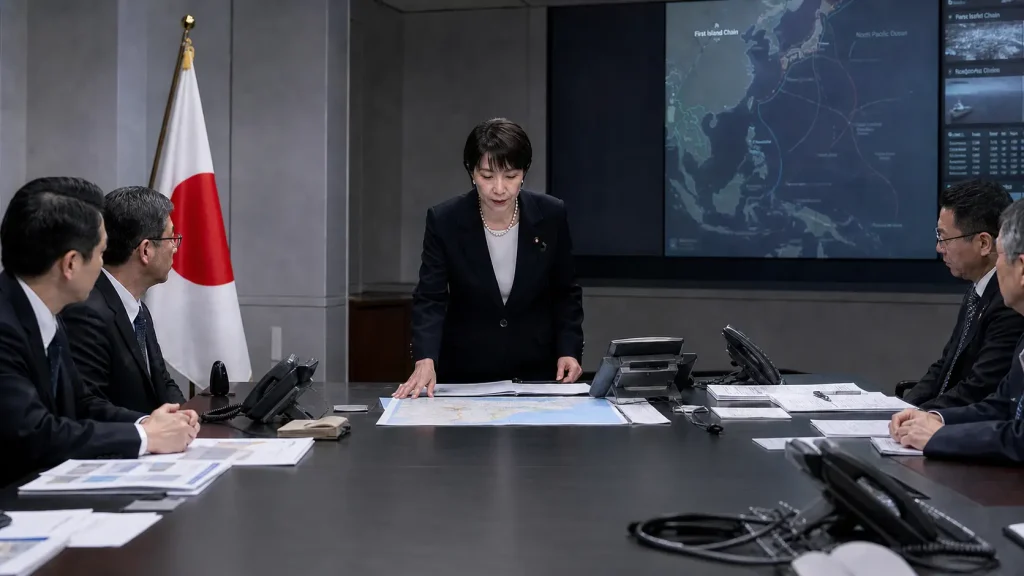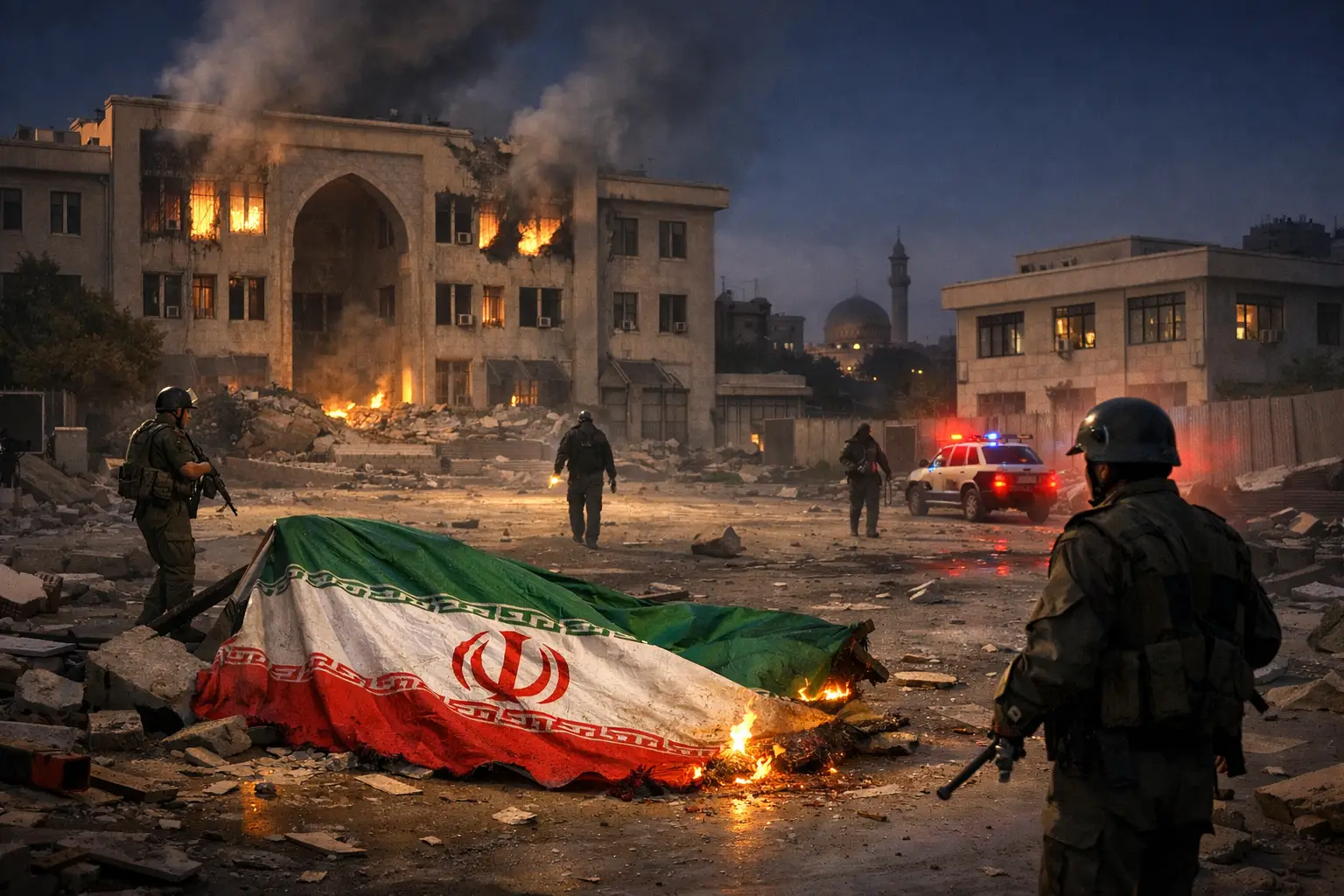
On February 28, 2026, the United States and Israel conducted a coordinated strike against military bases, command centers of the Islamic Revolutionary Guard Corps (IRGC), nuclear facilities, and the residences of Tehran’s military-political leadership.
Within the first 12 hours of Operation “Epic Fury,” the elimination of the country’s Supreme Leader, Ayatollah Ali Khamenei, along with more than 40 senior Iranian officials, generated an additional strategic effect: the disorganization of the upper echelon of power.
This development created more favorable conditions for potential regime change by intensifying the internal political instability that had been building in Iran since the mass protests of late 2025–early 2026.
The operation against Iran extends far beyond the Middle Eastern theater and should be understood as an element of the United States’ preventive strategy to avert a broader military confrontation with the autocratic axis.
The weakening of Tehran simultaneously constrains Russia’s ability to sustain its aggression against Ukraine based on the assumption of fragmented U.S. resources across multiple conflicts.
It also reduces China’s capacity to rely on Iranian proxy, logistical, and resource infrastructure in advance of a potential escalation around Taiwan.
Regardless of the immediate political outcome of the campaign, the degradation of Iran’s military, economic, logistical, and proxy capabilities undermines one of the core pressure mechanisms of the autocratic axis against the United States and its allies, thereby lowering the systemic risk of global escalation.
The scale of the campaign against Tehran reflects the fact that its role within the architecture of the autocratic axis is considerably broader than typically assessed by the expert community.
The scope of Iran’s proxy network, the geographic footprint of the IRGC, and the results of Tehran’s long-term efforts to build influence infrastructure across the Middle East, Africa, South Asia, and Southeast Asia largely remain outside the bounds of public analysis.
This creates a distorted perception of the real strategic cost of neutralizing the Iranian regime for the trajectory of global confrontation. Operation “Epic Fury” represents an element of Washington’s consistent strategy to weaken the infrastructure of the autocratic axis implemented during 2024–2026.
Prior to the outbreak of hostilities against Tehran, the United States and its allies had already substantially weakened or destabilized a number of regimes, proxy structures, and logistical nodes that enabled Beijing and Moscow to project influence across multiple continents.
In Syria, the overthrow of Bashar al-Assad eliminated a key foothold of Russia and Iran in the Middle East. In the Western Hemisphere, the dismantling of Nicolás Maduro’s regime in Venezuela deprived the autocratic axis of its most strategically significant ally in Latin America.
The United States also supported the Mexican government in conducting operations against drug cartels whose activities had been used to destabilize the U.S. southern border.
At the same time, the Trump administration approached what the president publicly described as a “friendly takeover” of Cuba—the last stronghold of pro-Russian and pro-Chinese influence in the Caribbean.
Parallel to the removal of allied regimes, Washington began the systematic displacement of the autocratic axis from critical logistical infrastructure.
The restoration of U.S. control over port facilities in the Panama Canal zone and the removal of the Chinese operator from the Port of Piraeus in Greece deprived Beijing of key nodes through which it conducted commercial—and potentially military—power projection into the Atlantic and the Mediterranean.
Simultaneously, a coalition of Western states intensified operations against Russia’s shadow fleet, which had enabled the circumvention of oil sanctions and the financing of Moscow’s war effort.
The U.S.–Israeli strikes were designed to neutralize three pillars of the Iranian regime’s strategic power.
First, the nuclear program: strikes on uranium enrichment facilities and research reactors prevent Tehran from further advancing toward the nuclear weapons threshold—a position Iran had steadily approached over the past decade.
Second, the missile program: the systematic destruction of launchers, production facilities, and ballistic missile stockpiles deprives the regime of its primary instrument of strategic deterrence and coercion against neighboring states.
Third, naval capabilities, including the shadow fleet: the elimination of vessels and port infrastructure used to circumvent oil sanctions, supply proxy forces with weapons, and threaten closure of the Strait of Hormuz undermines the regime’s financial base and its ability to project force along regional maritime lines of communication.
Even under a scenario in which a diplomatic settlement halts hostilities in the coming weeks, the destruction or critical degradation of these three components would already constitute a strategic outcome of the operation.
Deprived of its missile arsenal, nuclear potential, and fleet, Iran would lose the instruments that for decades enabled it to coerce neighbors, accumulate resources to finance its proxy network, and maintain the status of a regional power with which both Washington’s allies and adversaries were compelled to reckon.
The extensive campaign targeting Tehran—an institutional pillar of the Middle East’s autocratic bloc—much like the earlier downfalls of the Assad and Maduro governments, failed to elicit meaningful counteraction from Beijing or Moscow. Even amid direct military strikes on a crucial ally, neither country offered Iran significant military support.
This time, strategic passivity was demonstrated not toward a peripheral ally, but toward a state occupying a central functional position within the axis. Tehran’s strategic value to Beijing derives from the uniqueness of its role within the division of functions among axis members.
Within the autocratic axis, Iran performs a dual function. It acts both as organizer and resource provider of its own proxy network—the Shiite “axis of resistance,” deployed across the Middle East and North and East Africa—and as an instrument for parallel support of pro-Chinese regimes in the Global South.
In this latter capacity, Tehran supplies weapons, energy resources, and dual-use technologies that Beijing avoids providing directly due to sanctions exposure and reputational risk.
The systemic danger Iran poses to Washington is also defined by the resource model underpinning the Shiite “axis of resistance.” Iran’s armed forces receive direct oil allocations, with sales revenue channeled toward financing the IRGC, its external operations, and regional proxy structures.
Annual budgetary allocations of oil revenue to Iran’s armed forces exceed $10 billion. Since 2012, Tehran is estimated to have spent more than $20 billion financing foreign militias and terrorist organizations—from Hezbollah in Lebanon to the Houthis in Yemen and Shiite militias in Iraq.
Unlike Russia and China, where military expenditures compete with corporate and social obligations, Iran’s model converts a significant share of export revenues into proxy financing. This transforms the regime of the ayatollahs into the most efficient generator of asymmetric threats within the autocratic axis.
The nominal scale of these expenditures does not reflect their real military-political effectiveness. Iranian-backed proxy structures are characterized by extremely low maintenance costs, with spending concentrated on weapons, ammunition, logistics, and basic sustainment.
As a result, relatively limited macroeconomic resources allow Tehran to maintain an extensive network of low-cost yet highly effective instruments of asymmetric violence.
It is precisely this dual role—as the core of the Shiite proxy alliance and as an arms and logistics service provider for a broader network of pro-Chinese autocracies—that has made Iran a system-forming element whose removal would undermine multiple layers of the autocratic axis architecture.
In effect, the regime of the ayatollahs became an instrument for advancing Chinese interests in the Global South, filling resource and military gaps that Beijing either could not or chose not to address directly.
The scale of this service function spans several strategic directions. In Sudan, Iranian Mohajer-6 drones protect oil export infrastructure in which China National Petroleum Corporation (CNPC) holds a 40 percent stake.
In Pakistan, Tehran functions as a de facto security subcontractor for Belt and Road projects, supplying border security technologies to prevent attacks on Chinese engineers in Balochistan and supporting energy supply to Gwadar’s industrial zones through the “Peace” gas pipeline.
In Sri Lanka, the Port of Hambantota—leased to China for 99 years—is being transformed into a hub for refining Iranian oil following the signing of a $3.7 billion refinery construction agreement, forming a “sanctions-protected” energy corridor for Beijing.
In Cambodia, where China is modernizing the Ream Naval Base for the permanent presence of PLAN vessels, Tehran explored the possibility of using local ports to legalize vessels of its shadow fleet in Southeast Asia.
Each of these cases reproduces the same model: China invests capital and provides diplomatic protection; Iran supplies inexpensive lethality, fuel, and sanctions-survival expertise.
The most illustrative example of Tehran’s support is its role in sustaining Myanmar’s military regime—a country whose strategic importance to Beijing makes it a priority direction for support by the autocratic axis.
Since the 2021 coup in Myanmar (Burma), which brought a junta to power and triggered mass protests and armed clashes, China and Russia have provided steady political, trade-economic, material-technical, and military support to the regime.
However, given the widespread non-recognition of the coup, calls from approximately 200 international organizations for an arms embargo, and sanctions imposed on individuals and entities linked to the Burmese regime, China was compelled to partially distance itself from maximalist support for the junta.
As a result, the task of sustaining the regime was distributed among the core states of the autocratic axis, with the ayatollah regime assuming a significant share of the resource supply function.
Beginning in early 2022, Tehran supplied guided missiles, UAVs, and components and engines for their repair. By at least late 2024, the Myanmar junta had begun producing and deploying domestically manufactured drones structurally similar to the Iranian Shahed-136, reflecting technology transfer from Iran.
A qualitative escalation in cooperation was marked by a contract—brokered by China—between the junta and Tehran for the supply of Shahed drones.
The batch planned for delivery in 2026 is intended to support a decisive military campaign aimed at suppressing the armed resistance of the democratic opposition and establishing full territorial control.
At the same time as providing drones and technology, Iran has, since 2024, furnished the junta with fuel and materials used to produce explosives.
By December 2025, the Iranian ships Reef and Noble had transported 175,000 tons of aviation fuel, allowing the junta to mount a major airpower-backed counteroffensive and recapture territories that had been under opposition control.
From the start of Iranian fuel deliveries through the end of 2024, junta forces conducted more than 1,000 airstrikes against civilian targets—twice as many as in the preceding 15 months—and were able to maintain an air grouping of approximately 100 aircraft in sustained combat readiness.
Fuel procurement volumes rose sharply: in 2025, Myanmar imported at least 109,604 metric tons of aviation fuel, a 69 percent increase over 2024 and the largest annual import volume since the coup.
Since early 2023, Iran has also become a key supplier of urea used by the military regime as a component in explosive production. Tehran’s shadow fleet annually delivered between 400,000 and 600,000 tons of this precursor, further accelerating the junta’s offensive capacity against democratic forces.
The junta’s consolidation of control over several key cities and highways in the second half of 2025, and its ambition to eliminate insurgent resistance during 2026, are driven by Beijing’s strategic imperative to entrench an allied autocratic regime before a full-scale escalation of global confrontation with the democratic bloc.
Myanmar’s strategic value to China derives from its access to the Indian Ocean. Approximately 80 percent of China’s crude oil imports currently transit the Strait of Malacca.
In the event of armed conflict in the Indo-Pacific, the democratic bloc would leverage its capacity to block this route, depriving China of access to critical logistical nodes in the Global South—sources of minerals, energy resources, and food supplies.
Given that such a blockade would pose a direct threat to China’s energy security, manufacturing base, and defense industry, Beijing is developing the China–Myanmar Economic Corridor as an alternative overland supply route.
A core element consists of $2.5 billion oil and gas pipelines linking the deep-water port of Kyaukphyu on the Indian Ocean coast with Yunnan Province.
Myanmar’s eight Indian Ocean ports, including two deep-water facilities, combined with the CMEC corridor, form the infrastructural foundation for mitigating the risk of a Malacca blockade.
Accordingly, Iranian fuel and weapons supplies to the Burmese junta constitute part of a broader Chinese strategy of preparation for global conflict.
While Tehran provides the resources necessary for suppressing armed opposition, Beijing develops the logistical corridor that could become a key link connecting the core of the autocratic axis with its periphery in the Global South.
By neutralizing the ayatollah regime as one of the principal resource suppliers to Myanmar’s regime, the U.S. administration simultaneously complicates the junta’s path to military victory and creates obstacles to the timely completion of China’s alternative logistical route bypassing the Strait of Malacca.
Myanmar is just one illustration of Tehran’s role in sustaining pro-Chinese proxy regimes. For Washington’s strategic calculations, however, Iran’s other key function—building and equipping a Shiite proxy network able to disperse the democratic bloc’s military resources across several theaters at once—is equally consequential.
The division of labor in the February 28 strikes between the United States and Israel reflects this dual threat structure. U.S. strikes against missile launchers and military-industrial facilities targeted the production base that supplied weapons to pro-Chinese regimes from Myanmar to Sudan.
Parallel Israeli actions—the elimination of the IRGC command hierarchy and strikes against Hezbollah—were designed to dismantle the coordination center of the proxy network across the Middle East and Africa. The operation thus simultaneously targeted both functions of the Iranian regime within the autocratic axis architecture.
Strikes by Israel in southern Lebanon, carried out as part of a coordinated Washington–Jerusalem effort, suggest that the hostilities launched on February 28, 2026, are intended to dismantle the pro-Iranian Shiite network throughout the Middle East and North Africa.
This objective aligns with a central priority of the United States administration as it prepares for a broader escalation in its confrontation with the autocratic axis.
The White House’s strategic objective is to neutralize the Shiite “axis of resistance” before the primary focus and military resources of the United States shift to the Indo-Pacific.
The National Security Strategy and the Pentagon’s Defense Strategy, published in December 2025–January 2026, characterize fragmentation of combat potential across multiple theaters as unacceptable.
Following escalation with China, Beijing would deploy its full spectrum of indirect pressure to compel Washington to sustain presence across several active fronts simultaneously. The axis of resistance represents the principal instrument of such pressure in the Middle East.
Iran’s influence architecture across the Middle East and North Africa is not homogeneous, which has produced asymmetry in U.S. and allied efforts to counter it.
Washington’s efforts focused on dismantling the Syrian regime and constraining the combat effectiveness of Hezbollah, Hamas, and the Houthis—areas where Tehran’s presence was most explicit: direct IRGC involvement in armed conflicts, proxy activity, weapons transfers, and financial support.
By contrast, peripheral segments of Iran’s influence network—where influence operated through funding of religious institutions, support for specific ethnic groups, and backing of military-political formations serving as situational allies—long received limited U.S. attention and countermeasures.
As a consequence of this asymmetric pressure, the Shiite “axis of resistance” was weakened chiefly in its principal arenas.
Israel’s campaign against Hamas, the subsequent U.S.-led peace initiative for Gaza, the collapse of the Assad regime, and the pressure exerted on the Lebanese government to curb Hezbollah’s political and military power all undermined the network’s logistical cohesion.
Anticipating the risk of losing logistical unity, Iran gradually transformed its coalition into a network of decentralized cells.
Territorially fragmented proxy structures retained sufficient capacity for partial regeneration across much of the Middle East and North Africa. Their decentralization complicates Washington’s ability to forecast subsequent actions and identify activation points.
China’s leadership assigned Iran the role of an instrument of permanent instability across a geographic space encompassing much of the Islamic world.
Since at least the early 2010s, Tehran has built covert terrorist networks, collected intelligence, and bribed local politicians in the Central African Republic (CAR), Chad, Eritrea, Gambia, Sudan, and South Sudan.
In Senegal, the Central African Republic, and Nigeria, Iran has replicated its Middle Eastern model by arming and training Shiite insurgent groups.
To expand the pro-Iranian “axis of resistance” into Africa, Tehran has also relied on its established proxies. Since 2017, Hezbollah has provided support and military training to Western Saharan POLISARIO fighters based in the Tindouf refugee camp in Algeria.
Due to Iran’s backing of POLISARIO, Morocco severed diplomatic relations with Tehran for the third time. Nevertheless, the ayatollah regime intensified the activities of Islamic Revolutionary Guard Corps (IRGC) advisers and instructors in Algeria to enhance the training of Western Saharan armed formations.
In 2022, the POLISARIO Front announced Tehran’s plans to supply the group with kamikaze drones; subsequent confirmation that Western Saharan fighters had received such systems was provided by Morocco’s representative to the United Nations.
Growing Iranian support for Algeria and POLISARIO threatens the stability of the entire North African region. Morocco holds the status of a Major Non-NATO Ally of the United States and has, over the past two decades, played a central role in the African Lion exercises.
The country’s predominance of moderate Islamic currents, rapid economic growth, and deepening ties with other African states position Rabat as a strategic connectivity hub linking the United States, Europe, and the African continent.
Moreover, following the signing of the Abraham Accords, Moroccan-Israeli relations have intensified across diplomatic, economic, and military domains. Morocco’s role in U.S. policy aimed at strengthening ties with Middle Eastern allies has correspondingly expanded.
Beyond extending the “axis of resistance” into North Africa, Tehran has also focused on strengthening autocratic influence in the Horn of Africa.
On May 6, 2025, Ethiopia and Iran signed a memorandum of understanding establishing cooperation in combating transnational crime, intelligence sharing, joint exercises, and experience exchange.
For the autocratic axis, this memorandum formalized ties cultivated in prior years; during the Tigray conflict, the ayatollah regime supplied the Ethiopian government with UAVs.
Sudan’s civil war has also become an instrument for expanding Tehran’s influence in Northeast Africa, with Iran indirectly involved since 2023.
Following the restoration of diplomatic relations with Sudan in October 2023, Iran began supplying the Sudanese Armed Forces—controlled by the Sudanese Sovereignty Council—with Mohajer-6 and Ababil drones, providing intelligence support, and assisting with recruitment and training.
Iran’s military-political influence in Sudan, intermittent since the 1990s, previously enabled Tehran to use the country to advance its interests across the broader Middle East.
This included utilizing the Yarmouk military complex near Khartoum to produce missiles and ammunition later employed by Hamas, the Houthis, and pro-Iranian formations in Africa. IRGC logistical routes through Sudan were used to transfer weapons to Hamas.
Beyond military support to the government led by General Abdel Fattah al-Burhan, Iran has consolidated its presence through ideological and educational activities.
Tehran is developing a network of Shiite educational institutions within Sudan to disseminate the ideology of the ayatollah regime, while cultivating contacts with segments of the Muslim Brotherhood in Sudan that express loyalty to Iran and operate under Shiite ideological influence.
The theological training conducted by Iran is accompanied by the construction of social networks oriented toward Tehran, forming a local base for sustained Iranian entrenchment.
Tehran’s long-term objective is the gradual ideological transformation and Islamization of the Sudanese armed forces, ultimately integrating them into the “axis of resistance” in a manner analogous to Iraq’s Popular Mobilization Forces.
In the Sahel and Central Africa—where autocratic penetration has often been facilitated by Russian military support through the Wagner Group and later the GRU’s Africa Corps—Iran has assumed a mediating role between the autocratic axis and local Islamist militant structures.
Over the past decade and a half, IRGC forces have recruited members of the Seleka and Saraya Zahara insurgent groups operating in the Central African Republic.
IRGC units trained and armed these organizations and, exploiting regional instability, redirected militants to Sudan, Chad, Cameroon, Ghana, the Democratic Republic of the Congo, and Niger to coordinate and establish new Islamist cells.
By transforming the Central African Republic into a node for terrorist diffusion in Central Africa, the ayatollah regime achieves two objectives simultaneously.
First, terrorist networks are used to target Western, Israeli, and Saudi interests, constraining Washington’s and its allies’ channels of influence across the Sahel and equatorial Africa.
Second, by subsuming African Islamist organizations into the “axis of resistance,” Tehran gains access to mercenary recruitment pools for higher-priority theaters such as Lebanon, Iraq, and Syria.
Iran’s use of Shiite proxy forces in Africa has provided the autocratic axis with additional leverage over trade and logistical routes in the Global South.
Following Eritrea’s international isolation after the 1998 Ethiopia–Eritrea border conflict, Iran revitalized relations to secure broader access to logistics in the Red Sea and the Bab el-Mandeb Strait. In 2008, an agreement granted Tehran’s navy expanded access to the Eritrean port of Assab, located near one of the narrowest points of the Red Sea.
After the advance of the pro-Iranian Ansar Allah (Houthi) movement in Yemen in 2014–2015, the opposite shore of the Red Sea came under the control of “axis of resistance” forces.
As a result, the Bab el-Mandeb Strait—through which 10 to 12 percent of global maritime trade passes annually—became an instrument of potential coercion against the democratic bloc.
The ability to disrupt or obstruct maritime traffic at will furnished the autocratic axis with a powerful asymmetric lever, one that Iran and its proxies began to employ in response to military and political setbacks in the Middle East.
Beginning in November 2023, following Israel’s operation in Gaza, the Houthis launched systematic attacks on commercial vessels linked to democratic-bloc states, significantly distorting global trade flows.
In the first month alone, global trade declined by 1.3 percent. Continued seizures and damage to vessels compelled more than 2,000 ships to reroute around the African continent, extending logistics chains between European and Asian ports by an average of 14–15 days.
The cumulative effect—higher transportation and insurance costs—was felt most acutely by European economies, for which the Suez Canal is the primary trade artery with India, China, and the Gulf monarchies. Container shipping rates on key Asia–Europe routes increased three- to tenfold, intensifying inflationary pressures.
This sequence of attacks demonstrated that a single peripheral proxy node could generate measurable macroeconomic disruption without direct confrontation with Washington.
Tehran subsequently scaled this lever. Attacks intensified following Israel’s advance in the Rafah corridor in May 2024 and during operations in Gaza throughout 2025. One of the first reactions to the February 28, 2026, operation was the resumption of Houthi attacks after several months of ceasefire.
The renewed strikes—despite the elimination of the Iranian regime’s command hierarchy—confirmed that decentralization had been deliberately embedded as a resilience mechanism rather than emerging solely from weakness.
Recognition that targeting individual components of the “axis of resistance” failed to eliminate systemic risk—because Iran retained the capacity to regenerate them financially and materially—prompted a shift in the Republican administration’s logic.
Despite U.S. strikes on Iranian nuclear infrastructure in June 2025, the White House had largely relied on containment through strategic encirclement, leveraging regional dynamics unfavorable to Tehran, applying negotiation pressure, and disorganizing proxy structures.
The large-scale combat operations launched on February 28, 2026, signaled a transition from peripheral pressure to the elimination of the principal source of Middle Eastern instability.
Washington’s assessment is that sustained campaigns against individual proxies without neutralizing the ayatollah regime—their organizational and resource hub—are strategically futile. Destroyed structures regenerate, while the network retains the capacity to challenge the United States and its allies.
The objectives underpinning Operation “Epic Fury” indicate that the United States seeks the comprehensive destruction of the regime’s military infrastructure.
The phased suppression of Iran’s air defense system is designed to enable systematic strikes against the military-industrial base, command infrastructure, and economic assets.
Regardless of whether the operation results in regime dismantlement or in substantial, irreversible weakening while preserving part of the ruling elite, Tehran would be deprived of the capacity to sustain its proxy network materially and technically.
Absent financial flows, weapons supplies, and strategic coordination from Tehran, decentralized cells of the “axis of resistance” would lose their system-forming core and gradually degrade into fragmented groups with limited operational capability and no strategic coherence.
The scale and cost of Operation “Epic Fury”—including risks to U.S. personnel, the potential for escalation on the Arabian Peninsula, and volatility in global oil markets—highlight the White House’s assessment of the stakes involved.
Allowing Iran’s support infrastructure for the autocratic axis to remain intact amid a looming confrontation with China would, in its view, create a systemic danger.
Such a scenario could fracture U.S. combat power across multiple theaters, an outcome regarded as unacceptable under both the National Security Strategy and the Pentagon’s Defense Strategy.
The operation against Tehran directly affects the trajectory of the Ukraine–Russia war. The sequential elimination of autocratic-axis allies—from Assad to Maduro and ultimately the ayatollah regime—demonstrates Washington’s willingness to employ military force without the constraints that previously limited U.S. action.
For the Kremlin, this alters risk calculations. A strategy of protracting negotiations in anticipation that Washington would lose political will or become distracted becomes less viable when the United States demonstrates the capacity to conduct parallel operations across multiple theaters.
Operation “Epic Fury” increases pressure on Moscow to engage in substantive negotiations to end the war in Ukraine and narrows the Kremlin’s maneuvering space.
The timing of the operation aligns with the logic of sequential threat neutralization ahead of Donald Trump’s planned visit to Beijing on March 31–April 2, 2026.
The White House calculation envisions concluding hostilities against Iran within two to three weeks on terms favorable to Washington, thereby opening a window to intensify pressure on Moscow and secure meaningful progress toward ending the Ukraine war before negotiations with Xi Jinping begin.
Notably, the first full day of the U.S. president’s visit to Beijing—April 1—coincides with the 47th anniversary of the proclamation of the Islamic Republic of Iran.
Washington thus enters negotiations with Chinese leadership from a position of strength, having sequentially removed or substantially weakened key axis allies—Assad, Maduro, and the ayatollah regime—without effective counteraction from Beijing or Moscow.
This creates a negotiating asymmetry in which China is compelled to respond to established facts rather than declared intentions.
Such a scenario—neutralization of the Iranian threat, de-escalation in Ukraine, and demonstrable results in talks with Beijing—would allow the Republican administration to approach midterm congressional elections without active armed conflicts involving U.S. forces, a central domestic political priority.
Strategic passivity by Beijing and Moscow in response to the systematic dismantling of their allies suggests that the autocratic axis has proven incapable of defending its periphery under sustained pressure. This does not mean the axis threat is neutralized; China retains sufficient economic, technological, and military capacity for direct confrontation.
However, the sequential dismantlement of Iran’s influence infrastructure deprives Beijing of its principal mechanism of indirect pressure and narrows its strategic maneuvering space ahead of potential escalation in the Indo-Pacific.
For Washington, neutralizing Iran as a system-forming element of the autocratic axis reconfigures the broader confrontation. The operation against Tehran dismantles a central mechanism through which China intended to fragment U.S. resources across multiple theaters.
By removing Iran as Beijing’s primary external instrument of asymmetric destabilization in the Middle East, Africa, and along Global South logistics routes, the architecture of the autocratic axis is significantly constricted.
In this configuration, China is effectively left with only Russia and North Korea as core allies, limiting its capacity to pursue a strategy of dispersing American resources and increasing the likelihood that the United States can alter the balance of power without entering a direct global military confrontation.