On February 2, 2026, President Trump unveiled a $12 billion initiative funded by $1.67 billion in private funds and a $10 billion loan from the US Export-Import Bank.
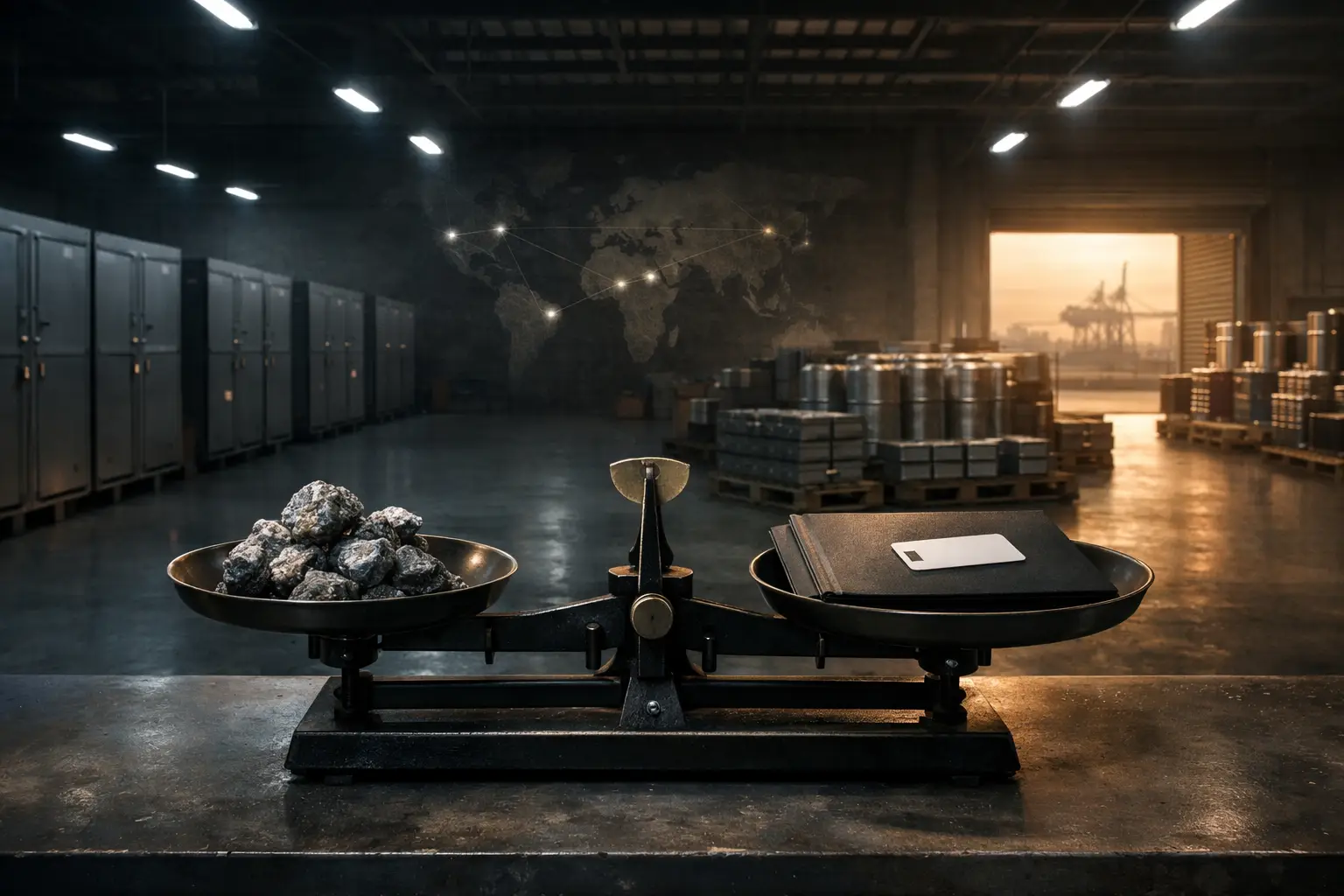
This initiative, known as Project Vault, which Trump compared in his White House speech to government oil reserves for emergencies, involves purchasing and storing minerals for American manufacturers.
At the same time, on February 4, during a meeting of representatives from the foreign ministries of 54 countries, the United States presented its new initiative, the “Forum for Geostrategic Resource Engagement” (FORGE), by signing a memorandum of understanding.
The launch of “Project Vault” signifies the US’s abandonment of the old doctrine of non-intervention in the economy. Previously, it was believed that market mechanisms and the “invisible hand of the market” would handle risks on their own, but now it is evident that direct control and guarantees are needed to protect state interests.
The previous American model relied on imports from China, limited tariff tools, and grant support through the IRA, leaving investment decisions to the private sector, which was forced to respond to price volatility and dumping without long-term guarantees of demand or revenue stability.
The Chinese model is built differently: state banks, subsidies, and export controls allow for maintaining processing even in unprofitable phases, creating price pressure that displaces competitors and consolidates control over downstream segments, where the main added value is created.
In 2023–2025, the sharp drop in lithium prices—more than 70% from peak values—has already led to the freezing or postponement of dozens of projects in the US, Canada, and Australia, which under other conditions would have been commercially viable.
For a private investor, this means an unacceptable payback horizon and the risk that any investment could be “knocked out” of the market by politically motivated price pressure.
The “Project Vault” model occupies an intermediate position between these approaches and differs from the Chinese one in that the state does not replace the market but stabilizes it.
A federal reserve of critical minerals essentially creates guaranteed demand and a price buffer, reducing risk for private investors without moving to direct subsidization of production.
This means a shift to a model where competition occurs between economic systems, not between individual companies, and efficiency is determined by the state’s ability to ensure long-term predictability of investments in strategic resources.
The Chinese model already operates on this principle: state banks and companies operate with a 10–20 year horizon, allowing temporary unprofitability in downstream segments for the sake of maintaining control over processing and standards.
The Western private sector, oriented toward 5–7 years and stable cash flow, without state support, systematically loses in this competition.
In practical terms, this means forming a strategic reserve that is used during phases of shortage or price shocks, while civilian sector companies gain access to resources with the obligation to replenish reserves, turning the state into a stabilizer of cycles rather than the main producer or buyer.
In the new configuration, the state takes on part of the market risk through EXIM Bank credit instruments, long-term contracts, and political guarantees, allowing the launch of mining and processing projects that remained frozen due to the inability to compete with short-term price fluctuations formed outside market logic.
Ultimately, an American version of industrial policy is formed, where competition shifts from the company level to the level of economic systems.
China retains an advantage through scale and centralized financing, while the US tries to create a predictable investment environment in which private capital receives protection from politically motivated price pressure without transitioning to full state coordination of the industry.
For the Trump administration, this opens the opportunity to simultaneously limit Chinese influence on pricing and avoid a large-scale subsidy model, shifting the emphasis from direct budget support to control over investment conditions and the speed of forming alternative production chains.
The further development of this model will be determined by the speed with which the American system can convert financial support into physical supply volumes, as it is the time gap between the US investment cycle and China’s price response that shapes the real balance of power in the critical minerals sector.
China retains a strategic advantage due to its ability to influence the market in the short term: through control of processing, state exchanges, and subsidies, prices can change within one or two quarters, allowing new Western projects to be quickly made economically questionable even before their launch.
The American cycle is significantly slower, as the full chain from exploration to industrial processing takes 7–10 years, including approvals, construction, and certification, so any investment without long-term demand guarantees remains vulnerable to short-term price pressure.
In this logic, Project Vault and FORGE serve as stabilizers, but their effectiveness depends on the ability to provide contracts and guarantees even before the final investment decision, as it is off-take agreements and minimum price benchmarks that allow investors to close the financial model in a high-volatility environment.
Without this mechanism, American tools remain reactive: reserves soften shortages, credit programs reduce financing costs, but they do not change the market structure in which China can maintain control over processing through the speed of price signals and a longer horizon of state financing.
Therefore, the key question is whether the American model can reduce the time gap between political decision and the emergence of new production capacities.
It is the speed of creating alternative chains, not the amount of allocated funds, that will determine whether FORGE and Project Vault become tools for systemic change in equilibrium or remain mechanisms for adaptation to Chinese dominance.
At the same time, corporate behavior shows the limits of this model. Large transnational companies are increasingly cautious about large-scale mergers and concentration of resource assets.
Large conglomerates make companies more visible to political pressure, regulatory restrictions, and geopolitical risks.
In an environment where access to deposits and logistics is determined by political agreements, size ceases to provide protection and instead increases vulnerability, prompting businesses to shift toward targeted investments in specific assets rather than creating super-large resource structures.
The breakdown of negotiations on a possible merger between Rio Tinto and Glencore, which ended with Rio Tinto’s statement of “no intention to bid” on February 5, 2026, demonstrated another limitation for the private sector.
Even a deal that strategically looked like an attempt to quickly assemble a Western resource megacorporation to compete with Chinese companies is halted at narrow bottlenecks of valuation, distribution of corporate control, and procedural requirements.
The private sector cannot systematically reduce the time gap with China through accelerated consolidation and is forced to shift to models of targeted investments and partial participation in individual assets.
It is at this point that the functional role of Project Vault and FORGE emerges. Corporate consolidation as a tool for rapid scale-up can stall due to valuation and control agreements, and individual companies may be unwilling to assume full political and price risk in vulnerable jurisdictions.
In such cases, the state takes on the systemic part of the “consolidation” function through long-term offtakes, credit leverage, and coordination with allies, shifting the provision of resource access from corporate balances to state guarantees and interstate frameworks.
Accordingly, state tools become a substitute for corporate consolidation: instead of large mining conglomerates, the old network of individual projects remains, whose economic viability is ensured by access to the American system of guarantees and coordination.
In this logic, Glencore’s deal to sell 40% of the Mutanda and Kamoto deposits to the Orion Critical Mineral Consortium demonstrates the practical implementation of this strategy: the US is shifting from declarative signals to direct influence on supply chains through ownership structure, instead of relying solely on market contracts.
Orion CMC receives the right to appoint independent directors and direct the sale of its share of production to “nominated buyers” under the U.S.–DRC Strategic Partnership Agreement.
The consortium is led by Orion Resource Partners and in public materials is described as an initiative involving the U.S. International Development Finance Corporation (DFC); according to industry sources, financing also involves the Abu Dhabi sovereign fund ADQ, embedding the deal into a coalition capital model.
Mutanda and Kamoto are nodal assets in the cobalt-copper chain: according to corporate data, in 2025 KCC and Mumi together provided about 247.8 thousand tons of copper and 33.5 thousand tons of cobalt, so any change in ownership structure becomes a tool for redistributing access to resources.
In this configuration, the geopolitical compatibility of the investor and the ability to guarantee managed offtake become more important than maximizing short-term asset valuation.
The Orion CMC model distributes risks: the private operator retains asset management, while financial partners gain the ability to direct part of the production to designated buyers, integrating Congo into a system of long-term supplies for the US and allies.
For Glencore, such a structure reduces the political risk of operating in Congo without losing control, while for the US it creates a physical presence in a key node of the global battery metals chain.
The involvement of ADQ and the American DFC demonstrates a new model of coalition capital: countries with financial resources but limited access to minerals gain a share in strategic chains through partnerships with states seeking to reduce dependence on China.
At the same time, the agreement between the US and the Democratic Republic of the Congo outlines the limits of this strategy: formal agreements with the government do not guarantee real control over mining territories and transport routes.
Denials of the agreement’s legitimacy by armed coalitions demonstrate that geoeconomic competition is entering a phase where legal frameworks give way to control over land, logistics, and production security.
In such a configuration, even state guarantees and ownership structure reduce risks only partially, emphasizing: the effectiveness of Vault and FORGE will be determined by the ability of the US and allies to ensure the physical stability of supply chains in regions where competition for minerals is already going beyond purely economic logic.
The true strengthening of the American model through Project Vault and FORGE is still ahead. To transform state guarantees, strategic reserves, and capital coalitions into a tool for systemic change, the only way to reduce China’s lead through these programs is to create innovative processing technologies, mining automation, and integrated resource recycling.
Only the combination of these elements with financial guarantees and legal protection will allow the US to reduce the time gap between political decision and the emergence of alternative production capacities, which today gives China a critical advantage in pricing speed and control over processing.