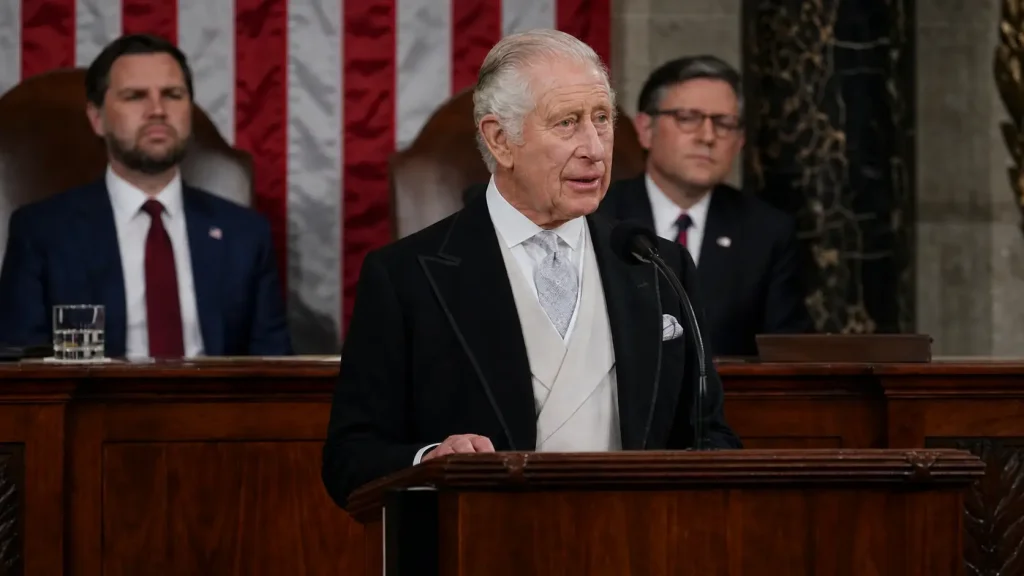
On December 17, 2025, Donald Trump delivered a prime-time television address in which he emphasized that the cost-of-living problems experienced by American households were caused by his predecessor Joe Biden. Trump stressed that he is on the path to solving many of the issues he campaigned on, including migration and inflation.
In the political dimension, this means that the Republican Party enters the midterm election campaign without a protective layer of economic optimism, as tariff experiments have ceased to be associated with future growth and are perceived as a source of daily pressure.
For Trump, this trajectory fixes a strategic trap—continuing the policy of monetary compensations without changing the economic course increases the risk of inflationary escalation, while abandoning them exposes the scale of dissatisfaction among his own electorate.
In the end, the economic policy of the second term creates preconditions under which the outcome of the 2026 midterm elections will be determined not by external competition or geopolitical conflicts, but by households’ ability to withstand accumulated financial pressure.
Moreover, data from a Politico poll (where 46% of voters called the cost of living the worst in recent years, and among Trump supporters, 37%) records a structural gap between the administration’s political rhetoric, which includes mentions of high economic indicators, and the daily consumer experience of households that feel a high level of inflation.
Washington enters the second half of Trump’s presidential cycle and preparations for the 2026 midterm elections under conditions where the rising cost of living is gaining a new wave of political pressure from the Republican electorate, including those who secured Trump’s victory in 2024.
The administration is trying to respond to this gap through symbolic and selective financial injections, including a $1,776 bonus to service members under the “warrior dividend” brand, using the 250th anniversary of the U.S. as a tool to legitimize budget expenditures.
This episode records a change in the logic of managing economic dissatisfaction. The administration is shifting from attempts to reduce structural components of inflation to the mechanics of targeted checks as a quick surrogate for political stabilization.
The prime-time address on December 17 added to this design a one-time payment of $1,776 for 1.45 million service members and public support for the concept of direct cash payments for health insurance instead of subsidies through the Affordable Care Act, meaning the cash-first model becomes an element of the political toolkit.
The critical point is that the White House simultaneously ties the legitimacy of the course to tariffs and statements about attracted investments, but the channel for using resources is tuned to current consumption, not to asset accumulation that reduces the cost of living.
Against this backdrop, debt ceases to be a background and becomes a direct factor in the cost of living, because the growth in government interest expenses locks in high rates and passes them on to households through more expensive mortgages, auto loans, and consumer debt servicing.
The baseline trajectory of federal debt is already leading to levels of about 118% of GDP in 2035, and interest expenses are approaching a trillion dollars per year, which narrows the space for painless compensations and makes any further correction more expensive.
This step has a clear political calculation, as the military environment is viewed by the White House as an electorally sensitive segment amid discussions in the Democratic Party about the Trump administration’s responsibility for economic policy after the end of Biden’s term.
Trump’s public statements about a rapid price reduction come into direct contrast with actual indicators, as the consumer price index rose by 3% in September, remaining at the level from the end of Biden’s term.
Promises to reduce drug prices “by up to 600%” function in the political space as a tool for emotional compensation, but they do not change the structure of household expenses, where housing, utilities, and debt servicing continue to crowd out other consumption categories, including drug purchases.
Trump’s tariff strategy, presented as a driver of a future investment boom, in practice transforms into a hidden tax on households through rising inflation, which disproportionately affects lower-income groups, transforming, by conservative estimates, 650–875 thousand Americans into the poverty category.
The labor market adds its own constraints to this dynamic, as unemployment rose to 4.6% from 4.4% in November 2025, job creation rates, although increased to 64 thousand, however, government spending cuts and shutdown reduced the employment multiplier, as 105 thousand jobs were lost in October.
The shutdown and fragmented spending cuts in this configuration do not create conditions for anti-inflationary restructuring; they reduce the institutional throughput capacity of the state to make complex transformations.
The administration is cutting part of the state mechanisms but does not offer an architecture that converts attracted resources into productivity, infrastructure, and long investment cycles.
As a result, anti-inflationary policy loses support on institutional competence and shifts toward gestures that provide a short electoral effect but do not change the structure of household expenses.
These data mean that the economy is entering a phase where even moderate economic deterioration quickly translates into political dissatisfaction, as the employment growth observed earlier during Trump’s first term is no longer able to serve as a buffer between the White House’s macroeconomic decisions and households.
The cooling of wage growth to 3.5% (usually 4-5%) on an annual basis reduces real purchasing power, especially against the backdrop of inflation expectations of 3.2% for 2026, which narrows the space for consumer optimism.
In the political dimension, this destroys a key precondition for electoral stability, under which voters are willing to tolerate turbulence in financial markets and tariff experiments in exchange for tangible growth in their own incomes.
Households compensate for this pressure by reducing savings, the level of which fell to 4.9% in April 2025, and more active use of credit, forming deferred risks for financial stability. Moreover, 25% of American households have no ability to save at all.
For the administration, this creates a timing problem, as current consumer resilience masks structural exhaustion of financial reserves, which may materialize in a sharp demand decline already in the 2026 election year.
Lower-income groups are increasingly focusing on health care and housing expenses, cutting spending on dining out, travel, and services, which hits sectors of domestic demand.
This shift in consumption structure undermines local small businesses, which traditionally form the social base of Republicans in a number of states, transforming macroeconomic decisions into regional political risk.
Higher-income groups maintain consumption thanks to wealth effects and stable incomes, but this asymmetry undermines the political narrative of general economic recovery that the White House is trying to promote.
In essence, the economic model of Trump’s second term increasingly looks like growth concentrated in upper-level income groups, which limits its mobilization potential on a nationwide election scale.
Trump’s statements about the future appointment of a new Fed chair focused on more aggressive rate cuts signal an attempt to shift responsibility for borrowing costs into the realm of monetary policy.
Thus, the White House is forming public expectations under which any easing of financial conditions will be credited to political leadership, while maintaining tight rates will be personalized as a Fed problem.
Expectations of mortgage payment reductions are used as an argument to calm the middle class, although structural causes of expensive housing remain beyond short-term solutions.
In electoral logic, this is enough to keep part of the swing electorate in waiting mode, even if the actual effect of rate cuts turns out to be deferred or limited.
The administration’s refusal to continue Obama-era medical subsidies intensifies pressure on low-income households, while allowing Trump to maintain the ideological integrity of his own economic course.
This decision fixes the priority of budget discipline and targeted payments over systemic social programs, but at the same time expands the field for Democratic attacks in socially vulnerable districts.
The decline in the President’s ratings combined with potential Republican defeats in special elections forms incentives to expand direct financial support for the population, even with awareness of inflationary risks.
During his second term, Donald Trump is building a response to the rising costs of American households through a combination of tough tariffs, tax breaks, energy deregulation, and government spending cuts, positioning these tools as an alternative to direct support social programs.
This model is based on the assumption that short-term price pressure caused by tariffs can be partially politically neutralized through income redistribution and structural shifts in production, which over time should transform into employment and income growth.
A key element of this strategy is the introduction of tariffs, which were framed as a response to a “national economic emergency” and are viewed as a fiscal resource that allows forming alternative channels of household support without expanding classic budget programs.
The White House rhetoric ties tariff revenues to the idea of “economic sovereignty,” where reducing the trade deficit is presented as a source of funds to return money to voters in the form of discounts, rebates, or one-time payments.
In the tax plane, Trump proposes a series of targeted solutions, including eliminating taxes on tips, overtime pay, and social security payments.
According to administration estimates, these measures can give working Americans more than $1,300 in additional annual income, creating a tangible effect precisely for groups sensitive to the cost of living ahead of the 2026 midterm elections.
The energy block of this strategy is based on large-scale deregulation, which, according to Trump’s statements, should allow the construction of up to 1,600 power plants and reduce electricity costs by 30–50% in the medium term.
Reducing energy costs will become a universal tool for fighting inflation, as it indirectly affects transportation, production, and housing prices, creating a multiplicative effect for households. However, building all 1,600 power plants is not possible in 2026, as technically it would require years of preparation and all even minimal permitting procedures.
Even if deregulation reduces time losses on permitting procedures, it does not solve the main thing—the structure of demand. The American energy system is entering a phase where additional generation does not create surplus but is absorbed by new large consumers, primarily data centers and AI infrastructure.
The DOE estimates that data centers already consumed about 4.4% of U.S. electricity in 2023, and this figure could rise to 6.7–12% by 2028.
As a result, the energy block, which the administration sells as a universal anti-inflationary lever, works slowly and with limited throughput capacity, as the market maintains high prices through demand balance, not regulation deficit as such.
The most debated element is the idea of direct redistribution of tariff revenues in the form of “tariff dividends,” which could reach about $2,000 per person for low- and middle-income households.
These payments are viewed as a compensatory mechanism for the rising cost of imports and at the same time as a tool for quickly increasing electoral loyalty ahead of the 2026 vote.
According to preliminary discussions, payments may be limited to income up to $100,000 and adapted to household size, repeating the logic of pandemic stimuli or tax refunds.
However, the fiscal arithmetic remains vulnerable, as Yale estimates indicate that tariff revenues in 2025 amounted to about $200 billion, while full rebates could cost $500–600 billion per year.
The critical point is that tariff revenues institutionally do not form a stable tax base for new permanent obligations. They create a short fiscal impulse that the administration is trying to turn into a channel of political loyalty through payments, but this locks in voter expectations of repeated compensation as the norm.
Further, externally generated resources cease to expand the space for maneuver and begin to accumulate obligations that increase the deficit and push the debt trajectory.
In this model, debt becomes not a consequence but a mechanism for passing costs to households through more expensive capital costs and through maintaining high credit payments in 2026.
This gap creates a risk of expanding the budget deficit or deferring payments with expansion of public debt, which, on one hand, directly contrasts with Trump’s statements about intentions to reduce debt, and on the other hand, reduces trust in promises and leaves the administration in a political waiting mode.
Moreover, reducing tariffs would provide a quicker effect on the cost of living, but for Trump, this would mean abandoning a key geoeconomic tool of pressure on China.
As a result, the strategy for combating pressure on households in Trump’s second term turns into balancing between a tough trade line, selective financial compensations, and an attempt to buy time until the 2026 midterm elections without structural correction of inflationary indicators.
In the end, Trump faces a dilemma between supporting a tough economic model that involves cutting payments and the need to stabilize consumer sentiments through tariff payments, where each decision simultaneously works on external competition and vulnerability of growing public debt and budget deficit.
In the end, Trump enters the midterm cycle not as a President of quick economic turnaround, but as a leader who consciously bets on political management of expectations, understanding that a full change in economic dynamics is limited by external markets, debt risks, and internal institutional limits.
The dangerous trend lies in the institutionalization of check-based management of expectations as a substitute for economic modernization. The White House is not building a contour for increasing productivity and removing structural bottlenecks; instead, it uses fiscal injections as a tool for electoral mobilization.
This narrows the corridor of decisions in the event of any external shock, as budget space is already spent on maintaining sentiments, and debt dynamics increase the cost of later correction.
It is this that makes 2026 a moment of choice for Trump. If the White House does not revise its own economic doctrine, it will accept electoral confrontation with Democrats under conditions of an economy recovering more slowly than electoral cycles allow.