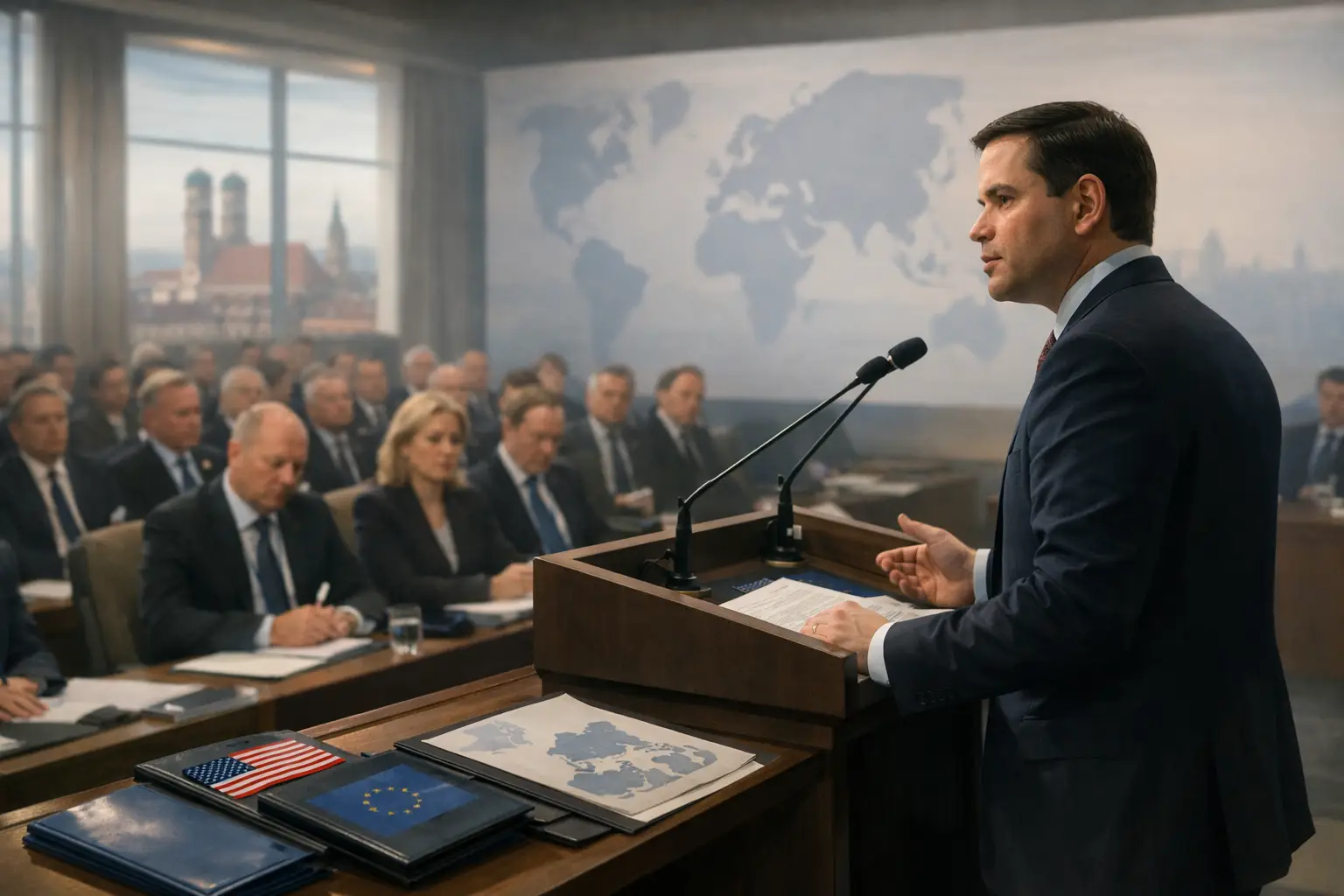
The 62nd Munich Security Conference took place in Germany from February 13 to 15, 2026. The U.S. delegation was headed by Secretary of State Marco Rubio.
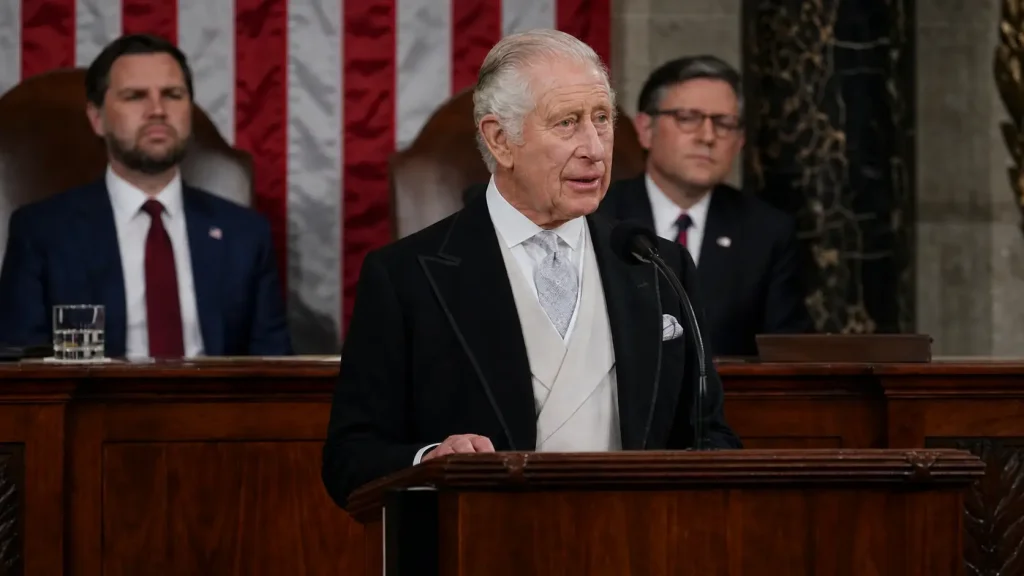
His speech differed significantly in tone from Vice President J.D. Vance’s confrontational remarks at last year’s conference, as well as from President Donald Trump’s criticism of European elites at the World Economic Forum in Davos in January 2026.
In recent months, Secretary Rubio has strengthened his influence over U.S. foreign policy, largely due to the effective implementation of the “Donroe Doctrine” in Latin America—particularly the dismantling of the Maduro regime in Venezuela. This strategy has also led to a recalibration of engagement between Latin American governments and Washington.
The restoration of foreign policy agency to the Secretary of State aligns with the expectations of both chambers of Congress, where Republican lawmakers have repeatedly questioned the insufficient role of the Department of State in shaping U.S. foreign policy.
The strategy outlined by Rubio in Munich reflects a year of Washington’s efforts to shape the trajectory of regional conflicts. The course of the war in Ukraine has shown U.S. policymakers that the capacity of any party to sustain a localized conflict depends largely on the scale of external resource support.
In particular, this support has come from the People’s Republic of China, ranging from the provision of dual-use components to financial mechanisms that facilitate sanctions evasion.
This pattern is replicated in the Middle East, where Iran’s “axis of resistance” relies on Chinese oil purchases and technological cooperation, and in Africa, where Moscow and Beijing jointly fill the vacuum left by Western states.
This conclusion underpins the Secretary’s position: the United States should concentrate its efforts on containing and weakening China as the only state whose resource capacity sustains the functioning of the broader autocratic axis.
Neutralizing Beijing’s ability to provide such support would create conditions in which regional partners could independently contain participants in local conflicts.
Under this model, Europe assumes responsibility for countering Russia, which—absent Chinese resource backing—would lose the capacity to sustain prolonged military operations and finance hybrid campaigns. Israel, in coordination with Washington, would deter Iran, whose economy remains critically dependent on oil exports to China.
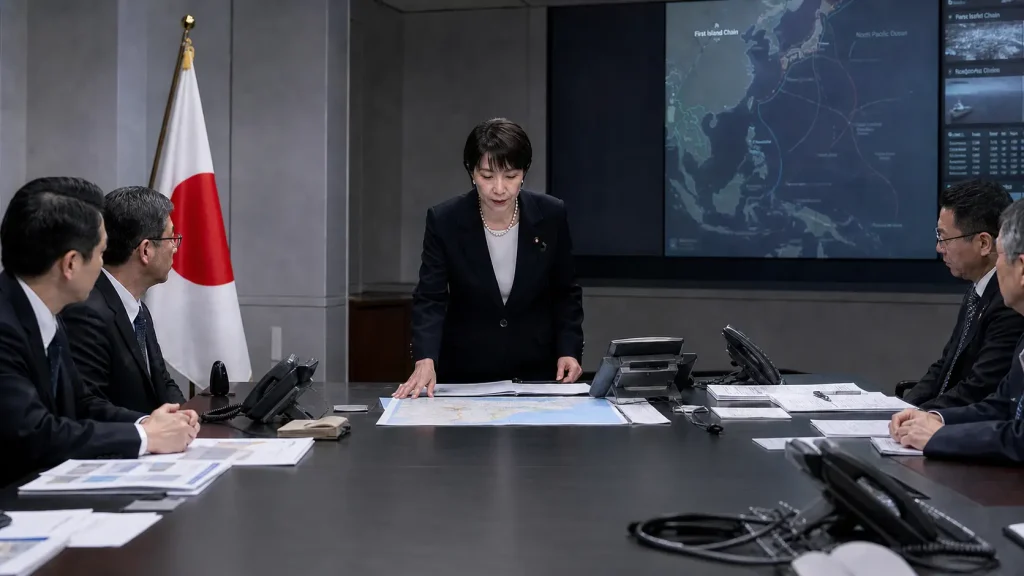
In the Indo-Pacific, Beijing is the direct and principal actor: exerting pressure on the Philippines in the South China Sea, expanding its military presence around Taiwan, and conducting influence operations across Southeast Asia.
This redistribution of security responsibilities—whereby the United States concentrates on containing the PRC while regional partners address localized threats—directly determines the scale of the U.S. presence in Europe. That scale will depend on the willingness of European allies to offset the reallocation of American resources toward the Pacific theater.
The White House communicates this logic across the entire European political spectrum, conditioning the preservation of the transatlantic partnership on Europe’s transition toward autonomous defense provision, industrial independence, and the restoration of an active presence in the Global South.
The institutional articulation of this vision for Europe’s security architecture, expressed by Secretary Rubio in Munich, occurred one day prior to the conference.
On February 12, 2026, at a meeting of NATO defense ministers in Brussels, Deputy Secretary of Defense Elbridge Colby presented the “NATO 3.0” concept, formalizing this division of responsibilities at the Alliance level.
The concept assigns Europe primary responsibility for defending the continent against the Russian Federation. The United States retains nuclear deterrence guarantees and logistical support for allies, while reorienting its principal capabilities toward containing the PRC in the Indo-Pacific and the Western Hemisphere.
Although the tone of U.S. messaging shifted over the course of the year, the substance of the White House’s demands remained unchanged.
Security and political expectations directed at allies were coupled with sharp unilateral economic measures by the Trump administration. Most notably, a sweeping tariff program increased uncertainty in Washington’s relations with its partners.
That uncertainty deepened further after February 20, 2026, when the U.S. Supreme Court, in a 6–3 decision, ruled that tariffs imposed by the President under the International Emergency Economic Powers Act (IEEPA) exceeded executive authority.
The ruling invalidated the core elements of the administration’s tariff program, raised questions regarding the reimbursement of more than $175 billion in duties already collected, and compelled the White House to introduce new levies under alternative legal authorities.
U.S. Customs announced it would cease collecting the invalidated tariffs as of February 24—four days after the Court’s decision—while both allies and adversaries formally requested clarification regarding the new tariff regime.
Against this backdrop, Rubio’s address in Munich provided clarity regarding the geopolitical dimension of U.S. strategy.
During the first year of Trump’s second term, foreign policy signals from Washington were transmitted through parallel channels—including Vice President Vance, Special Envoy Steve Witkoff, and presidential adviser Jared Kushner—none of whom possessed a full institutional mandate to articulate official policy.
The practice of ad hoc diplomacy through trusted envoys, characteristic of Trump’s managerial style, created additional uncertainty for European allies accustomed to institutionalized decision-making procedures.
For this reason, the Secretary of State’s address—delivered by the principal official vested with foreign policy authority—acquired the status of an authoritative articulation of the United States’ official position. Rubio outlined three conditions that Washington views as prerequisites for full strategic coordination with allies.
First, European members of the Alliance must assume genuine responsibility for the defense of the continent. Second, they must protect industrial and technological supply chains from Chinese expansion. Third, they must exercise effective control over migration flows.
Washington reinforces its demands with a significant domestic military buildup indicative of preparations for prolonged strategic competition. In December 2025, President Trump signed the National Defense Authorization Act (NDAA) for Fiscal Year 2026, authorizing $900.6 billion in funding for the Pentagon and national security programs.
On February 3, 2026, Congress approved $838.7 billion in discretionary defense appropriations; when combined with additional funding through budget reconciliation, total U.S. defense expenditures surpassed $1 trillion for the first time in history.
In January 2026, Trump announced his intention to raise the FY2027 defense budget to $1.5 trillion—a 50 percent increase the administration plans to finance through tariff revenues.
A substantial share of these funds is directed toward fleet expansion, modernization of the nuclear triad, and the deployment of new operational capabilities in the Pacific—the theater designated by the Pentagon as the priority in the National Defense Strategy released on January 23, 2026.
Concurrently, the Trump administration has initiated a systematic dismantling of Chinese logistical infrastructure in the Western Hemisphere. The contract of Hong Kong–based CK Hutchison to manage the Balboa and Cristóbal ports on the Panama Canal has been revoked.
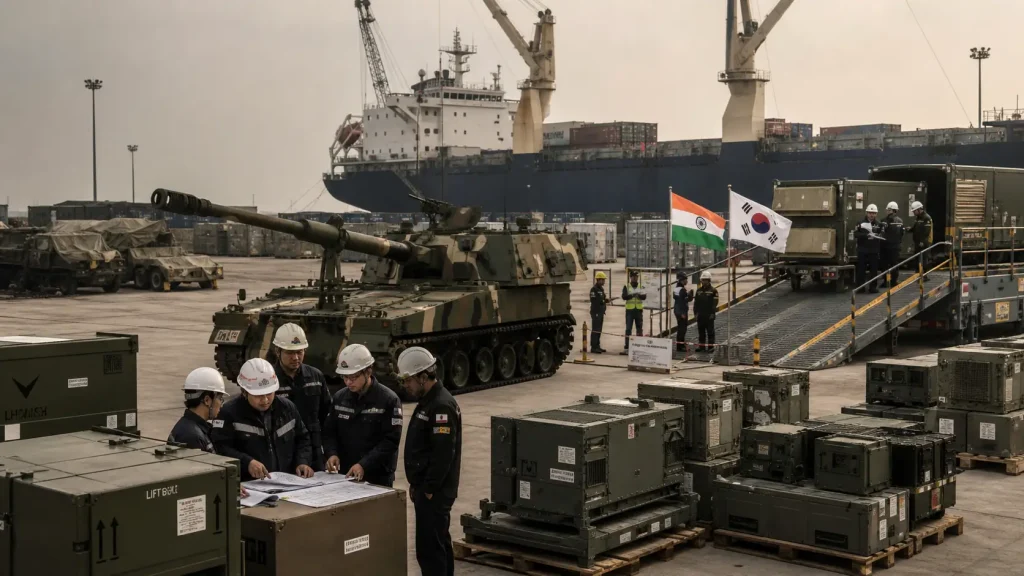
The administration also approved $1.5 billion in equipment and services for the relocation and modernization of Peru’s principal naval base in Callao—50 miles from the Chinese megaport of Chancay, inaugurated by COSCO Shipping in November 2024.
A shipbuilding revitalization plan has been launched, financed through port fees imposed on Chinese-built vessels, aimed at reducing the U.S. Navy’s dependence on foreign shipyards, the number of which in the United States has declined from more than 300 in the 1980s to fewer than 20 today.
These measures send a clear signal to European governments: Washington is undertaking a structural reconfiguration of its military and logistical posture in accordance with a new strategic logic and regards a comparable transformation by its allies as a precondition for preserving the transatlantic partnership.
By demanding that Europe assume genuine responsibility for its own defense, the Secretary directs attention to correcting a longstanding imbalance in the transatlantic relationship.
As of 2025, the United States continues to finance more than 60 percent of NATO’s total defense expenditures. In no year since the onset of Russia’s hybrid aggression against Ukraine in 2014 have the combined defense outlays of European NATO members exceeded U.S. contributions to the Alliance.
Between 2014 and 2024, Canada and European NATO members increased their defense spending on average from 1.43 percent to 2.02 percent of combined GDP.
However, since the beginning of Trump’s second term, Washington has deemed this pace insufficient given the accelerated militarization of Russia and the PRC.
In February 2025, during a meeting between Secretary of Defense Pete Hegseth and his European counterparts, the Pentagon chief called on European NATO members to raise defense budgets to 5 percent of GDP.
In May 2025, the same demand was conveyed through U.S. Permanent Representative to NATO Matthew Whitaker, and on the eve of the NATO Summit in The Hague in June 2025, President Trump personally reaffirmed his administration’s position. The rhetoric was subsequently codified in official documents.
On January 23, 2026, the Pentagon released a new National Defense Strategy formally stating that Europe is no longer a priority region for U.S. military presence and that the United States would relinquish its role as the principal guarantor of the continent’s defense.
The updated strategy and coordinated messaging produced the anticipated outcome. Following the Hague Summit, NATO members committed to investing annually 3.5 percent of GDP in core defense requirements and an additional 1.5 percent in defense-related measures.
Moreover, in March 2025, the President of the European Commission presented the strategic initiative “Readiness 2030,” allocating nearly €800 billion to strengthen Europe’s defense infrastructure.
Beginning in the first quarter of 2026, the EU Defense Roadmap entered into implementation, aiming to develop the Union’s industrial and military capacity in the latter half of the 2020s across nine priority areas.
The initiative seeks to conduct at least 40 percent of EU member states’ defense procurement on a joint basis by the end of 2027, with contracts finalized and financing secured by 2028.
However, defense budgets address only part of the challenge. Secretary Rubio stressed that containing the autocratic axis will be impossible without Europe’s renewed engagement in active competition for influence in the Global South.
In this region, the balance of economic, political, and security presence will ultimately shape the outcome of competition between democratic nations and autocracies.
The gradual withdrawal of Western states from sustained competition in Africa, Asia, and Latin America created a vacuum that China has systematically filled since launching the Belt and Road Initiative.
Through centralized management of state capital, Beijing integrates infrastructure, trade, and debt instruments into a unified system of influence. The results are measurable.
France, which maintained a military presence in the Sahel, has lost ground in Mali, Burkina Faso, and Niger, where Russian and Chinese operators have supplanted French forces.
Chinese state-owned enterprises control or operate more than 40 ports across Africa. The total debt owed by African states to the PRC exceeds $140 billion, creating a degree of dependency that enables economic leverage to be translated into political influence.
This influence is reflected in voting patterns at the United Nations and in the terms governing access to critical raw materials.
Europe’s return to the Global South requires revisiting the post-colonial consensus that has shaped European foreign policy toward these regions since the 1960s.
A sense of historical responsibility for the colonial era has effectively excluded European states from strategic competition in regions where the PRC and Russia operate without constraint.
In Germany, an antimilitarist social consensus rooted in postwar guilt continues to impede defense transformation despite the policy shift under Chancellor Merz.
In Belgium, responsibility for colonial policy in the Congo is embedded in the education system and shapes societal attitudes toward any assertive foreign policy posture in Africa.
Washington demands that Europe abandon this model, applying the same logic the Trump administration advances with Japan regarding the transcendence of postwar pacifism.
In practical terms, this entails rebuilding industrial and technological capacity, establishing alternative supply chains for critical resources, and reengaging in competition for markets and political influence across Africa and Asia.
Simultaneously with reassessing its external posture, Europe is strengthening its immediate defense capabilities. At the NATO defense ministers’ meeting on February 12, 2026, European allies moved from financial commitments to planning concrete defense programs.
On that day, Belgium, Denmark, France, the Netherlands, Norway, Turkey, and the United Kingdom agreed to cooperate on strengthening ballistic missile defense through the development, procurement, and deployment of sensors, interceptors, and tactical command-and-control systems.
In parallel, five Allies—Denmark, Lithuania, the Netherlands, Poland, and Turkey—agreed to jointly develop long-range strike unmanned systems capable of conducting precision strikes deep within adversary defenses.
To accelerate implementation, participating states committed to involving companies outside the traditional defense-industrial sector and to testing new procurement mechanisms to expedite the fielding of these systems.
These initiatives unfold as the PRC undertakes the most extensive military modernization since the founding of the People’s Republic. The gap between the pace of European and Chinese military expansion continues to widen.
China’s official military budget for 2025 stands at $246 billion; however, indirect indicators suggest that Beijing’s actual defense expenditures approach $500 billion.
Beijing is simultaneously implementing multiple programs, each of which is altering the balance of power in its respective region. Chinese shipyards are producing warships at a pace exceeding the combined output of all NATO member states.
In 2024 alone, Chinese shipyards launched naval vessels with a combined displacement of more than 130,000 tons, not including the world’s first amphibious assault ship equipped with an electromagnetic catapult, the Sichuan, which displaces 40,000 tons.
As of 2025, the People’s Liberation Army Navy (PLAN) fields a battle force of over 370 vessels. This makes it the largest naval fleet in the world.
In parallel, Beijing is scaling production of robotic combat systems, unmanned platforms across all classes, and next-generation aviation. A distinct line of effort involves integrating the civilian fleet into defense planning.
China’s mobilization law permits the requisitioning of commercial vessels for amphibious and logistical operations, and the PLA systematically rehearses this capability.
In the summer of 2025, civilian cargo ships and ferries offloaded armored vehicles directly onto beaches during large-scale exercises. In effect, the world’s largest merchant fleet functions as a strategic reserve for the PLAN.
Most consequential for the strategic balance is Beijing’s reassessment of the role of nuclear weapons. Drawing on its analysis of the war in Ukraine—including the effectiveness of fortified defensive lines and the limits of conventional strike capabilities—Chinese military planners are exploring new operational concepts.
These include low-yield tactical nuclear warheads designed to penetrate hardened defenses without causing large-scale destruction and to eliminate critical infrastructure nodes that sustain logistics along the line of contact and support broader national defense capacity.
This approach envisions moving nuclear weapons from a last-resort instrument to an integrated component of operational-tactical planning, fundamentally altering the logic of nuclear deterrence in the region.
By calling on Europe to shield its industrial and technological supply chains from Chinese expansion, Secretary Rubio identified the most vulnerable dimension of European defense capacity.
The expansion of the continent’s military capabilities cannot be fully realized without reducing systemic dependence on China in strategic sectors of the economy.
As long as Europe’s industrial and technological base remains critically reliant on supplies from the PRC, increases in defense spending and the buildup of indigenous military-industrial capacity will remain partial measures.
With control over the supply of rare earth elements (REEs), magnesium, and other critical minerals, Beijing can at any time restrict access to raw materials and components upon which Europe’s defense-industrial base depends.
As of 2024, 75 percent of rare earth elements, scandium, and yttrium (REE+) entering European markets originated from China and Russia. China also supplied 96 percent of the EU’s magnesium imports, 73 percent of gallium imports, and 38 percent of natural graphite imports.
The EU’s dependence on Chinese extraction is compounded by Beijing’s dominance in processing critical raw materials. In the first half of the 2020s, China processed approximately 90 percent of globally mined graphite, while more than two-thirds of global cobalt and lithium processing capacity was controlled by Chinese companies.
This dominance enabled China to secure leading positions in the production of materials essential for lithium-ion batteries: 85 percent of global anode production, 82 percent of electrolytes, 74 percent of separators, and 70 percent of cathodes.
As a result, China accounts for 85 percent of global battery cell manufacturing capacity by value and 74 percent of total exports of battery modules and related components.
The scale of this dependency transforms China’s monopoly into a direct threat to defense readiness. REE-based components are indispensable for the production of unmanned aerial vehicles, loitering munitions, electric and hybrid vehicles, submarines, and individual soldier equipment.
Neodymium, praseodymium, and samarium are used in permanent magnets for missile guidance systems; dysprosium in thermal stabilization systems; and gallium nitride in radio-frequency seekers for air-to-air missiles.
Beijing’s dominance in supplies critical to Western defense capabilities has provided Chinese leadership with leverage over the democratic bloc—leverage it has already exercised.
After President Trump announced new tariff rates in April 2025, with the highest increases targeting Chinese exports, the PRC restricted exports of seven rare earth elements and magnets to the United States and the EU.
As U.S.–China trade tensions escalated, Beijing imposed additional export controls aimed at disrupting supply chains for computer chips, batteries, and defense-related electronics.
In early April 2025, China introduced export controls on samarium—an element for which 100 percent of global processing capacity is located in China and which is used in the production of F-35 fighter aircraft and U.S. missile systems.
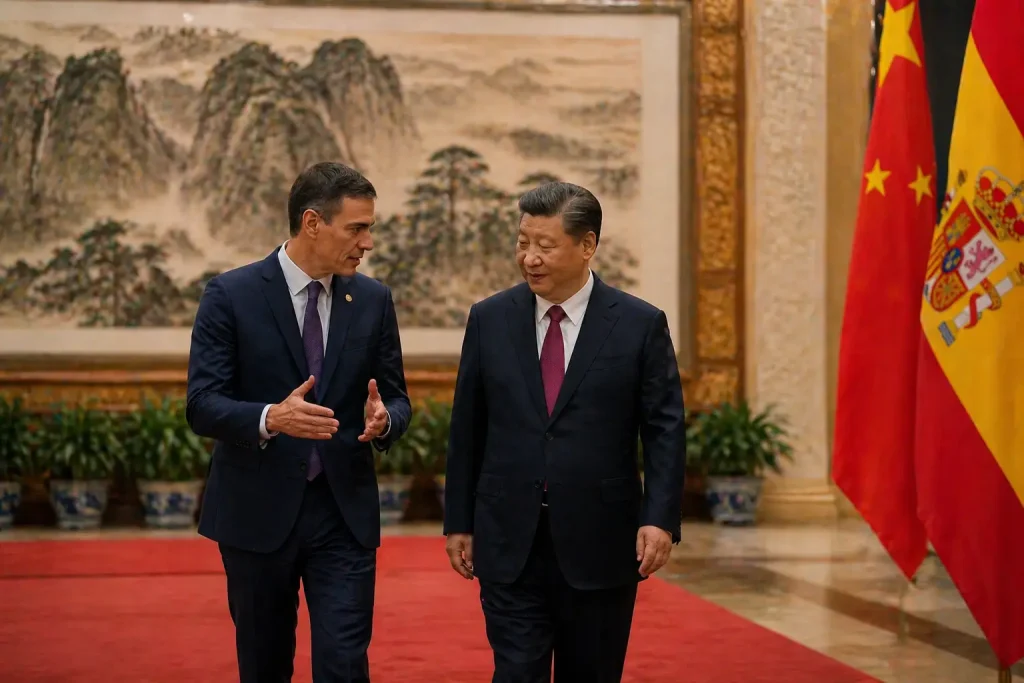
Following direct negotiations between President Donald Trump and President Xi Jinping on October 30, 2025, in South Korea, China agreed to suspend restrictions on exports of five rare earth metals for one year in exchange for a reduction in U.S. tariff rates against the PRC.
However, tightened export controls on samarium, gadolinium, terbium, dysprosium, lutetium, scandium, and yttrium remained in place, enabling Beijing to retain instruments for selectively constraining Western rearmament irrespective of the trajectory of trade negotiations with Washington.
By preserving these tools, Beijing acquired the capacity to influence European political decisions directly—converting resource control into pressure whenever the EU approaches measures to limit Chinese presence.
When the EU considers tightening sanctions against China, restricting Chinese technologies, or declaring support for Taiwan in its confrontation with Beijing, China can translate its resource dominance into intensified pressure on Europe’s industrial sector.
For example, in late September 2025, the Dutch Ministry of Economic Affairs invoked the National Security Screening Act—legislation allowing government intervention in private companies in cases of economic security risk—against Nexperia, a firm owned by China’s Wingtech Technology Group.
Within days, China suspended exports of semiconductors (including transistors, diodes, and power components) manufactured at Nexperia’s Guangdong facility, and on October 9, 2025, it further tightened export controls on critical rare earth elements.
These measures achieved their intended effect: by November 2025, the Dutch government had dropped its efforts to place Nexperia under state control.
Recognizing the risks of mounting dependency, EU elites have advanced a diversification strategy. On December 3, 2025, the European Commission announced adoption of the ReSourceEU Action Plan, allocating €3 billion in 2026 to accelerate strategic projects in extraction, processing, and recycling of rare earth elements, cobalt, and lithium.
Beginning in 2026, the Commission restricted exports of REE waste, with recycling intended to meet 20 percent of EU magnet demand. A European Critical Raw Materials Center is to be established to coordinate joint procurement, strategic stockpiling, and investment in projects aimed at reducing dependence on the PRC.
To counter China’s monopoly in REE exports by 2029, the European Raw Materials Alliance will finance 14 mining, production, and magnet-processing projects across Africa.
Russian and Chinese leaderships recognize that gradual reduction of Europe’s resource dependence will narrow their leverage even before a broader geopolitical escalation. Accordingly, Moscow and Beijing increasingly deploy another instrument: uncontrolled migration.
Rubio’s third condition—migration control—was directed at both segments of Europe’s political spectrum. Uncontrolled migration has become a mechanism through which the autocratic axis undermines the societal consensus necessary for Europe’s defense and industrial transformation.
Coordinated actions by Russian and Belarusian authorities led Minsk to engineer artificial migration pressure along the Belarus–Poland border in autumn 2021, channeling migrants from the Middle East and Africa.
In late 2023, a similar tactic was employed along the Russian–Finnish border, prompting Finland to close nine of its ten crossing points with Russia.
Beyond pressure on the EU and NATO’s eastern borders, the Kremlin utilized affiliated non-state armed formations to intensify flows of African migrants toward Southern Europe.
In March 2023, the Italian government stated that the Russian Wagner Group, operating at the time in Libya and the Sahel, had contributed to a more than threefold increase in irregular migration from the region to Italy.
The Kremlin intensifies the effects of migration tensions through information operations. After the summer 2024 stabbing attack in Southport, carried out by a UK-born citizen against three children, Russian state media and Moscow-linked Telegram and X accounts spread disinformation claiming the attacker was an African refugee.
The rapid spread of this narrative triggered anti-migration unrest in several British cities, escalated political, religious, and racial violence, and deepened polarization in the United Kingdom.
China, for its part, exploits migration dynamics—initially catalyzed by Russia, Belarus, and the pro-Iranian “axis of resistance”—within Europe, transforming uncontrolled refugee flows into a persistent destabilizing factor for the EU.
Beijing reinforces instability through parallel mechanisms. On one track, Chinese authorities have cultivated informal ties with organized crime networks in Europe, particularly in Italy.
Chinese criminal groups have expanded influence over local businesses, regional logistics, and narcotics distribution, with payments processed through Chinese money-transfer systems.
In exchange for building networks of influence, facilitating tax evasion and illicit financial flows, and degrading public security environments, PRC authorities refrain from countering such activities and decline cooperation with European and U.S. law enforcement.
On another track, Beijing intensifies covert engagement with ultraconservative and Euroskeptic political forces within the EU that capitalize on public frustration over migration and perceived governmental inaction to exacerbate polarization.
In April 2024, German police arrested an aide to Maximilian Krah, then a Member of the European Parliament representing the nationalist-conservative Alternative for Germany (AfD).
The aide, Jian Guo, was charged with espionage on behalf of Beijing, including transferring confidential European Parliament information to Chinese intelligence services and surveilling Chinese dissidents in Germany.
To further amplify polarization and distrust in EU societies, Chinese information policy is systematically coordinated with Russian narratives.
According to reporting by the analytical center CERA, Chinese state outlets CGTN, Global Times, and Xinhua regularly publish and amplify content from Kremlin-affiliated media, while Russian and Chinese hacker networks coordinate interference in European and U.S. election campaigns.
Exploitation of internal societal conflicts—many exacerbated by migration pressures—has become a principal mechanism for influencing voter preferences and shaping political agendas across Europe.
The White House views annual issuance of more than three million new residence permits across Europe as a socio-economic challenge deliberately provoked and exploited by the autocratic axis. Washington increasingly frames migration control as a pan-European security issue rather than solely a humanitarian matter.
Europe’s ability to secure its borders is seen as a prerequisite for preserving the societal consensus necessary to complete the continent’s defense and industrial transformation.
The U.S. administration’s rhetoric on stricter border control is increasingly echoed by mainstream political forces forming governments in key European states.
In October 2025, German Chancellor Friedrich Merz stated that irregular migration was deteriorating Germany’s social and security environment and damaging its international image.
In December 2025, Interior Minister Alexander Dobrindt announced that Germany would not participate in the EU migrant redistribution mechanism for 2026–2027, opting instead to strengthen border enforcement.
In autumn 2025, a summit in Copenhagen brought together leaders of the European Commission, the European Parliament, the United Kingdom, and 15 EU member states, who defined irregular migration as a shared continental challenge and agreed on coordinated countermeasures.
These included empowering law enforcement to curb illicit flows of people and goods, establishing legal frameworks for returns to countries of origin, and developing mechanisms to combat smuggling and related criminal activity.
The aggregate measures undertaken by European governments—increased defense spending, adoption of ReSourceEU, and the Copenhagen migration summit—correspond to the three conditions articulated by Rubio in Munich and signal Europe’s acceptance of a new security reality.
The Trump administration has effectively codified the parameters of partnership at a moment when Europe’s political and economic agency can be preserved only through consolidation with the United States—and before electoral pressures to maintain the existing social-spending model become decisive.
What is unfolding between Washington and European capitals extends beyond another recalibration of transatlantic relations.
The security architecture established after 1945—NATO 1.0, grounded in an American guarantee of European stability—underwent its first transformation after the Cold War, when the Alliance expanded geographically without proportionally redistributing the burden of defense.
Under NATO 2.0, the United States financed collective defense at levels exceeding the combined contributions of the rest of the Alliance, allowing European states to convert security dividends into social expenditures. This model has become structurally unsustainable amid simultaneous strategic competition with China and Russia.
The NATO 3.0 concept, presented by Colby on the eve of the Munich Conference, formalizes a transition to distributed deterrence, under which each component of the democratic bloc assumes autonomous responsibility for a defined sector, and coalition effectiveness is determined by the resilience of its weakest link.
The window for completing this transformation is narrowing from both directions. Electoral cycles in France, Germany, and Italy raise the prospect of populist forces gaining power—forces for whom reducing social spending to fund defense is politically untenable.
Externally, the pace of Chinese militarization and the PLA’s integration of nuclear weapons into operational planning compress the timeframe within which European capability growth can alter the strategic balance.
For the first time in modern history, democratic allies face a security challenge that requires a coalition of open societies. These societies, with competitive electoral systems and dispersed decision-making centers, must undertake structural transformations at a pace and consistency comparable to the mobilization capacity of authoritarian regimes.
The rapid completion of Europe’s defense, industrial, and societal restructuring aims to create a configuration in which the democratic bloc can achieve multiple strategic objectives simultaneously.
These include deterring the PRC in the Pacific, containing Russia on the European continent, and competing with autocracies for resources and political influence across the Global South.
In his Munich address, Rubio articulated Washington’s clear strategic focus: containing and weakening China. He also outlined the conditions the Trump administration expects from European allies.
These include maintaining autonomous defense of the continent, safeguarding industrial and technological supply chains from Chinese expansion, and managing migration flows.
The experience of the war in Ukraine reinforces the logic behind these demands: the cost of strengthening defense capabilities, however substantial, is still far lower than the cost of a conflict that arises due to inadequate preparation.